Business Insurance Coverage for Startups: What You Need to Know

Starting a business means juggling countless decisions, and insurance often gets pushed to the back of the pile. The truth is, the wrong coverage-or worse, no coverage-can wipe out your startup faster than a bad quarter.

At Grimes Insurance Agency, we’ve seen firsthand how business insurance coverage for startups separates those who survive setbacks from those who don’t. This guide walks you through the coverage types you actually need, the gaps most startups miss, and how to pick a provider that gets your business.

The Three Core Policies Every Startup Needs

General liability insurance sits at the foundation of startup protection, and it’s non-negotiable. This coverage protects your business when a client or third party claims you caused them bodily injury or property damage. A visitor trips in your office and breaks their arm, or your product causes financial harm to a customer-general liability covers the legal costs and settlements. Most startups underestimate how often these situations arise. The reality is that general liability claims happen across every industry, from software companies to service providers. You need minimum coverage limits between $1 million and $2 million per occurrence, with aggregate limits of $2 million to $3 million. This isn’t excessive; it reflects actual claim costs in today’s market.

Visualization of the core insurance policies that form a startup’s foundation in the U.S.

Property Insurance Protects What You’ve Built

Property insurance covers the physical assets your startup depends on: office equipment, inventory, furniture, and leasehold improvements. Fire, theft, vandalism, and weather damage all fall under a standard property policy. Many startups operate from leased spaces, and landlords almost always require proof of property coverage before you sign a lease. If your startup manufactures products, stores inventory, or maintains expensive equipment, property insurance isn’t optional-it’s the difference between recovering from a disaster and closing your doors. Standard property policies typically exclude flood damage, which means you need separate flood insurance if your location sits in a flood zone or even moderately elevated flood risk. The National Flood Insurance Program covers flood losses and costs roughly $500 to $2,000 annually depending on risk level, a small price compared to uninsured flood damage that can total tens of thousands of dollars.

Workers Compensation Covers Your Team

If your startup has employees, workers compensation insurance is legally required in virtually every state. This coverage pays for medical expenses and lost wages when an employee gets injured on the job. California’s Department of Industrial Relations enforces strict compliance, and penalties for operating without coverage include fines up to $10,000 per uninsured employee, plus potential criminal charges. The cost depends on your industry classification and payroll size. A small tech startup with five employees might pay $800 to $1,500 annually, while a startup in construction or manufacturing faces higher premiums due to greater injury risk. The real value appears when an actual injury happens: workers compensation prevents lawsuits from employees and protects your startup’s finances during recovery periods.

Why These Three Policies Form Your Foundation

These three policies work together to shield your startup from the most common financial threats. General liability handles third-party claims, property insurance protects your physical assets, and workers compensation covers your team. Most startups can bundle these coverages into a Business Owner’s Policy (BOP), which combines general liability and property coverage at a lower cost than separate policies. This approach simplifies administration and reduces your overall premium. However, your specific industry and business model may demand additional protections beyond this foundation. The gaps most startups overlook often prove far more expensive than the premiums they try to save.

What Coverage Gaps Actually Cost Startups

Most startups operate with incomplete protection because they focus only on the three core policies and ignore everything else. This approach creates serious financial exposure in areas where claims hit hardest. Your industry determines which gaps matter most, but three gaps appear consistently across nearly every startup we encounter.

Industry-Specific Liability Gaps Leave You Exposed

The first gap involves underestimating liability exposure specific to your industry. A software startup faces completely different liability risks than a consulting firm or a product manufacturer, yet many founders grab a standard general liability policy without considering industry-specific claims. Tech startups encounter claims around software failures, IP disputes, and service delivery failures that standard general liability doesn’t adequately cover.

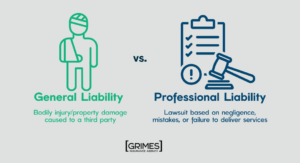
Professional liability insurance, also called Errors and Omissions coverage, protects against claims that your work or advice caused a client financial harm. If you’re a consultant, designer, engineer, or software developer, professional liability becomes as essential as general liability itself. Skipping this coverage means a single client lawsuit could create substantial legal costs, even if you ultimately win the case.

Cyber Liability and Data Security Breaches

The second critical gap involves cyber liability and data security. The Cybersecurity and Infrastructure Security Agency notes that cyber threats target organizations of all sizes, including startups, and even a single incident can create significant financial strain for companies still raising capital. If your startup handles customer data, payment information, or proprietary client files, you operate in constant breach risk.

Standard business policies exclude data breach costs entirely. Cyber liability insurance covers breach response expenses, legal fees, notification costs to affected customers, and potential regulatory fines. The Federal Trade Commission emphasizes data security as a foundational business practice, and costs from a single breach typically range from $10,000 to $100,000 depending on customer count and data sensitivity.

Compact list of three common insurance gaps for U.S. startups. - business insurance coverage for startups

Many startups discover this gap only after a breach occurs, at which point the damage spreads across customer relationships and investor confidence.

Business Interruption Coverage Protects Your Cash Flow

The third gap involves business interruption coverage, which protects your income and operating expenses when a covered event forces you to temporarily close. A fire, natural disaster, or extended equipment failure could halt operations for weeks or months. During that shutdown, your rent, payroll, and vendor payments continue regardless of whether revenue arrives.

Business interruption insurance reimburses these ongoing costs, typically covering 30 to 90 days of lost income and operating expenses. Startups with high fixed costs or heavy supplier dependence benefit most from this protection, as a two-month closure without coverage could eliminate months of cash reserves. These three gaps represent the most common blind spots we see, but your specific business model may reveal additional exposures that demand attention before they become expensive problems.

Picking an Insurance Partner That Understands Your Startup

Selecting an insurance provider matters far more than most founders realize. The wrong carrier leaves you with gaps you don’t discover until a claim arrives, while the right partner proactively identifies exposures before they become problems. Start by requesting quotes from at least three carriers, but don’t treat this as a simple price comparison. A quote that looks cheap often comes with higher deductibles, lower coverage limits, or exclusions that create the exact gaps you’re trying to avoid.

When you evaluate quotes, verify that each carrier proposes identical coverage limits and deductibles across all three policies. This forces apples-to-apples comparison and reveals where carriers differ on actual protection. Many startups fixate on monthly premium and miss that a $50 difference in premium might come with a $10,000 difference in coverage limits or a critical exclusion buried in policy language.

Three-point guide to evaluating startup-friendly insurance carriers in the United States. - business insurance coverage for startups

Demand that each carrier provides a detailed coverage summary, not just a price sheet. Ask specifically whether cyber liability, professional liability, or business interruption coverage is included or available as add-ons, since these determine whether you’re actually protected against the gaps we discussed.

Experience with Startup-Stage Companies Matters

Insurance carriers vary dramatically in how they approach startup businesses. Some carriers treat startups as loss leaders and provide minimal support, while others specialize in early-stage companies and understand the unique cash flow constraints and rapid growth patterns that define startup operations. An independent insurance agency with access to multiple carriers can match your startup to insurers that actively support early-stage businesses rather than viewing them as problems.

Ask your prospective carriers directly: How many startups do you insure in my industry? What’s your average policy size? Do you offer online quotes or require phone calls? Carriers that invest in startup-friendly processes typically provide faster quotes and more flexibility on coverage customization. Request references from founders in your industry who use each carrier. A five-minute call with another founder reveals whether claims get processed quickly, whether customer service actually answers the phone, and whether the carrier stands behind coverage when problems arise.

Tech startups particularly need carriers that understand cyber risk and data security, not generalist carriers that treat cyber as an afterthought. Construction startups need carriers experienced with equipment and contractor liability. Your industry determines which carrier experience matters most.

Claims Support Determines Real-World Value

The true test of an insurance carrier arrives the moment you file a claim. A carrier with excellent customer service during the sales process can become unresponsive once your money is paid. Investigate each carrier’s claims process before you purchase: Do they offer 24/7 claims reporting? Can you file claims online or through a mobile app? How long does it typically take to receive a claims decision?

Check AM Best ratings to verify financial stability, prioritizing carriers with A- ratings or higher. A startup cannot afford to discover mid-claim that your insurer lacks financial reserves to pay claims. Ask your prospective carriers for their average claims processing time and request specific examples of how they’ve handled claims similar to yours. Some carriers assign a dedicated claims adjuster to each policy, while others rotate between adjusters, which affects consistency and relationship continuity. Request a sample Certificate of Insurance to verify the format matches what your clients, landlords, and investors will demand. Cheap insurance that creates headaches during claims destroys more value than higher premiums that provide smooth, fast resolution when problems occur.

Final Thoughts

Business insurance coverage for startups forms the financial foundation that lets you take calculated risks without betting your entire company on a single bad event. The three core policies-general liability, property insurance, and workers compensation-establish your baseline protection, but the gaps we discussed often prove far more expensive than the premiums you’ll pay to fill them. Professional liability, cyber liability, and business interruption coverage aren’t luxuries for larger companies; they’re practical shields against the specific threats your startup actually faces.

Getting properly covered starts with honest assessment of your industry’s unique risks. A software startup’s exposure looks nothing like a consulting firm’s, and your insurance should reflect that reality. Request quotes from multiple carriers, but evaluate them on coverage quality and claims support, not just price. The cheapest premium means nothing if it comes with exclusions that leave you exposed exactly where you need protection most.

An independent insurance agent transforms this process from overwhelming to manageable, as they access multiple carriers and understand which insurers actually specialize in startups rather than treating them as afterthoughts. They identify gaps you might miss, explain policy language in plain terms, and contact Grimes Insurance Agency to discuss your coverage needs and receive a customized quote that reflects your specific risks.

Disclaimer: The information provided in this blog is for general informational purposes only and does not constitute legal, financial, or insurance advice. Coverage options, terms, and availability may vary. Please consult with a licensed professional for advice specific to your situation

Home Insurance Basics for Homeowners: A Comprehensive Overview

Homeownership comes with real financial responsibility, and home insurance is the foundation of protecting your investment. At Grimes Insurance Agency, we’ve helped countless homeowners understand the home insurance basics they need to make confident decisions.

This guide walks you through what coverage actually protects you, what factors shape your rates, and how to pick a policy that fits your situation.

What Your Home Insurance Actually Protects

Your homeowners policy typically covers four core protections, and understanding exactly what each one does prevents costly coverage gaps. Dwelling coverage rebuilds your home’s structure after fire, wind, hail, or lightning damage-but the amount matters far more than most homeowners realize. You need enough to rebuild at today’s construction costs, not your home’s market value, since land isn’t covered and rebuilding expenses have climbed significantly. According to the Insurance Information Institute, replacement cost coverage pays what it actually costs to rebuild using current materials and labor rates, which differs sharply from what your home would sell for.

Wind and hail cause roughly 42.5% of homeowners insurance losses, while water damage and freezing account for 22.6%, so your dwelling limit should reflect these real rebuilding expenses in your area. Personal property coverage typically sits at 50–70% of your dwelling limit and protects your belongings if they’re stolen or destroyed, though this standard percentage often falls short for households with valuable items.

High-Value Items Need Extra Protection

High-value items like jewelry, art, antiques, and collectibles hit coverage caps-usually around $500 per item-unless you add a scheduled personal property endorsement with appraisals to document true worth. Off-site coverage for items taken outside your home frequently caps at roughly 10% of your personal property limit, so items stolen while traveling may receive less protection than you’d expect. This gap means you should obtain appraisals for expensive possessions and insure them with a rider that reflects their appraised value.

Diagram showing the four core protections in a standard U.S. homeowners policy - home insurance basics for homeowners

Liability and Medical Coverage Work Differently

Liability protection covers lawsuits when someone is injured on your property or you accidentally damage someone else’s property, and the standard $100,000 limit often proves insufficient for meaningful asset protection. No-fault medical coverage pays a guest’s medical bills immediately if they’re injured in your home, typically ranging from $1,000 to $5,000, regardless of who caused the accident. This coverage excludes your own family members and pets, so it only helps visitors.

Additional Living Expenses and Temporary Housing

Additional living expenses, sometimes called loss of use, covers hotel stays, meals, and temporary housing while your home is being repaired or rebuilt after a covered loss, but these payments have time limits and separate caps from your rebuild funds. If you rent out part of your home while displaced, this coverage may also pay lost rental income you would have collected. The data from the Insurance Information Institute shows wind and hail claims average around $88,170 per incident, while water damage averages $15,400, illustrating why adequate dwelling coverage directly prevents financial disaster.

Separate Policies for Flood and Earthquake

Flood and earthquake damage aren’t included in standard policies-you’ll need separate flood insurance through the National Flood Insurance Program or private carriers, and earthquake coverage is available through separate endorsements. Water backup coverage, which protects against sewer or drain backups, costs between $50 and $250 annually and covers a different peril than flood insurance. Most mortgage lenders require proof of active homeowners insurance and may specify minimum coverage amounts, so keeping your policy current and notifying your lender of changes protects your loan status.

Now that you understand what your policy covers, the next critical factor-your rates-depends heavily on where you live and how insurers assess your specific risk profile.

Factors That Affect Your Home Insurance Rates

Location Creates the Largest Premium Gap

Your location is the single most powerful factor controlling your premium, and it’s not negotiable. If you live in Florida, you’ll pay roughly $2,677 annually on average according to the National Association of Insurance Commissioners, while Oregon homeowners average around $893-a difference driven almost entirely by weather exposure and loss frequency in your specific area. Coastal regions face hurricane risk, areas prone to hail experience higher wind-and-hail claims, and states with frequent winter storms see elevated water damage losses.

Compact list of top rating factors that influence U.S. homeowners insurance premiums - home insurance basics for homeowners

Your proximity to fire departments and hydrants directly lowers premiums because insurers view these as concrete risk reducers. Before you buy a home, factor insurance cost into your decision-location-based premium differences in homeowners insurance can persist for decades. The Insurance Research Council found Florida homeowners spend about 4.07% of their income on homeowners insurance, the least affordable state in the nation, while Utah residents spend just 0.96%, revealing how geography creates real financial hardship for some and manageable costs for others.

Home Age and Construction Type Shape Your Rate

Home age and construction type matter almost as much as location because older homes cost more to rebuild and typically lack modern safety systems. A 1970s home with original wiring and outdated plumbing will command higher premiums than an identical 2015 home with updated electrical systems and modern building code compliance. Upgrading to impact-resistant roofing, storm shutters, or obtaining an IBHS Fortified Home certification can reduce your premium substantially-ask your insurer specifically what retrofit qualifies for discounts rather than assuming all upgrades help.

Claims History and Credit Score Predict Future Risk

Your claims history and credit score function as a permanent record that insurers use to predict future losses. One homeowners insurance claim typically raises premiums, and multiple claims within five years can make coverage difficult to obtain at any price. Credit scores matter in most states because insurers link payment behavior to claim likelihood, so paying bills on time and maintaining low credit card balances directly reduces your rates.

If your credit score improves, request a rate review from your insurer rather than waiting for renewal, since loyalty discounts kick in after 3–5 years with the same carrier and reach roughly 10% after six years or more. The national average premium sits around $1,569 annually, but your actual rate reflects your specific combination of location risk, home characteristics, and personal history-comparing quotes from multiple carriers remains the only way to see how each factor prices your individual situation.

Understanding what drives your rates helps you identify which factors you can control and which ones shape your baseline cost. The next step involves taking that knowledge and using it to select a policy that actually matches your needs rather than settling for whatever your current insurer offers.

How to Choose the Right Home Insurance Policy

Calculate Your Dwelling Coverage Accurately

Selecting home insurance requires moving past price alone and getting specific about what you actually own and what could realistically happen to your home. Most homeowners either over-insure and waste money or under-insure and face catastrophic gaps when disaster strikes. Calculate your dwelling coverage based on current rebuilding costs in your area, not your home’s market value-the National Association of Home Builders reports an average of $162 per square foot based on surveys of builders across the country. Contact local contractors or use online rebuild cost calculators to get a realistic number, then add 10–20% as a buffer for code upgrades required during reconstruction.

Document Your Personal Property and High-Value Items

For personal property, the standard 50–70% of dwelling coverage often falls short if you own valuable items. Create a detailed home inventory with photos, serial numbers, and receipts for everything from electronics to furniture. About 47% of homeowners maintain an inventory according to Munich Re’s 2023 consumer survey, and that preparation cuts claim processing time dramatically while preventing disputes over item values.

If you own jewelry, art, collectibles, or antiques worth more than a few thousand dollars, calculate their total value separately-these items hit the standard $500-per-item cap unless you add scheduled personal property endorsements with appraisals. Liability coverage at $100,000 is barely adequate if someone is seriously injured on your property, and legal costs alone can exceed that limit; consider raising liability to $300,000 or $500,000, especially if you have a pool, trampoline, or rental property exposure. An umbrella policy covering $1 million costs surprisingly little-typically $150–$300 annually-and provides critical protection beyond your homeowners policy limits.

Compare Quotes from Multiple Carriers

Get quotes from at least three different carriers because premiums for identical coverage vary wildly by insurer. State Farm dominates the market with an 18.2% share according to 2024 NAIC data, but that size doesn’t guarantee the best price for your specific situation-Allstate, USAA, Liberty Mutual, and regional carriers often undercut the largest players. Ask each insurer about bundling discounts for combining home and auto, but don’t assume bundling saves money; compare quotes from different carriers for each line separately.

Identify Discounts and Deductible Strategies

Some insurers offer 5–15% discounts for security systems, and monitored systems can yield discounts up to 20%, so factor in installation costs against long-term savings. Building upgrades like impact-resistant roofing or storm shutters qualify for discounts at many carriers, but not all insurers recognize the same improvements-ask specifically what retrofit earns a credit rather than assuming. Request quotes with multiple deductible options because raising your deductible from $500 to $1,000 typically reduces premiums by 10–25%, and that tradeoff makes sense only if you can actually afford the higher out-of-pocket amount after a loss.

Checklist of actionable ways to reduce U.S. homeowners insurance premiums

Verify Coverage Details and Exclusions

When comparing policies, verify that replacement cost valuation applies to your personal property rather than actual cash value, which factors in depreciation and pays far less for older items. Check each policy’s exclusions carefully because water backup coverage, earthquake protection, and flood insurance require separate endorsements or standalone policies-standard coverage excludes these, and discovering that gap after a loss is financially devastating. The Insurance Information Institute notes that wind and hail claims average $88,170 per incident, water damage averages $15,400, and fire averages $14,747, so gaps in coverage directly translate to uninsured losses that come straight from your pocket.

Final Thoughts

Home insurance basics for homeowners come down to three decisions: buying enough dwelling coverage to rebuild at current costs, protecting your personal property with accurate limits, and selecting liability protection that matches your actual risk. Wind and hail claims average $88,170 per incident while water damage averages $15,400, so underestimating coverage creates real financial exposure that hits your savings account directly. About 5.3% of insured homes file a claim annually, which means the odds favor you experiencing a loss at some point during your ownership.

Gather quotes from at least three carriers and compare them using identical coverage amounts rather than stopping at price alone. Verify that each policy covers flood and earthquake separately, confirm replacement cost valuation applies to your personal property, and check whether your deductible fits your budget. If you own high-value items, calculate whether scheduled personal property endorsements make sense, and consider raising liability to $300,000 or $500,000 instead of accepting the standard $100,000 limit.

We at Grimes Insurance Agency in Lubbock, Texas work with multiple carriers to find coverage that fits your specific situation rather than pushing one company’s products. Contact Grimes Insurance Agency to discuss your home insurance needs and receive quotes that reflect your actual protection requirements.

Disclaimer: The information provided in this blog is for general informational purposes only and does not constitute legal, financial, or insurance advice. Coverage options, terms, and availability may vary. Please consult with a licensed professional for advice specific to your situation

Exploring the Top Home Insurance Providers in Lubbock: What You Need to Know

Finding the right home insurance in Lubbock means understanding your options. We at Grimes Insurance Agency know that the top home insurance providers in Lubbock each offer different coverage levels and pricing structures.

This guide walks you through what matters most when comparing policies. You’ll learn how to evaluate coverage types, assess your home’s specific needs, and make a decision that protects your property without overpaying.

Top Home Insurance Providers in Lubbock

Lubbock homeowners face higher-than-average premiums compared to the rest of Texas. For a $300,000 dwelling, you’ll pay roughly $4,121 per year, or about $343 per month, according to rate data from Bankrate using Quadrant Information Services. This is about 6% above the Texas average of $3,899 annually, driven by the area’s exposure to hail, tornadoes, and wind. Understanding which carriers operate in Lubbock and what they actually charge matters far more than generic national rankings.

State Farm, Farmers, and Chubb Lead the Lubbock Market

State Farm, Farmers, and Chubb dominate the Lubbock market, each with distinct pricing and coverage strengths. State Farm charges roughly $228 per month for a $300,000 dwelling in Lubbock and carries an AM Best A++ financial stability rating, making it solid for homeowners who prioritize reliability and local agent access. Farmers offers the cheapest option at around $186 per month for the same coverage, though you’ll need to verify their wind and hail deductible structure since those often sit separately in storm-prone areas like Lubbock.

Comparison of average monthly premiums among Farmers, State Farm, and Chubb in Lubbock - top home insurance providers in Lubbock

Chubb targets high-value homes with extended replacement cost and private flood insurance options, running about $300 per month for $300,000 coverage but offering superior service ratings through J.D. Power.

Other National Carriers Worth Considering

According to Insurify’s analysis of 180+ insurers, several other carriers serve Lubbock effectively. USAA serves military members with replacement-cost coverage and A++ ratings, while Nationwide emphasizes bundling discounts and broad endorsements if you combine home and auto policies. Armed Forces offers the absolute lowest premiums in Texas at around $2,240 annually for a $300,000 dwelling, though availability and coverage options in Lubbock vary. These carriers represent practical starting points for Lubbock residents seeking competitive quotes tailored to the region’s specific weather risks.

Wind and Hail Deductibles Create Hidden Costs

Standard homeowners policies in Lubbock have a critical gap that catches people off guard. Wind and hail deductibles operate separately from your main deductible, sometimes running 2% to 5% of your dwelling’s value, meaning you could face a $6,000 to $15,000 deductible for a hail claim on a $300,000 home. Bankrate’s analysis of common Texas home insurance problems identified these separate deductibles as a frequent source of claim disputes and inadequate payouts.

Flood Coverage Requires a Separate Policy

Flood coverage is almost never included in a standard HO-3 policy, and you’ll need standalone flood insurance through the National Flood Insurance Program or private carriers. A typical policy includes 20% to 30% of your dwelling limit for additional living expenses if you’re displaced by a covered loss, but that can fall short in Lubbock’s high rebuild-cost environment. When comparing quotes, explicitly ask each carrier about wind and hail deductibles, flood exclusions, and how replacement cost applies to older structures, since many homes in Lubbock were built in the 1980s and earlier. These questions reveal which carriers actually understand Lubbock’s unique risks and which ones treat your home like any other property in a low-risk market.

What Matters Most When Selecting a Home Insurance Provider

Claims Processing Speed Determines Real-World Value

Claims processing speed separates adequate insurers from exceptional ones, and this matters more in Lubbock than anywhere else. When hail or wind damage strikes your $300,000 home, you don’t want to wait weeks for an adjuster or months for a payout. State Farm’s extensive local agent network in Lubbock means faster claim routing and face-to-face communication, which according to J.D. Power satisfaction data translates to fewer disputes over wind and hail deductible calculations. Farmers, while cheaper at $186 per month for a $300,000 dwelling, operates through fewer local touchpoints, potentially slowing claims in urgent situations. Chubb’s private flood insurance option and extended replacement cost coverage appeal to homeowners with high-value properties, but their claims process works through specialized adjusters rather than neighborhood-based agents.

Verify whether your carrier maintains local claims adjusters in Lubbock before you commit to a policy. Contact the company directly and ask their average claim resolution time for weather-related losses, not general statistics. Under Texas law, claims processing speed requires insurers to acknowledge your claim within 15 days of notification and begin investigating immediately. Most carriers won’t volunteer additional details about their timeline, which itself tells you something about their transparency.

Hub-and-spoke chart showing factors that impact claims processing speed in Lubbock

Financial Strength Ratings Protect You During Regional Disasters

Financial strength ratings matter more than premium price when disaster hits. AM Best A++ ratings from State Farm and USAA guarantee they’ll pay claims even during catastrophic regional losses, whereas lower-rated carriers sometimes delay or deny payouts after major events. Lubbock’s tornado history and hail exposure mean you need an insurer with rock-solid reserves. An independent agency accesses multiple carriers simultaneously and can compare not just monthly costs but also each carrier’s specific claims procedures, local representation, and financial stability ratings in a single conversation. This approach eliminates the legwork of calling five insurers separately and asking identical questions about wind deductible structures, flood exclusions, and replacement cost definitions.

You’ll pay roughly $228 per month with State Farm or $186 with Farmers, but the difference in claims experience could mean $5,000 or more when you actually need the coverage. The cheapest option rarely delivers the fastest payout when your roof sustains hail damage or wind tears off your siding.

Local Market Knowledge Reveals Hidden Coverage Gaps

Carriers that understand Lubbock’s specific weather patterns ask better questions during the quote process. They probe whether your roof has impact-resistant shingles, whether your home sits in a flood-prone area, and whether you’ve upgraded your electrical system-details that directly affect your actual risk and your actual premium. National carriers that treat Lubbock like any other Texas city often miss these nuances, leaving you underinsured or overpaying for coverage you don’t need. An independent agency with deep roots in West Texas knows which carriers offer the best wind and hail deductible structures for Lubbock properties and which ones impose unnecessary restrictions on older homes built in the 1980s.

This local expertise becomes invaluable when you file a claim and discover that your carrier interprets replacement cost differently than you do, or that your wind deductible applies to damage you thought was covered under your standard deductible. The agent who understands Lubbock’s construction standards and weather history can advocate for you during disputes and steer you toward carriers known for fair claim settlements in your area.

Choosing Your Home Insurance Without Overpaying

Calculate Your Home’s True Replacement Cost

Start with your home’s actual replacement cost, not its market value. A $300,000 home in Lubbock might cost $350,000 to rebuild after a total loss because of elevated labor and material costs in West Texas. Contact local contractors and ask what they’d charge to rebuild your specific home from the ground up, then use that figure as your dwelling coverage amount. This step prevents you from underinsuring your property and facing a shortfall when you file a claim.

Checklist of key steps to choose the right home insurance in Lubbock - top home insurance providers in Lubbock

Identify Your Home’s Specific Vulnerabilities

Document your home’s age, roof condition, electrical system type, and whether you’ve upgraded plumbing or HVAC systems, since carriers ask about these details during quotes and honest answers prevent claim denials later. Homes built before 1990 in Lubbock often lack impact-resistant shingles, making them targets for higher wind and hail deductibles. If your roof is older than 15 years, carriers will either charge more or impose steeper deductibles.

Flood risk matters enormously in Lubbock despite the city’s location away from major waterways. Check the FEMA flood maps for your specific address, then contact your mortgage lender to confirm whether flood insurance is required. Even if it’s not required, standing water from heavy rainfall or overflowing storm drains can cause thousands in damage that standard policies won’t cover.

Request Quotes From Multiple Carriers

Request quotes from at least three different carriers rather than relying on online comparison tools that often omit local options. Call State Farm, Farmers, and Chubb directly with your home details, then contact an independent agency that accesses multiple carriers simultaneously. Compare the actual monthly premiums for identical coverage levels-State Farm typically runs $228 monthly for $300,000 dwelling coverage in Lubbock while Farmers sits around $186, but ask specifically about wind and hail deductible structures since those vary dramatically between carriers.

Verify Financial Strength and Claims Performance

Don’t choose based on price alone. Check AM Best ratings for financial strength and J.D. Power customer satisfaction scores to verify that the cheapest option won’t disappear when you file a claim. Read recent customer reviews on Google and the National Association of Insurance Commissioners complaint database to see whether claims get paid quickly or disputed endlessly. Lubbock residents report that claims involving wind damage take anywhere from two weeks to three months depending on the carrier, so ask each insurer for their specific average claims timeline before committing.

Confirm Local Claims Adjuster Availability

Verify that your chosen carrier maintains local claims adjusters in Lubbock. If adjusters operate from Amarillo or Dallas, expect delays during major weather events when multiple claims flood in simultaneously. This local presence (or lack thereof) directly affects how quickly you receive payment after hail or wind damage strikes your home.

Final Thoughts

Selecting home insurance in Lubbock requires balancing coverage that protects your home, claims processing that works when you need it, and pricing that fits your budget. State Farm delivers reliability and local agent access with AM Best A++ ratings, Farmers undercuts competitors on monthly premiums at around $186 per month for a $300,000 dwelling, and Chubb serves high-value properties with extended replacement cost options. The top home insurance providers in Lubbock each excel in different areas, which is why comparing quotes across multiple carriers matters far more than picking a name you recognize.

An independent agency eliminates the guesswork by accessing multiple carriers simultaneously, so you receive competing quotes with identical coverage levels in a single conversation rather than calling insurers separately. This approach reveals which carriers offer the best wind and hail deductible structures for your home’s age and condition, which ones maintain local claims adjusters in Lubbock, and which ones impose unnecessary restrictions on older properties. An independent agent understands Lubbock’s unique weather risks, construction standards, and carrier quirks better than any national call center.

Contact Grimes Insurance Agency and provide your home’s details: age, square footage, roof condition, and replacement cost estimate. Request quotes from at least three carriers with identical dwelling coverage amounts and deductibles so you can compare apples to apples, then ask each carrier about wind and hail deductibles, flood exclusions, and their average claims timeline for weather-related losses. Choose based on the complete picture, not just the lowest monthly premium.

Disclaimer: The information provided in this blog is for general informational purposes only and does not constitute legal, financial, or insurance advice. Coverage options, terms, and availability may vary. Please consult with a licensed professional for advice specific to your situation

How to Protect Commercial Properties Effectively: Essential Strategies for Landlords

Commercial property owners face real threats every day-from break-ins and fires to liability claims that can drain resources fast. The difference between a protected investment and a vulnerable one often comes down to preparation and the right coverage.

We at Grimes Insurance Agency help landlords understand how to protect commercial properties effectively through smart planning and comprehensive insurance solutions. This guide walks you through the essential strategies that matter most.

Real Threats That Hit Commercial Properties Hard

Break-Ins and Theft Drain Resources Fast

Break-ins and theft cost commercial properties an estimated 12 to 14 billion dollars annually in the United States. Most incidents occur at properties with weak perimeter security or poor access controls. Properties with clear entry points, inadequate lighting, and no integrated surveillance systems become targets.

Checklist of leading factors that make commercial properties targets for break-ins and theft. - how to protect commercial properties effectively

The commercial security system market was valued at USD 210.6 billion in 2024 and is projected to reach USD 374.1 billion by 2030, reflecting how seriously property owners take these threats.

Start with a comprehensive site assessment that evaluates your perimeter continuity, identifies all entry points, and maps out vehicle and pedestrian traffic patterns. Properties with multiple buildings, numerous access points, and shared roadways face compounded risk because each gap creates an opportunity. Biometric access systems and cloud-based surveillance platforms with AI-powered video analytics now allow real-time threat detection and reduce false alarms that drain resources. Gate selection matters too; prioritize gates that offer flexibility, durability, and compatibility with future site changes so you adapt without disrupting operations.

Fire and Natural Disasters Accelerate Damage

Fire and natural disasters present equally serious threats, especially as climate impacts accelerate. The United States experienced 27 billion-dollar weather disasters in 2024 alone, driving property damage and insurance costs higher across commercial portfolios. Coastal properties face heightened threats from rising sea levels, saltwater corrosion, and storm surges that threaten both value and safety. Flooding and excess moisture heighten mold risk and structural damage, increasing maintenance costs and reducing property appeal to tenants.

Weatherproofing, reinforced roofing, flood barriers, and storm-resistant windows reduce claims and signal to insurers that you take risk seriously, often resulting in lower premiums. Schedule regular inspections on HVAC systems, fire suppression equipment, parking areas, lighting, and exterior structures. Address compliance with ADA accessibility standards, fire and safety codes, and signage requirements without relying on tenants to flag violations.

Liability Claims From Injuries Escalate Quickly

Liability claims from injuries on premises rank third among major threats, and they escalate quickly when clear hazards exist. Weak lighting in common areas, deferred maintenance on stairs or roofs, and unclear emergency protocols all increase injury risk and litigation exposure. Social inflation pushes litigation costs higher, meaning a single injury claim costs significantly more than it did five years ago.

Proactive maintenance on all building systems protects both occupants and your bottom line. The next section covers how the right insurance coverage works alongside these physical protections to create a complete defense strategy.

How to Spot and Fix Security Gaps Before They Cost You

Map Every Entry Point on Your Property

Start with a site assessment that covers everything. Walk your entire property and map every entry point, from main gates to loading docks to roof access. Document the condition of perimeter fencing, lighting along boundaries, and sightlines from your surveillance cameras. Note where vehicles move through your property and where pedestrians walk. Properties with multiple buildings or shared roadways create blind spots that criminals exploit, so photograph and measure distances between buildings, fence discontinuities, and areas where visibility drops. This isn’t theoretical work; you need a written record you can reference later and share with your insurance broker.

Compact list of actionable steps to map entry points and site vulnerabilities. - how to protect commercial properties effectively

Many landlords skip this step and only react after a break-in or injury occurs, which means they’ve already lost ground. Your assessment should identify which entry points see the most traffic and which ones sit unmonitored.

Prioritize Fixes by Risk Level

After you’ve mapped vulnerabilities, prioritize fixes by exposure and likelihood. Reinforce main gates first because they control the largest volume of traffic and set the tone for security. High-traffic gates need robust access controls that don’t slow operations, while secondary entrances may need reinforcement or closure entirely. If your property has loading areas or service entrances, these typically rank as the highest-risk zones because they blend legitimate traffic with potential unauthorized access. Properties near busy roadways or with high vehicle traffic need vehicle barriers or bollards to separate pedestrian zones from traffic zones, reducing both collision and intentional vehicle-based threats.

Deploy Technology That Works in Real Time

Install biometric access systems or cloud-based platforms with AI-powered video analytics to detect threats in real time rather than reviewing hours of footage after an incident. Address lighting gaps in parking areas and along perimeter fences because poor visibility invites break-ins and increases injury risk during emergencies. These upgrades signal to insurers that you take risk seriously, often resulting in lower premiums. Work with your insurance broker to align these improvements with your coverage requirements; many carriers offer premium discounts for documented security upgrades.

Maintain Systems on a Regular Schedule

Schedule regular inspections of fire suppression systems, HVAC equipment, and emergency exits at least quarterly. Don’t wait for a system failure or compliance violation to act. A phased approach works better than trying to fix everything at once, so develop a prioritized action plan that spreads costs over time while addressing your highest-risk exposures first. This foundation of physical security and maintenance sets the stage for selecting the right insurance coverage that protects what you’ve built.

Insurance Coverage That Matches Your Property’s Real Exposure

Commercial property insurance protects the physical structure, equipment, and fixtures on your premises, but coverage limits matter more than most landlords realize. General liability premiums have risen about 5 percent, and property insurance costs surged around 20 percent in 2023 as insurers tightened policies and raised minimum coverage requirements.

Percentage changes in insurance premiums affecting commercial properties.

Your property value isn’t static, so coverage limits that worked three years ago no longer reflect rebuilding costs driven by inflation and supply chain disruptions. Review your policy annually with your broker and increase limits to match current replacement costs for the building, roofing systems, HVAC equipment, and any tenant improvements you’ve financed. Underinsurance leaves you exposed; a fire that destroys 40 percent of your structure could wipe out years of profit if your limit falls short of actual rebuilding expense.

What Your Property Insurance Must Actually Cover

Property insurance covers the building structure, permanent fixtures, and equipment you own, but exclusions vary widely between carriers. Standard policies exclude flood damage, which requires a separate flood insurance policy through the National Flood Insurance Program or private carriers, and many exclude earthquake damage unless you add an endorsement. If your property has a flat roof, some carriers impose stricter maintenance requirements or charge higher premiums because flat roofs face greater exposure to pooling water and weather damage. Document all property improvements, equipment installations, and upgrades with photos and receipts because these increase your insurable value and help insurers understand your actual replacement costs if a loss occurs.

Liability Coverage Protects Against Injury Claims

Liability coverage protects you when a tenant, customer, or visitor suffers an injury on your property and sues for damages. General liability policies typically cover bodily injury and property damage claims, with standard limits ranging from 1 million to 5 million dollars depending on property size and risk profile. However, social inflation drives litigation costs higher than they were five years ago, so a single injury claim now costs significantly more to defend and settle. Review your liability limits every two years, especially after property improvements or changes in tenant mix that increase foot traffic or operational complexity.

Business Interruption Coverage Protects Revenue During Shutdowns

Business interruption insurance reimburses lost rental income when a covered event forces tenants to vacate or prevents them from operating. A fire that closes your building for four months doesn’t just mean repair costs; it means four months of zero rent while your mortgage, property taxes, utilities, and debt service continue. This coverage pays the difference between actual rental income and normal income during the interruption period, plus some policies cover extra expenses needed to resume operations faster. If your property houses essential services like healthcare or data centers, business interruption coverage becomes even more valuable because downtime cascades into tenant losses that trigger additional liability claims.

Alternative Risk Transfer Options for High-Risk Properties

Parametric insurance offers another approach, paying a fixed amount when a specific trigger occurs-such as a hurricane of a certain intensity hitting your county-without requiring you to prove actual losses. This speeds claims payment and works well for properties in high-risk climate zones where traditional coverage has become expensive or hard to obtain. Consider alternative risk transfer options such as captives or parametric insurance for greater flexibility and cost control, especially if your portfolio spans multiple regions or includes properties with elevated climate exposure.

Final Thoughts

Protecting commercial properties effectively requires three interconnected layers: physical security upgrades, regular maintenance systems, and comprehensive insurance coverage. A reinforced gate means little without liability coverage for injuries that still occur on your property, and a fire suppression system matters only if your business interruption insurance covers lost rent during repairs. The most successful landlords treat property protection as an ongoing process, not a one-time project.

Schedule quarterly inspections of critical systems, review insurance limits annually as replacement costs climb, and adjust security measures when tenant mix or traffic patterns change. Document everything with photos and receipts because this record protects you during claims and helps insurers understand your actual exposure. Rising insurance costs and tightening coverage requirements mean landlords who stay proactive pay less and recover faster when losses occur.

Contact Grimes Insurance Agency to review your current coverage against your property’s actual replacement costs and risk profile. We at Grimes Insurance Agency have over 75 years of experience helping real estate investors in Lubbock, Texas and beyond secure comprehensive protection across multiple carriers. Our team specializes in real estate investor insurance and understands the specific gaps that leave landlords exposed.

Disclaimer: The information provided in this blog is for general informational purposes only and does not constitute legal, financial, or insurance advice. Coverage options, terms, and availability may vary. Please consult with a licensed professional for advice specific to your situation

Flood Risk Assessment for Home Insurance: Ensuring Adequate Coverage

Flooding is one of the most common and costly natural disasters in the United States, yet most homeowners don’t realize their standard insurance won’t cover it. A flood risk assessment for home insurance is the first step toward protecting your property and finances.

At Grimes Insurance Agency, we help homeowners understand their actual flood exposure and find the right coverage. This guide walks you through evaluating your risk and selecting adequate protection.

How FEMA Flood Maps Shape Your Insurance Costs

Understanding Your Flood Zone Designation

FEMA flood maps form the foundation of flood insurance requirements and pricing, yet most homeowners never check theirs. Your address falls into one of four zones-High Risk (Zones A and V), Moderate Risk (Zone X), Low Risk (Zone X), or Undetermined Risk (Zone D)-and this designation directly affects whether your lender mandates flood insurance and what you’ll pay for it. High-risk zones like Zone A or coastal Zone VE require flood insurance if you have a federally backed mortgage, while moderate and low-risk zones are optional but strongly recommended since roughly one in three flood insurance claims come from areas outside high-risk zones according to FEMA data.

How Base Flood Elevation Affects Your Premium

The FEMA Flood Map Service Center lets you search by address in seconds to find your zone and base flood elevation, which is the height water is expected to reach during a standard flood event. Base flood elevation matters because it directly influences your insurance premium under FEMA’s Risk Rating 2.0 system-a home sitting three feet above the base flood elevation pays less than one sitting at or below it, even if both are technically in the same zone.

Infographic showing uninsured flood losses and claims outside floodplains in the United States

Your address determines more than just whether you need coverage; it shapes your entire insurance cost structure.

Newly Mapped Zones and Premium Increases

If you live in a newly mapped high-risk zone, you may qualify for discounts on your first year of coverage, but those discounts phase out quickly and premiums can increase annually until reaching full risk rates. Homes in moderate-risk zones often get overlooked by owners who assume they’re safe, but Hurricane Helene in September 2024 paid out significant NFIP claims, with many losses occurring outside traditional flood zones.

Factors Beyond the Map

Elevation relative to surrounding grade, proximity to rivers or storm drains, soil type, and whether your home has a basement all factor into actual flood risk beyond what the map alone shows. Checking your flood map annually is critical because FEMA updates designations as development, drainage improvements, or climate patterns shift the hazard landscape. If your zone changes to higher risk, you need to know immediately so you can adjust coverage before new premiums take effect. The difference between checking your flood zone today versus next year could mean thousands of dollars in coverage gaps or unexpected premium jumps that catch you unprepared. Once you understand your zone and elevation, the next step involves evaluating your home’s specific vulnerabilities beyond what FEMA maps reveal.

Hub-and-spoke diagram of key factors that increase home flood vulnerability beyond FEMA map designations - flood risk assessment for home insurance

What Makes Your Home Vulnerable to Flooding Beyond the FEMA Map

How Water Actually Moves Across Your Property

Your FEMA flood zone tells you the statistical risk, but it does not tell you how water actually moves across your specific property. Elevation relative to the surrounding grade, not elevation above sea level, determines whether water pools in your yard or drains away. Walk your property after a heavy rain and observe where water collects-that low spot near your foundation is a liability. If water sits within ten feet of your home, you need serious drainage work before worrying about insurance alone.

Drainage Systems That Protect Your Foundation

Check your gutters and downspouts right now; they should direct water at least five feet away from your foundation, not dump it against your house. Yard grading should slope away from your foundation at roughly five percent grade, which means dropping one foot in elevation for every twenty feet of horizontal distance. If your yard slopes toward your home instead of away, you are essentially inviting water inside during heavy rainfall. Inspect nearby storm drains to confirm they are not clogged, because a blocked drain system transforms moderate rain into standing water that threatens your foundation. Soil type matters too-clay soil holds water far longer than sandy soil, so a clay-heavy yard will retain moisture and increase foundation exposure even days after rain stops.

Basements and Crawl Spaces: Your Biggest Exposure

Historical flood data reveals what the future likely holds. The FEMA Historical Flood Data tool and services like FloodFactor show exactly which properties in your area have flooded before and how often. Properties that flooded once will flood again during similar weather events unless you install permanent mitigation. About 40% of flood claims occur outside designated floodplains, which means basements and crawl spaces are your biggest vulnerability because they sit below grade and collect water naturally. Homes built on slabs avoid this problem entirely.

Critical Systems and Permanent Mitigation

If you have a basement or crawlspace, a sump pump is not optional; it is mandatory protection that costs under two thousand dollars installed and prevents tens of thousands in damage. Seal foundation cracks with waterproof sealants immediately, as water finds every gap. Elevate HVAC units, electrical panels, and water heaters above the base flood elevation shown on your FEMA map-if the map says water reaches eight feet, your critical systems need to be at nine feet or higher. Contact a licensed contractor to assess your specific vulnerabilities and create a mitigation plan tailored to your property’s topography and exposure. Once you understand your home’s physical vulnerabilities, you can determine what insurance coverage actually protects you against the financial impact of a flood event.

Getting Adequate Flood Insurance Coverage

Your homeowners policy stops cold when water enters your home, which is why flood insurance exists as a separate purchase. Standard homeowners policies explicitly exclude flood damage, meaning a ten-thousand-dollar basement flood leaves you responsible for every penny of repair costs, demolition, and replacement. This gap between what people assume they’re covered for and what they actually own creates financial catastrophe across America. In 2017, Hurricane Harvey caused an estimated 125 to 190 billion dollars in losses, with roughly 70 percent of those losses completely uninsured according to industry analysis. That statistic repeats itself after every major flood event because homeowners either didn’t purchase flood insurance or underestimated their property’s replacement cost.

Why Standard Homeowners Insurance Fails You

Water damage from flooding sits outside every standard homeowners policy. Your insurer will cover a burst pipe inside your home but not water that enters from outside during a flood event. This distinction matters enormously when a heavy rainfall or storm surge saturates your foundation. The financial impact hits hard-a flooded basement requires removing drywall, flooring, insulation, and potentially studs if water damage reaches high enough. Reconstruction costs in most American markets exceed 150 to 200 dollars per square foot, meaning a 2,000-square-foot home would cost 300,000 to 400,000 dollars to fully rebuild.

Understanding NFIP Coverage Limits and Gaps

The National Flood Insurance Program, administered by FEMA, covers up to 250,000 dollars for building damage and 100,000 dollars for personal property. This sounds adequate until you calculate actual replacement costs. The NFIP’s 250,000-dollar building limit covers the shell but leaves you short on mechanical systems, appliances, flooring, and finishes.

Three-point comparison of NFIP and private flood insurance for U.S. homeowners - flood risk assessment for home insurance

Private flood insurance fills this gap, with carriers like AXA, Assurant, and Liberty Mutual offering coverage limits above the NFIP cap. Private premiums written for residential flood insurance reached 730 million dollars in 2024, up from 471 million in 2017, reflecting growing demand from homeowners recognizing NFIP limits as insufficient.

Calculating Your True Replacement Cost

Calculate your actual replacement cost by multiplying your home’s square footage by local reconstruction rates, then add ten to fifteen percent for site-specific factors like soil conditions or difficult access. If that total exceeds 250,000 dollars, you need adequate flood insurance coverage layered above your NFIP policy. The cost difference matters less than the coverage difference, and most homeowners can afford both policies for under 2,500 dollars annually depending on risk zone and elevation.

Comparing NFIP and Private Flood Insurance Options

NFIP pricing now uses Risk Rating 2.0, which considers your specific elevation relative to base flood elevation, the type of flood risk you face, and your home’s construction type. Private carriers often underwrite more aggressively on elevation and mitigation measures, meaning homes with sump pumps, elevated systems, or proper drainage might qualify for lower private rates than NFIP. Contact an insurance agent to quote both options because the lowest price isn’t always the best protection, and NFIP policies cannot be cancelled unilaterally like private policies can.

Final Thoughts

Check your FEMA flood zone using the Flood Map Service Center, evaluate your property’s drainage and elevation relative to surrounding grade, and calculate your actual replacement cost to complete your flood risk assessment for home insurance. Historical flood data in your area reveals patterns that FEMA maps alone cannot show, and properties that flooded once will flood again unless you install permanent mitigation like sump pumps, foundation sealing, or elevated critical systems. Confirm that your flood coverage limit matches your actual replacement cost, not just the NFIP’s standard 250,000-dollar building cap, because private flood insurance fills the gap and costs far less than the financial devastation of underinsurance.

Check whether your gutters direct water away from your foundation, your yard slopes away from your home, and nearby storm drains function properly. These drainage improvements often cost less than a year of flood insurance premiums but prevent water from entering your home in the first place. Your flood zone determines whether your lender mandates coverage, but your home’s elevation, basement exposure, and drainage systems determine whether you will actually experience a flood loss.

We at Grimes Insurance Agency have spent over 75 years helping homeowners in Lubbock and across Texas understand their actual flood exposure and find adequate coverage. Our independent agency accesses multiple carriers, meaning we can compare NFIP and private flood insurance options to match your specific risk profile and budget. Contact us to review your flood risk assessment and ensure your coverage protects what matters most.

Disclaimer: The information provided in this blog is for general informational purposes only and does not constitute legal, financial, or insurance advice. Coverage options, terms, and availability may vary. Please consult with a licensed professional for advice specific to your situation

Affordable Home Insurance Tips for 2026: How to Save Without Sacrificing Coverage

Home insurance doesn’t have to drain your budget. We at Grimes Insurance Agency help homeowners find affordable home insurance tips for 2026 that actually work without leaving you underprotected.

The right strategy combines smart discounts, strategic deductible choices, and coverage that matches your real needs. This guide shows you exactly how to cut costs while keeping the protection your home deserves.

What Determines Your Home Insurance Rate

Insurance companies calculate your premium based on concrete property and personal data that directly predicts claim likelihood. Your home’s location is the single biggest driver of cost. A house in Colorado faces wildfire risk and hail exposure that dramatically increases premiums compared to a similar home in Kansas. According to Matic’s 2025 Predictions report, Colorado, Texas, and Georgia experienced steeper premium increases due to climate exposure and regulatory factors. Your home’s age and construction matter enormously too. A house built in the last ten years typically costs less to insure than a 1970s home with outdated electrical systems and plumbing. Insurance companies know older homes file more claims for water damage and electrical fires, so they price accordingly. Your roof’s age receives heavy scrutiny because it serves as your home’s first line of defense against weather damage. If your roof passes fifteen years old, expect higher premiums or outright denial from some carriers.

How Property Details Shape Your Quote

Home value directly correlates to your dwelling coverage limit, which sets your baseline premium. A $500,000 home costs more to insure than a $250,000 home because the replacement cost is higher. But here’s what most homeowners miss: you don’t insure your home’s market value, you insure its rebuild cost. Those are different numbers. Your rebuild cost excludes land value and includes only the expense to reconstruct the structure from the ground up. Insurance companies increasingly use property-level risk factors instead of assumptions. This means they check your electrical system’s age, your plumbing type, whether you have a monitored security system, and even your roof material. Matic’s 2025 Predictions report shows pricing will increasingly reflect actual property conditions rather than assumptions. If you upgrade to impact-resistant windows or install a new roof, your premium should drop once you notify your insurer. This is actionable: document any home improvements and contact your insurer immediately after completion to capture available discounts.

Your Claims History and Credit Impact

Your CLUE report, maintained by LexisNexis, tracks every insurance claim you filed for the past seven years. One water damage claim can stay on your record and affect your ability to obtain coverage elsewhere. This creates a real dilemma: filing a small claim might cost you more in future premium increases than the claim payout itself. Your credit score also affects your premium significantly. People with poor credit pay substantially more for homeowners insurance because insurers view credit as a predictor of claim behavior. Some states restrict this practice-California, Maryland, and Massachusetts don’t allow or restrict credit-based insurance scoring-but most states permit it. If your credit falls below 650, improving it will lower your insurance costs more than almost any other action you can take.

Why Location and Risk Assessment Matter Most

Geographic location determines not just your premium, but your access to coverage itself. In high-risk states like California, Florida, and Texas, Excess & Surplus (E&S) products accounted for 16% of policies by the end of 2025, up from under 2% in 2023. This shift means standard coverage becomes harder to find in certain ZIP codes, forcing homeowners into more expensive alternatives. Insurance companies assess your specific property’s risk profile using satellite imagery, drone assessments, and AI-driven inspections.

Infographic showing key home insurance percentages for U.S. homeowners in 2025–2026. - affordable home insurance tips 2026

They’re no longer relying on neighborhood averages-they’re pricing based on your actual roof condition, your proximity to flood zones, and your home’s specific vulnerabilities. Climate-related insurance risks in high-risk states are expected to increase this year in states affected by severe weather. This shift toward precision pricing rewards homeowners who maintain their properties and punishes those who neglect them. Understanding these factors helps you identify which improvements will actually lower your costs. The next section shows you exactly which discounts and strategic choices will reduce your premium without leaving you exposed.

Cut Your Home Insurance Costs Without Cutting Coverage

Bundling your home and auto policies with the same insurer delivers the fastest path to meaningful savings. When you combine policies, insurers reward loyalty because they reduce their acquisition costs and administrative overhead. The math is straightforward: if your home premium runs $1,200 annually and your auto premium sits at $1,000, bundling might save you $440 across both policies in year one. Top carriers for bundling include USAA, Travelers, Progressive, Auto-Owners, and Nationwide, each offering multi-policy discounts that compound when you add additional coverage lines. Request quotes from at least three bundling-focused carriers and compare the total package price, not individual line items. Some insurers advertise aggressive home discounts but charge more on auto, so the bundled total tells the real story.

Strategic Deductible Selection

Your deductible choice directly controls your monthly premium without requiring home improvements or waiting for discounts to accumulate. Increasing your deductible from $1,000 to $2,500 reduces annual premiums by approximately 9% according to industry data, which translates to roughly $100 to $150 savings annually depending on your current premium. The critical decision point is whether you can actually afford to pay that higher deductible if a claim occurs. Calculate your break-even period before committing: if the annual savings are $120 and your deductible increases by $1,500, you break even after 12.5 years, making the move worthwhile only if you plan to keep the policy long-term.

Compact list of steps to select and manage a homeowners insurance deductible wisely.

Build an emergency savings fund to cover your chosen deductible and remove the risk that a claim forces you into financial hardship. Security upgrades like monitored alarm systems, smoke detectors, and water sensors trigger tangible discounts because they reduce claim frequency and severity. Carriers reward these improvements because they prevent losses rather than simply managing them after the fact.

Home Maintenance as Premium Reduction

Your roof age remains the single most scrutinized element in your premium calculation because weather damage represents the largest loss category for insurers. Replace an aging roof before it reaches 20 years old and you often qualify for a roof-replacement discount that offsets a meaningful portion of the replacement cost. Update your electrical system from outdated knob-and-tube or aluminum wiring to modern copper wiring and you reduce fire risk substantially, typically lowering premiums by 5% to 15% depending on the carrier. Plumbing upgrades from galvanized steel to copper or PEX plastic reduce water damage claims, another major loss driver. Contact your insurer before undertaking any major improvements and ask specifically which upgrades qualify for discounts. After completion, notify your insurer with photos or contractor documentation so the discount applies immediately to your next renewal. This proactive communication prevents the frustrating scenario where you invest $8,000 in a new roof but receive no premium reduction because the insurer wasn’t informed.

Loyalty, Credit, and Lesser-Known Discounts

Your insurance company wants to keep you as a customer because retention costs far less than acquiring new ones. Loyalty discounts grow over time, with some carriers offering increasing credits after three, five, and ten years of continuous coverage. A paid-in-full discount typically saves 5% to 10% annually if you pay your entire premium upfront rather than monthly installments, essentially rewarding you for giving the insurer your money earlier. Paperless billing discounts might seem small at 5% or less, but combined with loyalty and paid-in-full discounts, these stack into meaningful reductions. Your credit score directly influences your premium in most states, and improving it from 620 to 750 can lower your insurance costs more than almost any other single action. If your credit currently sits below 650, prioritize paying down debt and correcting reporting errors on your credit report because the premium savings will compound year after year. Occupation-based discounts exist for teachers, engineers, and firefighters at select carriers, so mention your profession when requesting quotes. Non-smoker discounts apply when all household residents avoid tobacco, and some carriers offer senior discounts for homeowners aged 65 or older. Ask your agent about every available discount beyond the standard ones, check carrier websites directly, and request rate matches if another insurer quotes lower. Shopping around yields substantially more options than in previous years, making comparison shopping more valuable than ever.

Essential Coverage You Cannot Afford to Skimp On

Your dwelling coverage protects the structure itself-the walls, roof, foundation, electrical systems, plumbing, and built-in appliances. This is non-negotiable coverage, yet many homeowners under-insure it to lower premiums. The 80% rule means an insurance company will pay the replacement cost of damage to a home as long as the owner has purchased coverage equal to at least 80% of its rebuild cost. Ignore this rule and insurers will reduce your payout proportionally after a total loss, leaving you thousands of dollars short. Your rebuild cost differs from your home’s market value because it excludes land and accounts only for construction expenses. A $400,000 home might have a $320,000 rebuild cost if your land represents significant value. Request your insurer calculate your rebuild cost using current construction prices in your area, not estimates from five years ago. Construction costs rose sharply through 2024 and continue climbing, meaning your old estimate likely undervalues your home.

Replacement Cost vs. Actual Cash Value

Actual cash value policies pay depreciated amounts for damaged items, while replacement cost coverage pays what it costs to rebuild today without depreciation penalties. Amica’s Platinum Choice policy includes replacement cost coverage as standard, illustrating how carrier-specific features dramatically affect your protection level. The difference matters enormously when a loss occurs. A ten-year-old roof that costs $12,000 to replace might receive only $4,000 under actual cash value coverage after depreciation. Replacement cost coverage pays the full $12,000, protecting you from bearing the depreciation burden yourself.

Liability Protection and Umbrella Policies

Personal liability coverage shields you when someone is injured on your property and sues for medical bills or lost wages. Standard policies include $100,000 to $300,000 in liability protection, but this proves inadequate if a serious injury occurs. A slip-and-fall accident resulting in permanent disability can generate lawsuits exceeding $500,000, leaving you personally liable for amounts above your policy limit. Umbrella policies extend your liability coverage to $1 million or more for relatively modest additional cost, typically $150 to $300 annually. Anyone with meaningful assets should purchase umbrella coverage because a liability judgment can attach to your bank accounts, investment accounts, and future wages.

Water Damage and Living Expense Coverage

Water damage claims represent the second-largest loss category in homeowners insurance after weather damage, yet standard policies exclude sewer backups, which occur increasingly as aging municipal systems fail nationwide. Adding sewer backup coverage costs $25 to $75 annually but protects against claims that easily exceed $25,000 when raw sewage floods your basement. Additional living expenses coverage pays your hotel, meals, and other costs if a covered loss forces you from your home during repairs. This coverage typically amounts to 20% to 30% of your dwelling coverage limit, which may prove insufficient if repairs take months.

Hub-and-spoke diagram highlighting core homeowners insurance coverages to prioritize. - affordable home insurance tips 2026

A fire destroying your kitchen and primary bedroom might require six months of contractor work, generating $15,000 to $25,000 in living expenses that basic coverage won’t fully cover. Request that your insurer increase your additional living expenses coverage to at least 50% of your dwelling limit if you live in an area prone to extended reconstruction timelines.

Detached Structures and Flood Insurance

Other structures coverage protects detached buildings like sheds, garages, and pools, typically capped at 10% of your dwelling coverage. If your detached garage contains tools and equipment worth $8,000 but your other structures limit sits at $5,000, that gap means your own loss. Adjust this coverage upward if you have a substantial detached structure or valuable equipment stored outside your primary home. Standard homeowners policies exclude floods entirely, making separate flood insurance essential in any flood-prone area. The National Flood Insurance Program administers federal flood policies, but private flood insurers like Neptune Flood now offer alternatives that sometimes cost less with better coverage terms. Your mortgage lender requires flood insurance if your home sits in a high-risk flood zone, but you should purchase it voluntarily if you’re in moderate-risk areas because one flood claim can total your home’s value.

Final Thoughts

Your home insurance strategy for 2026 requires action on two fronts: finding the lowest possible premium and confirming you have adequate protection. Start by reviewing your current policy against your home’s current rebuild cost, not the estimate from three years ago, since construction costs continue rising and underinsuring by even 10% means insurers will reduce your claim payout proportionally after a total loss. Contact your insurer and ask about every discount you might qualify for beyond the standard ones-loyalty discounts grow over time, paid-in-full discounts save 5% to 10%, and paperless billing adds another small reduction that stacks into meaningful savings when combined with bundling or strategic deductible increases.

Shopping around every one to two years remains your most powerful cost-reduction tool because the average number of quotes per person rose 78% in 2025, meaning more carriers compete for your business than ever before. An independent insurance agent can compare multiple carriers simultaneously rather than forcing you to request quotes individually from each company, and we at Grimes Insurance Agency specialize in accessing multiple carriers to find the best protection and pricing for your specific situation. With over 75 years serving the Lubbock, Texas community, Grimes Insurance Agency understands how local risk factors affect your premium and which carriers offer the strongest coverage for your needs.

The cheapest premium isn’t always the best choice when a policy that saves you $300 annually but excludes sewer backup coverage leaves you exposed to a $25,000 loss. Balance affordability with adequate protection by confirming your dwelling coverage meets the 80% rule, your liability limits match your assets, and your deductibles are amounts you can actually afford to pay. Contact us to review your current policy and explore affordable home insurance tips for 2026 that work for your specific situation.

Disclaimer: The information provided in this blog is for general informational purposes only and does not constitute legal, financial, or insurance advice. Coverage options, terms, and availability may vary. Please consult with a licensed professional for advice specific to your situation

Business Insurance Planning for Entrepreneurs: Essential Steps for Success

Running a business means facing risks you might not expect. At Grimes Insurance Agency, we’ve helped countless entrepreneurs navigate business insurance planning by identifying gaps in their protection.

The right coverage protects your assets, your employees, and your bottom line. This guide walks you through the essential steps to build an insurance strategy that actually fits your business.

Assess Your Business Risks and Insurance Needs

Start by mapping what could actually hurt your business financially. This means listing the specific hazards tied to your industry, the physical and financial assets you’d struggle to replace, and the liabilities that could drain your cash flow or force you to shut down. Your risk assessment should identify worst-case scenarios specific to how you operate. A retail shop faces different threats than a consulting firm. A contractor with equipment and employees faces different exposure than a home-based service business. Ask what would happen if a customer got injured on your premises, if your inventory burned down, if a client sued you for errors in your work, or if a key employee couldn’t work.

A compact checklist summarizing key steps to assess business risks and insurance needs.

These scenarios point directly to the types and amounts of coverage you actually need.

What Your Industry Exposes You To

Retail businesses need strong property coverage because inventory represents real dollars sitting in a building vulnerable to fire, theft, and weather. Service providers like accountants, consultants, and contractors need professional liability coverage because a mistake or negligence claim can cost thousands in legal fees and settlements. Manufacturers and product sellers need product liability protection because a defective item causes injury, triggering expensive claims. Contractors and trades need workers’ compensation because injuries on job sites happen regularly and state law often requires it. Your specific industry determines which coverages matter most. Don’t purchase insurance based on what another business uses-purchase based on what actually threatens yours. A local independent agent understands regional risks and industry-specific exposures that generic online quotes miss.

Evaluate Your Assets and Liabilities

Calculate your business assets honestly. List equipment, vehicles, inventory, and fixtures at what it would cost to replace them today, not what you paid years ago. Property coverage should match your actual asset value-the replacement cost of your building, equipment, inventory, and tools. Underinsuring saves premium money today but leaves you exposed; overinsuring wastes money. For workers’ compensation, payroll determines your premium, and most states require it if you have employees.

Determine Coverage Amounts Based on Business Size

Coverage amounts should reflect what you’d realistically need to pay out of pocket or what would force closure. A $1 million general liability limit makes sense for a business with high customer traffic and significant injury risk. A $500,000 limit might work for a small service business with minimal physical exposure. Small home-based operations typically need lower limits than established retail locations with dozens of daily customers. As your business grows and adds staff or equipment, your coverage amounts need to grow with it. Annual reviews catch gaps that emerge as your business changes. This ongoing assessment prevents the costly mistake of outgrowing your protection without realizing it.

Types of Business Insurance Every Entrepreneur Should Consider

General Liability Insurance Protects Against Customer Claims

General liability insurance is non-negotiable for any business that interacts with customers or the public. This coverage pays for bodily injury, property damage, and medical expenses when someone gets hurt or their property is damaged because of your business operations. If a customer slips in your retail space and breaks an arm, general liability covers their medical bills and any lawsuit settlement. A $1 million general liability limit costs far less than defending even one serious claim out of pocket.

Property Insurance Safeguards Your Physical Assets

Property insurance protects the physical assets that keep your business running-your building, equipment, inventory, and fixtures. Fire destroys inventory or a storm damages your roof, and property insurance pays to rebuild or replace what you lost. Retail businesses and manufacturers should prioritize this coverage because inventory represents significant capital tied up in a single location. Property coverage also includes business interruption protection, which covers rent and payroll during the time your business cannot operate after a covered loss. This protection helps you survive the gap between disaster and reopening.

Workers’ Compensation Covers Employee Injuries

Workers’ compensation insurance is legally required in most states if you have employees, and it covers medical expenses and lost wages when an employee gets injured or becomes ill from work. This coverage also protects you from employee lawsuits over workplace injuries.

Hub-and-spoke diagram showing four essential business insurance coverages and what they do. - business insurance planning for entrepreneurs

Professional Liability Shields Service-Based Businesses

Professional liability insurance, also called errors and omissions insurance, protects service-based businesses from claims that your work caused financial loss or harm to a client. Accountants, consultants, attorneys, contractors, and designers all face exposure to negligence claims when clients believe professional mistakes caused them damage. Unlike general liability, which covers bodily injury and property damage, professional liability specifically covers the cost of defending yourself against claims that your professional services failed to meet standard care. The coverage also includes settlement costs and judgments.

Scaling Coverage as Your Business Grows

As your business grows and you add employees, your coverage amounts and types need to expand as well. A home-based solo consultant needs lower limits than an established firm with multiple staff members handling client work. Your next step involves selecting the right insurance provider-one that understands your industry and can match you with carriers offering the protection your business actually needs.

How to Choose the Right Business Insurance Provider

Finding the right insurance provider matters more than most entrepreneurs realize. Online quote tools and national carriers offer convenience, but they often miss industry-specific risks and leave coverage gaps. A local independent agent understands regional hazards-flooding in coastal areas, wildfire exposure in certain regions, or industry-specific liability patterns in your market-that national carriers overlook. Independent agents also access multiple carriers rather than steering you toward one company’s limited product line.

Compare Rates Across Multiple Carriers

When you shop with three different carriers for the same business, premiums can differ by 40 percent or more for identical coverage. An agent who represents multiple companies can show you these differences and explain what you’re actually paying for, not just the lowest price.

Percentage highlight showing how premiums can differ across carriers for identical coverage. - business insurance planning for entrepreneurs

This matters because rates and available coverage vary significantly between insurers. Ask potential agents whether they represent one carrier or multiple carriers-the answer tells you whether they work to serve you or a specific company’s interests.

Verify Financial Strength and Claims Support

Financial stability of your insurance carrier matters when you actually need to file a claim. Before signing with any provider, check the insurer’s financial strength ratings through A.M. Best or Standard & Poor’s, which rate how likely an insurance company is to pay claims. You want A-rated or better carriers that have demonstrated ability to handle claims quickly.

When you evaluate an agent, ask directly about their claims support process. Do they handle the claims process with you, or do you contact the carrier alone? A good agent acts as your advocate during claims, helping coordinate between you and the insurer, explaining coverage limits, and pushing for faster resolution. Request references from existing clients and ask specifically about their claims experience, not just general satisfaction. An agent who has handled claims successfully for similar businesses in your industry brings valuable experience.

Select an Agent Who Understands Your Industry

A consultant’s liability insurance exposure looks completely different from a contractor’s or a retailer’s. If an agent recommends identical coverage to every small business regardless of industry, that’s a red flag. The right provider asks detailed questions about your operations, your customer base, your equipment and inventory, and your growth plans before making recommendations (this conversation should take at least 30 to 45 minutes for a thorough assessment). Quick quote processes feel efficient but typically mean coverage gaps you’ll discover too late. During your evaluation, also confirm that the agent understands your specific industry and can match you with carriers offering the protection your business actually needs.

Final Thoughts

Business insurance planning for entrepreneurs isn’t a one-time task you complete and forget-it’s an ongoing process that protects your investment, your employees, and your ability to recover when unexpected events strike. The steps outlined in this guide give you a framework to build protection that actually matches your business, not generic coverage that leaves gaps. A single lawsuit, property damage, or employee injury claim can exceed hundreds of thousands of dollars, while business interruption from a disaster forces many small businesses to close permanently.

Start by assessing your specific risks, mapping your industry hazards, calculating your asset values, and determining realistic coverage amounts based on your business size and growth trajectory. Then evaluate the four core insurance types that most entrepreneurs need: general liability to cover customer claims, property insurance to protect your physical assets, workers’ compensation to cover employee injuries, and professional liability if you provide services. Finally, choose an insurance provider who understands your industry and represents multiple carriers rather than pushing one company’s limited options.

At Grimes Insurance Agency, we’ve spent over 75 years helping entrepreneurs in Lubbock and beyond build insurance strategies tailored to their actual risks. As an independent agency, we access multiple carriers to find you the best protection at competitive rates, and we understand that your business is unique and deserves coverage that reflects your specific operations and growth plans. Contact Grimes Insurance Agency today to discuss your coverage needs and get started protecting what you’ve built.

Disclaimer: The information provided in this blog is for general informational purposes only and does not constitute legal, financial, or insurance advice. Coverage options, terms, and availability may vary. Please consult with a licensed professional for advice specific to your situation

How to Evaluate Home Insurance Quotes: Making an Informed Decision

Home insurance quotes can look confusing at first glance. Comparing coverage types, deductibles, and endorsements across different insurers takes time and attention to detail.

At Grimes Insurance Agency, we help clients evaluate home insurance quotes every day. We’ve put together this guide to show you exactly what to look for when reviewing quotes, spotting hidden costs, and making a decision that actually protects your home.

What Your Home Insurance Quote Actually Covers

A home insurance quote breaks down into four core protection areas, and understanding each one directly affects what you’ll pay and what happens when you file a claim. Dwelling coverage protects the structure itself-your walls, roof, and built-in systems. Personal property coverage pays for your belongings inside the home. Liability coverage protects you if someone is injured on your property and sues. Additional living expenses cover temporary housing if your home becomes uninhabitable after a covered loss.

According to Bankrate data, dwelling coverage level drives the largest premium difference: a $150,000 dwelling averages $1,459 annually, while a $300,000 dwelling averages $2,424, and a $750,000 dwelling runs $5,254. Never lower dwelling coverage to cut costs. Your dwelling limit becomes the foundation for calculating other coverage limits, so underinsuring creates a domino effect of inadequate protection. The national average premium sits around $2,424 per year as of November 2025 according to Bankrate, but location matters enormously-Oklahoma averages $4,695 annually while Alaska averages $1,035 for identical coverage.

Comparison of average annual home insurance premiums by dwelling coverage amount and by state averages. - how to evaluate home insurance quotes

How Deductibles Shape Your Real Cost

Your deductible is the amount you pay out-of-pocket when you file a claim, and it directly controls your premium. Higher deductibles lower your annual premium but increase what you owe after a loss. Bankrate shows that a $1,500 deductible costs approximately $2,366 yearly, a $2,000 deductible runs $2,212, and a $5,000 deductible drops to $1,989. The average deductible rose 22 percent in 2025 according to Matic, meaning more homeowners are choosing higher deductibles to manage affordability.

Key deductible-related percentages that affect cost and claims.

The math matters here: if you choose a $5,000 deductible to save $377 annually compared to a $1,500 deductible, you need to stay claim-free for at least 13 years just to break even. Try matching your deductible to your emergency savings capacity, not just chasing the lowest premium. Some states impose separate wind or hurricane deductibles that apply only to storm damage, so verify your insurer’s structure-a wind deductible might be 5 or 10 percent of your dwelling coverage rather than a fixed dollar amount.

Endorsements Add Targeted Protection

Endorsements are add-ons that extend coverage beyond the standard policy. Water backup coverage protects against sewer backups or sump pump failures-common claims that standard policies exclude. Service line coverage pays to repair underground water or electrical lines on your property. Ordinance or law endorsements cover the cost of rebuilding to current building codes when your home is damaged, since your original construction likely met older standards.

These endorsements cost more but address real risks. The decision should match your specific property: homes in flood-prone areas benefit from water backup coverage, older homes benefit from ordinance coverage, and homes with aging underground utilities benefit from service line coverage. Review endorsements annually because many homeowners pay for coverages that no longer fit their situation after renovations or property changes. Once you understand what your quote covers and how deductibles and endorsements affect your total protection, you’re ready to compare multiple quotes side-by-side to spot real differences in price and coverage.

Comparing Quotes Side by Side

Request Matching Coverage from Multiple Insurers

You need at least three quotes from different insurers if you want to understand your actual options and pricing. The variation across carriers is dramatic: for identical coverage on the same home, premiums can swing by hundreds of dollars annually simply because each insurer uses different risk models and underwriting criteria. When you request quotes, specify matching dwelling coverage, personal property limits, liability amounts, and deductibles across all three so you compare apples to apples. Many homeowners request quotes without specifying these details, then wonder why the numbers look so different.

Provide your property’s exact replacement cost, your location, the age and construction type of your home, and your roof age because these factors drive pricing dramatically. Request that each quote includes the declarations page with all terms, conditions, exclusions, and coverage specifics so you can actually read what you’re comparing.

Understand What Price Differences Actually Mean

Price differences reveal how insurers view your specific risk profile, and understanding those differences matters more than chasing the lowest number. An insurer quoting significantly lower than others might use outdated risk assessment methods, might avoid your area due to recent claims patterns, or might offer lower limits than you think. Conversely, a higher quote might reflect an insurer’s investment in modern satellite imagery and AI-driven assessment tools that catch real risks you should know about.

Ask each insurer directly why their quote differs from competitors, and pay attention to whether they can explain their reasoning with concrete factors tied to your property. This conversation often reveals whether an insurer truly understands your home’s specific risk profile or simply plugged numbers into a generic formula.

Evaluate Claims Handling and Financial Stability

Customer service quality and claims handling speed separate good insurers from mediocre ones, yet most people ignore this until they need to file a claim. Call the insurer’s claims line and time how long you wait before speaking to someone. Ask how they handle initial damage assessment, whether they use their own adjusters or third parties, and how long claim resolution typically takes.

Check AM Best ratings for financial stability because an insurer with cheap premiums means nothing if they cannot pay your claim. Read recent customer reviews on independent sites and specifically look for patterns about claims experience rather than generic complaints about price increases. These patterns tell you whether an insurer actually delivers when homeowners need them most-and that matters far more than saving a few dollars on your annual premium.

Watch for These Warning Signs in Home Insurance Quotes

Suspiciously Low Premiums Demand Investigation

A premium that sits $800 below competitors for identical coverage should trigger immediate investigation, not excitement. Something is wrong when one insurer quotes substantially lower than the rest. They may be underestimating your risk through outdated assessment methods, excluding coverage you believe you have, or deliberately undercutting to win your business before raising rates sharply at renewal.

Roof age now creates a $155 price gap between newer roofs and 11-15 year old roofs as of 2025, up from just $49 in 2022 according to Matic data. An insurer quoting substantially below market likely isn’t factoring in your actual roof condition or is using satellite imagery less effectively than competitors. Request a detailed explanation of how they calculated the quote and specifically ask what they assessed about your roof, electrical system, and plumbing. If they cannot answer with concrete details about your property, that signals a problem.

Hub-and-spoke diagram of common warning signs in home insurance quotes. - how to evaluate home insurance quotes

Coverage Details That Disappear in Fine Print

Missing coverage details in your quote means you are comparing incomplete information. Some insurers bury exclusions in fine print or simply omit them from the initial quote summary. Flood damage isn’t covered by standard policies, yet many homeowners assume it is until they file a claim. Earthquake coverage, water backup from sewer lines, and damage from poor maintenance are commonly excluded.

Request that every quote explicitly state what isn’t covered, not just what is. Ask directly whether the quote includes replacement cost value or actual cash value for personal property because that difference can mean thousands of dollars in a claim. Verify the liability limit because most homeowners policies allow you to choose a minimum of $100,000 and a maximum of $500,000.

Deductible Structures That Hide Real Costs

Unclear terms and conditions in the policy language itself indicate an insurer that doesn’t prioritize transparency. Read the declarations page for each quote and flag any language you don’t understand immediately. Call the insurer and ask them to explain it in plain English. If they struggle to explain their own policy or use vague answers, that signals they may not handle claims clearly either.

Some insurers structure wind or hurricane deductibles as a percentage of dwelling coverage rather than a fixed dollar amount, which dramatically affects your actual out-of-pocket cost in a claim. A 5 percent wind deductible on a $400,000 dwelling means you pay $20,000 out of pocket for wind damage, not $2,500. This detail matters enormously yet gets buried in policy documents. Ask your insurer to calculate your exact deductible amount for wind or hurricane claims so you know precisely what you owe before you sign anything.

Final Thoughts

Evaluating home insurance quotes requires you to balance coverage that protects your home, premiums you can afford, and an insurer you trust when claims happen. Most homeowners focus only on price, then regret that decision when they discover missing coverage or slow claims handling after a loss. The quotes you’ve gathered now contain all the information you need to make a smarter choice.

Start by eliminating quotes with suspiciously low premiums or vague coverage details, as those red flags signal problems that will surface later. Next, narrow your remaining quotes to those with matching dwelling coverage, deductibles, and liability limits so you’re truly comparing identical protection. Check AM Best ratings for financial stability and read customer reviews specifically about claims experience, not just price complaints.

Your final decision should reflect your specific situation: if you have strong emergency savings, a higher deductible makes sense to lower your annual premium; if you live in an area prone to wind or water damage, endorsements for those risks are not optional; if your roof is aging, expect higher premiums and verify the insurer assessed it accurately. Contact Grimes Insurance Agency and let our local experts handle the heavy lifting-we’ll request quotes from multiple insurers with matching coverage, explain what drives the price differences, and help you select a policy that protects what matters most without overpaying for unnecessary coverage.

Disclaimer: The information provided in this blog is for general informational purposes only and does not constitute legal, financial, or insurance advice. Coverage options, terms, and availability may vary. Please consult with a licensed professional for advice specific to your situation

Flood Insurance vs Homeowners Insurance in 2026: Which Do You Need?

Most homeowners think one insurance policy covers everything. That’s a costly mistake.

We at Grimes Insurance Agency see this confusion constantly. Homeowners insurance and flood insurance serve completely different purposes, and understanding the difference between flood insurance vs homeowners insurance in 2026 could save you thousands in uncovered damages.

What Homeowners Insurance Actually Protects

The Three Core Coverage Areas

Homeowners insurance covers three broad categories of risk, and understanding exactly what falls under each one matters more than most people realize. The policy protects your home’s structure against specific perils like wind, hail, and fire-if a tornado tears off your roof or hail punches holes in your siding, homeowners insurance pays for repairs up to your policy limits. The policy also includes personal liability protection, which covers medical bills and legal costs if someone is injured on your property and sues you.

Three core protections provided by a standard U.S. homeowners insurance policy. - flood insurance vs homeowners insurance 2026

If a guest slips on your driveway and breaks their leg, your liability coverage handles their medical expenses and attorney fees up to your coverage limit, typically ranging from $100,000 to $300,000 for standard policies.

Additional Living Expenses Coverage

Homeowners insurance covers additional living expenses if your home becomes uninhabitable after a covered loss. If a fire makes your house unlivable, the policy pays for temporary housing, meals, and other necessary expenses while repairs happen. This protection prevents financial strain during the recovery period.

What Homeowners Insurance Excludes

Flood damage from heavy rainfall, overflowing rivers, or storm surge is not covered by standard homeowners policies. Earthquake damage is excluded. Damage from poor maintenance, wear and tear, or gradual deterioration falls outside the policy. Most standard homeowners policies also cap coverage for valuables like jewelry, electronics, and firearms at $1,500 to $2,500 per item, which means high-value items require additional riders to protect them fully. Water backup from sewer or drain failures isn’t covered unless you add a specific endorsement.

Understanding the Cost and Boundaries

On average, homeowners insurance costs between $800 and $1,500 annually, though rates vary significantly based on your home’s age, location, and construction materials. Homeowners insurance protects against sudden, accidental damage from specific perils, but it has real boundaries. Those boundaries create gaps that other types of coverage, particularly flood insurance, are designed to fill-which is why understanding what flood insurance covers becomes essential for complete protection.

What Flood Insurance Actually Covers

Flood insurance fills the gap that homeowners insurance leaves wide open. The National Flood Insurance Program, managed by FEMA, covers structural damage to your home caused by floodwaters-damage to your foundation, walls, electrical systems, plumbing, and HVAC equipment. It also covers personal belongings inside your home, up to $100,000 under the standard NFIP policy for residential contents. A single heavy rainfall event or overflowing river can destroy thousands of dollars worth of furniture, appliances, electronics, and clothing that homeowners insurance won’t touch. The coverage applies whether you live in a designated high-risk flood zone or not, which matters because roughly five times more homeowners experience flooding than home fires, yet only about 4% of U.S. homeowners carry flood insurance.

Percentage of U.S. homeowners who have flood insurance.

Flood insurance premiums vary dramatically by location and risk level. In low-risk areas, flood insurance costs less than $400 annually, making it surprisingly affordable protection. In high-risk zones like Plaquemines Parish, Louisiana, premiums exceed $5,400 per year-a reality that demonstrates why location matters enormously when assessing your actual exposure.

Waiting Periods Create Real Timing Risks

The NFIP imposes a 30-day waiting period before coverage begins, which means you cannot purchase a policy today and claim damages tomorrow. This delay creates vulnerability if you wait until storm season arrives or after heavy rain forecasts appear. Private flood insurance providers are re-entering the market in 2026 and often offer shorter or no waiting periods, higher coverage limits beyond the NFIP’s $250,000 cap for residential structures, and coverage for basements and detached structures that standard NFIP policies limit significantly.

Basement Coverage Gaps Demand Attention

Basements present a particular problem under traditional flood policies because coverage for below-ground areas is restricted, yet flooding often damages basement contents, mechanical systems, and foundation integrity most severely. If your home has a finished basement with stored valuables or critical systems, private flood insurance deserves serious consideration. Your mortgage lender may require flood insurance if your property sits in a high-risk zone, and that requirement appears in your loan documents and on official FEMA flood maps.

Finding Your Flood Zone Status

The key actionable step is to check your property’s flood zone status using FEMA’s Flood Map Service Center by entering your address-this free tool tells you exactly what risk category your home occupies and informs whether your lender will demand coverage. Understanding your specific flood zone status shapes every decision that follows about which coverage type fits your situation best.

Do You Actually Need Both Policies

Flood damage destroys homes that homeowners insurance won’t touch, and that gap between coverage types creates real financial exposure for most homeowners. Standard homeowners policies explicitly exclude flooding caused by heavy rainfall, overflowing rivers, storm surge, or any water that comes from outside your home’s structure. This exclusion exists because flood risk concentrates geographically, making it economically impossible for standard homeowners insurers to price the coverage fairly across their entire customer base.

Why Standard Policies Leave You Exposed

If you live anywhere near a river, in a low-lying area, or in a region with heavy seasonal rainfall, you face flood risk regardless of whether your property sits in an official high-risk zone. FEMA data shows that roughly five times more homeowners experience flooding than home fires over any 30-year period, yet this risk doesn’t translate into coverage under standard policies. Your mortgage lender will require flood insurance if your property falls within a designated high-risk flood zone, and that requirement appears explicitly in your loan documents. However, mortgage lenders cannot force you to buy flood insurance if your property sits outside a high-risk zone, which creates a dangerous gap where homeowners skip coverage they actually need.

Properties Outside High-Risk Zones Still Flood

Properties located outside designated flood zones experience flooding regularly. FEMA reports that a large portion of flood claims come from areas outside high-risk zones, which means your location on an official flood map tells only part of the story about your actual exposure. Your elevation, proximity to drainage patterns, local rainfall intensity, and aging stormwater infrastructure all influence flood risk independently of FEMA’s zone designations.

Key factors that influence residential flood risk outside designated FEMA zones. - flood insurance vs homeowners insurance 2026

Assess Your Real Flood Risk

Check your specific flood zone status using FEMA’s Flood Map Service Center, then assess whether your property has experienced flooding historically or sits in an area prone to water accumulation. If your lender requires flood insurance, you must carry it to maintain your mortgage. If your lender does not require it, carrying both policies still makes financial sense because the cost of flood insurance in low-risk areas runs less than $400 annually according to FEMA data, while a single flooding event can cost tens of thousands in uninsured damages.

Compare Your Coverage Options

Comparing flood insurance policies available in 2026 gives you better pricing and coverage terms tailored to your specific situation. A licensed insurance agent can review your property’s characteristics, compare multiple carriers, and help you understand whether NFIP coverage, private flood insurance, or a combination of both fits your actual risk profile and budget constraints. Evaluating flood risk independently rather than relying solely on mortgage requirements makes sense because lenders set requirements based on designated zones, not on the full picture of your property’s vulnerability.

Final Thoughts

Homeowners insurance and flood insurance serve fundamentally different purposes, and understanding the distinction between flood insurance vs homeowners insurance in 2026 protects your financial security. Homeowners insurance covers sudden damage from wind, hail, and fire, while flood insurance specifically covers water damage from heavy rainfall, overflowing rivers, and storm surge. Standard homeowners policies explicitly exclude flooding, which means a single heavy rain event can leave you with tens of thousands in uninsured damages if you lack flood coverage.

Your actual flood risk depends on far more than your FEMA flood zone designation. Properties outside designated high-risk zones experience flooding regularly, and FEMA data confirms that a large portion of flood claims originate from areas outside official flood zones. Your elevation, proximity to drainage patterns, local rainfall intensity, and stormwater infrastructure all influence whether water reaches your home during heavy weather, so checking your specific flood zone status using FEMA’s Flood Map Service Center takes minutes and provides the baseline information you need to assess your exposure accurately.

We at Grimes Insurance Agency recommend comparing your options with a licensed insurance agent who can evaluate your property’s specific characteristics and connect you with multiple carriers. An independent agent accesses both NFIP and private flood insurance options, helping you understand which coverage type or combination fits your risk profile and budget. Contact us today to review your current coverage and discuss whether flood insurance gaps exist in your policy.

Disclaimer: The information provided in this blog is for general informational purposes only and does not constitute legal, financial, or insurance advice. Coverage options, terms, and availability may vary. Please consult with a licensed professional for advice specific to your situation

Flood Insurance Flood Zones Explained: Understanding Your Risk in Lubbock

Flooding poses a real threat to Lubbock homeowners, yet many don’t understand their actual risk level. FEMA flood zones determine whether your property needs flood insurance and how much coverage you should carry.

We at Grimes Insurance Agency help local residents decode flood insurance and flood zones explained so they can make informed decisions about protecting their homes. This guide walks you through the zones, Lubbock’s specific risks, and the coverage options available to you.

How FEMA Flood Zones Shape Your Insurance Requirements

FEMA’s Flood Insurance Rate Maps divide properties into zones based on their flood risk, and this designation directly determines whether your lender will require flood insurance and how much you’ll pay. The zones fall into three main categories: high-risk areas labeled A and AE, moderate-risk zones, and low-risk areas.

High-Risk Zones A and AE

Zone A and AE properties sit in Special Flood Hazard Areas with a 1% annual chance of flooding, meaning federally regulated lenders almost always require flood coverage as a loan condition. These zones include base flood elevations, which represent the height that water is expected to reach during a 100-year flood event. In Lubbock, high-risk areas include Primrose Pointe, McAlister Park, Kings Park, Melonie Park along Restaurant Row, Ballenger, Bayless Atkins, and the area around the Lubbock County Courthouse. If your property falls in Zone A or AE, your flood insurance premiums will reflect the elevated risk, though the actual cost depends on your home’s elevation relative to the base flood elevation, construction type, and deductible choice.

Understanding Zone X and Lower-Risk Areas

Zone X properties present a different picture. The unshaded portions of Zone X indicate minimal flood risk and typically don’t require lender-mandated coverage, while shaded Zone X areas fall into moderate-risk territory. However, many Lubbock homeowners make a critical mistake: they assume no zone designation means no flood risk. FEMA data shows that approximately 25% of flood claims occur outside designated high-risk zones, and during Hurricane Harvey in 2017, more than half of flooded homes in Texas were outside mapped floodplains.

Infographic summarizing Lubbock flood risk and claims distribution percentages

Why Lubbock’s Flood Risk Extends Beyond Maps

Lubbock’s rapid, intense rainfall patterns trigger flash flooding along creeks and arroyos even in areas not traditionally considered high-risk, making flood coverage prudent regardless of your zone. The 1970 Lubbock flood serves as a historical reminder that strong rainfall can cause significant damage across the area. FEMA determines zone boundaries by analyzing historical flood data, rainfall patterns, topography, and stream flow information, then updates maps periodically as development and climate patterns change.

Your next step involves confirming your current zone designation and understanding what that means for your specific property’s protection needs.

Lubbock’s Flood Threat and What It Means for Your Home

Lubbock sits in a region where flash flooding strikes without warning, driven by the intense rainfall that characterizes the Texas High Plains. The 1970 Lubbock flood demonstrated the area’s vulnerability to severe weather events. Today, that risk persists and has intensified. SERVPRO of Southwest Lubbock reports that storms in the area now occur with increasing frequency and heavier rainfall than in previous decades, making flood preparedness non-negotiable for any homeowner.

Urban Sprawl Amplifies Flood Risk

Urban expansion compounds Lubbock’s flood problem. As the city grows, developers replace permeable ground with concrete, rooftops, and parking lots. This reduces the soil’s ability to absorb water, forcing rainfall to run off rapidly into drainage systems and waterways. When a heavy storm hits, these systems become overwhelmed, and flooding spreads beyond traditional floodplains. This is why about 40% of flood claims occur outside designated floodplains, meaning your property faces genuine risk regardless of current FEMA maps. During Hurricane Harvey in 2017, more than half of the flooded homes across Texas sat outside mapped floodplains. Your address on a FEMA map does not guarantee your safety.

High-Risk Neighborhoods in Lubbock

Specific neighborhoods in Lubbock face elevated risk. Primrose Pointe, McAlister Park, Kings Park, and Melonie Park along Restaurant Row all sit within flood zones where lenders require coverage. Ballenger and Bayless Atkins experience similar pressures, and properties near the Lubbock County Courthouse sit in mapped high-risk areas. But this is only part of the picture.

The Standard Homeowners Insurance Gap

Standard homeowners insurance policies explicitly exclude flood damage, a fact that shocks most Lubbock residents who discover it only after water enters their homes. Your homeowners policy covers wind, hail, fire, and theft, but not flooding from any source: heavy rain, overflowing creeks, failed drainage systems, or water that backs up through drains and sewers. Mortgage lenders know this gap exists, which is why they require a separate flood insurance policy for properties in Special Flood Hazard Areas.

Why Flood Insurance Costs Less Than Flood Damage

Even if your lender does not mandate coverage because your property sits outside a mapped zone, flood insurance remains practical protection. The cost of flood damage is substantial. Repairs typically involve flooring replacement, drywall removal, mold remediation, and restoration of personal belongings, often totaling tens of thousands of dollars. A standard disaster loan from FEMA averages less than ten thousand dollars, leaving homeowners to cover the rest from savings or debt. Flood insurance premiums in Texas typically run under seven hundred dollars annually for high-risk properties and around three hundred dollars for those outside floodplains, making coverage far cheaper than absorbing a loss yourself.

Understanding your flood risk and the gaps in standard homeowners coverage sets the stage for selecting the right protection. The next section explores your flood insurance options and how to determine which coverage fits your property’s actual needs.

Getting the Right Flood Insurance Coverage for Your Property

NFIP and Private Flood Insurance: Two Distinct Paths

Two main paths exist for flood coverage in Lubbock: the National Flood Insurance Program administered by FEMA and private flood insurance from carriers like Wright Flood, Chubb, and Aon Edge. NFIP offers standardized pricing using Risk Rating 2.0, meaning quotes are nearly identical across all NFIP carriers, while private insurers price based on your property’s actual risk profile and often deliver faster claims processing.

Comparison of NFIP and private flood insurance across pricing, limits, and claims speed - flood insurance flood zones explained

NFIP caps building coverage at $250,000 and contents at $100,000, which creates a significant protection gap for homes valued above these limits. Private carriers commonly offer building limits up to $2.5 million or higher and contents limits well above NFIP maximums.

Coverage Limits and Protection Gaps

Your home’s replacement cost determines whether NFIP coverage suffices or whether you need private flood insurance to close the gap. If your home’s replacement value exceeds $250,000 for the structure alone, NFIP leaves you underinsured. NFIP also excludes basement contents coverage and loss of use expenses, meaning you won’t recover temporary housing costs after a flood. Private policies frequently include these protections, reducing your out-of-pocket recovery costs significantly. High-value items in your home may also exceed standard NFIP limits, requiring additional coverage through private carriers.

Waiting Periods and Claims Speed

NFIP policies carry a standard 30-day waiting period before coverage activates, whereas private policies typically begin in 7 to 15 days, sometimes immediately. In Lubbock’s high-risk zones, private options often cost substantially less than NFIP. Claims processing speed tends to be faster with private flood insurers due to specialized flood claims teams; NFIP relies on the broader federal system.

Steps to Select Your Coverage

Start by obtaining your home’s replacement cost value from your homeowners insurer or a qualified appraiser, then check your flood zone on FEMA’s Flood Map Service Center to confirm whether lender-mandated coverage applies. Request quotes from at least three carriers using identical deductibles and coverage limits-testing multiple deductible levels like $5,000, $10,000, and $25,000 reveals how your total premium and out-of-pocket exposure shift. Document your personal belongings inventory and their values, paying special attention to high-value items that might exceed standard coverage limits. Contact your lender to confirm which carriers they’ll accept, as this often eliminates certain private options from consideration.

Compact step-by-step checklist for selecting the right flood insurance in Lubbock - flood insurance flood zones explained

Time your new policy to start when your current coverage ends, avoiding any gaps in protection.

Final Thoughts

Your flood zone designation marks the start of your protection strategy, not the finish line. Whether you occupy a high-risk area like Primrose Pointe or a lower-risk zone, understanding flood insurance and flood zones explained allows you to act on facts rather than guesses. The data speaks clearly: one in four flood claims occur outside mapped zones, and your standard homeowners policy will not cover water damage anywhere in Lubbock.

The right flood insurance choice hinges on three factors-your home’s replacement cost, your property’s actual flood risk, and which coverage gaps matter most to your family. NFIP offers predictable pricing but caps coverage at $250,000 for the structure and $100,000 for contents, while private carriers provide higher limits, faster claims processing, and additional protections like loss of use coverage. Contact Grimes Insurance Agency to review your current coverage and explore options tailored to your property’s real risk profile.

Act now, before the next storm arrives. Waiting until heavy rain is forecast means facing the 30-day waiting period that leaves you uninsured when you need protection most. Request your flood zone confirmation today, inventory your home’s replacement value, and obtain quotes from multiple carriers to protect your largest asset from flood damage.

Disclaimer: The information provided in this blog is for general informational purposes only and does not constitute legal, financial, or insurance advice. Coverage options, terms, and availability may vary. Please consult with a licensed professional for advice specific to your situation