Liability vs. Full Coverage Car Insurance Explained
What happens if a hailstorm totals your truck next week, and you only carry liability coverage?
What happens if you discover after an accident that your policy no longer fits how you actually use your vehicle?
Most drivers choose a coverage level once and never revisit it. The car ages. The loan gets paid off. A work truck gets added. The coverage stays the same.
That is where costly gaps happen.
At Grimes Insurance Agency, we have been helping West Texas drivers make real-world coverage decisions since 1948. We write policies across multiple insurance providers, helping drivers compare available options and make educated decisions when deciding on coverage.
In this article, you will learn what liability and full coverage include, how costs compare, when lenders require more protection, and how to choose the right option for your situation.
What Is Liability Car Insurance?
Liability insurance covers damage and injuries you cause to other people in an accident. If you rear-end another vehicle, liability pays for the other driver’s repairs and medical bills up to your policy limits. It does not cover your own vehicle or your own injuries.
In Texas, the minimum required limits are $30,000 per person for bodily injury, $60,000 per accident, and $25,000 for property damage, written as 30/60/25.
30/60/25 Explained
Let’s break down these limit costs and explain what they cover.
$30,000 per person for bodily injury
This means that insurance will pay up to $30,000 for each person who is hurt (excluding you) in the accident. This includes medical bills, lost wages, and more.
$60,000 per accident for bodily injury
This means that insurance will pay up to $60,000 maximum for all bodily injuries per accident.
For example, if you were at fault for an accident causing bodily injury to two people, each person would be awarded $30,000 for injury expenses.
If you were to injure three people, you would be responsible for the additional $30,000 to cover the third person.
$25,000 for property damage
This means that insurance will pay up to $25,000 for any property damage you cause when at fault during an accident. These expenses help cover vehicles, buildings, items, or public property that you may have hit.
Texas minimum limits are a legal floor, not a recommended coverage level. A single at-fault accident can quickly exceed those limits, leaving you personally responsible for the difference.
Carrying only the minimum is a risk most drivers do not fully appreciate until a claim comes in.
What Is Full Coverage Car Insurance?
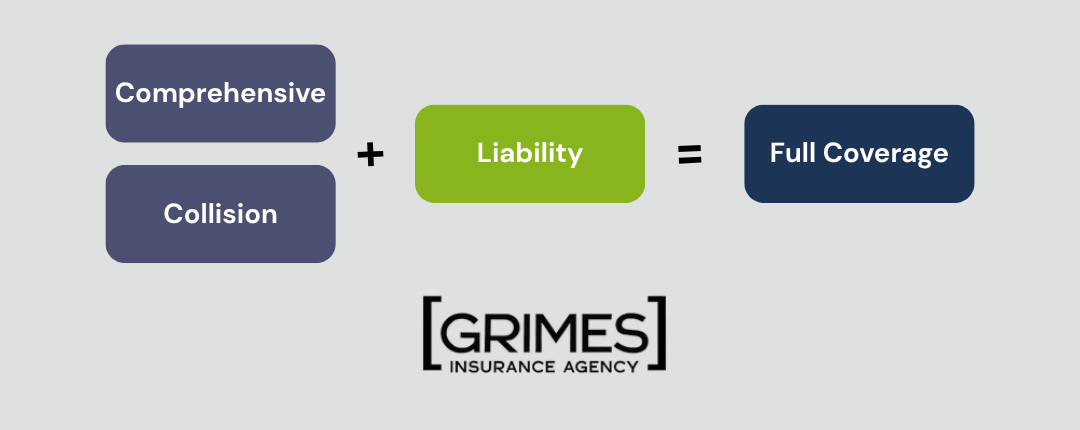
Full coverage combines liability, collision, and comprehensive.
Collision pays for damage to your own vehicle in an accident, regardless of fault.
Comprehensive covers damage from hail, theft, fire, flooding, and animal strikes.
Learn more about how collision and comprehensive coverages compare in this video:
In West Texas, where hail seasons are severe and frequent, comprehensive coverage carries real practical value.
Full coverage shifts the financial risk of losing your vehicle from your pocket to the insurer, which matters most when your vehicle is newer, financed, or critical to your livelihood.
Without it, a hailstorm or at-fault accident becomes a bill you absorb entirely on your own.
Liability vs. Full Coverage Cost Comparison
Liability-only coverage is generally less expensive than full coverage because it only pays for damage or injuries you cause to others. Full coverage costs more because it also includes collision and comprehensive coverage, which help pay for damage to your own vehicle.
Keep in mind that monthly insurance costs vary based on multiple factors, such as your vehicle, driving history, location, coverage limits, and insurer.
Coverage Type |
Covers Your Car? |
Covers Others? |
Best For |
|
Liability Only |
No | Yes | Older, low-value vehicles |
| Full Coverage | Yes | Yes |
Newer, financed, high-value vehicles |
Read our article on How Auto Insurance Premiums Are Calculated to learn more about what affects auto insurance pricing.
When Is Full Coverage Car Insurance Required?
If you are financing or leasing a vehicle, your lender requires full coverage for the life of the loan. If you drop to liability-only, your lender can place force-placed insurance on the vehicle. It will typically be more expensive and structured to benefit the lender, not you.
If your loan balance exceeds your vehicle’s actual cash value, gap coverage might be worth adding. This covers the difference between what your insurer pays and what you still owe.
Many drivers with newer vehicles are unaware that this gap exists until a total loss reveals it.
When Should You Choose Liability Car Insurance?
Liability-only coverage is a reasonable choice in specific situations:
Your vehicle’s value is low.
If your car is worth $4,000 and your deductible is $1,000, the most you could recover from a total loss claim is $3,000. Paying several hundred dollars a year in additional premiums for that recovery may not be worth it.
You own the vehicle outright.
If you can pay the cost of replacing or repairing the vehicle out of pocket without significant financial strain, liability-only may be sufficient.
The annual premium savings are meaningful relative to the vehicle’s value.
If full coverage costs $800 more per year than liability-only and your vehicle is worth $5,000, you would recover the premium difference in roughly six years on a vehicle that may not last that long.
When Should You Choose Full Coverage Car Insurance?
Full coverage makes sense when the financial risk of losing your vehicle outweighs the additional premium cost.
Your vehicle is newer or more valuable.
A total loss on a $35,000 truck is a significant financial event. Full coverage protects that investment.
You could not easily replace the vehicle out of pocket.
If a hail storm or at-fault accident forces you to take on debt to replace your vehicle, full coverage shifts that risk to the insurer.
You drive in high-risk conditions.
West Texas hail exposure makes comprehensive coverage particularly valuable here. Hail claims are frequent, and the repair costs on a single storm event can exceed several years of comprehensive premiums.
Your vehicle is used for business.
Commercial vehicles carry higher liability exposure and are often more expensive to repair or replace. Full coverage on a commercial vehicle protects both the asset and your ability to keep operating.
Personal vs Commercial Auto: One Key Difference
A personal auto policy covers personal use. The moment a vehicle is used regularly for business purposes, such as hauling equipment, transporting clients, or making deliveries, a personal policy may deny the claim on the grounds of business use.
If your vehicle is used for work, it needs a commercial auto policy.
How Grimes Helps Drivers Find the Right Coverage Level
You now know what separates liability from full coverage, when lenders require it, and the specific situations where each option makes sense.
The drivers who end up underinsured are not always the ones who made poor choices. They are often the ones who chose correctly at the time and never revisited it. A paid-off loan, an aging vehicle, or a new work truck all change the calculus.
Before your next renewal, ask whether your current coverage level still reflects your vehicle’s value, your loan status, and how the vehicle is actually being used. If you cannot answer those questions confidently, that is worth resolving before an accident does it for you.
Grimes Insurance Agency has been helping West Texas drivers find the right auto coverage since 1948. We represent multiple top-rated carriers, allowing us to compare and present you with the best coverage options for your situation.
Knowing what coverage you have is important. Knowing what happens when you actually file a claim is the next step. Read How Does Grimes Insurance Agency Handle Claims? so you know what to expect before you need it.
Frequently Asked Questions
Is liability insurance required in Texas?
Yes. Texas requires all drivers to carry minimum liability coverage of 30/60/25. Driving without it can result in fines, license suspension, and personal liability for any damages you cause.
Does full coverage mean I am covered for everything?
No. Full coverage refers to a combination of liability, collision, and comprehensive coverages. It does not cover mechanical breakdowns, personal belongings inside the vehicle, or certain excluded events. Review your policy with a Grimes Insurance team member to understand what is and is not covered.
Can I switch from full coverage to liability-only at any time?
If you own the vehicle outright, yes. If you are financing or leasing, your lender requires full coverage, and dropping it would violate your loan agreement.
How does my deductible affect my full coverage premium?
A higher deductible lowers your premium. A lower deductible raises it. Choose a deductible you could comfortably pay out of pocket after a loss.
Do I need a separate policy for a vehicle I use for work?
If the vehicle is used regularly for business purposes, yes. A personal auto policy may not cover claims that arise from business use. A commercial auto policy is the correct coverage for business vehicles.
Disclaimer: The information provided in this article is for general informational purposes only and does not constitute legal, financial, or insurance advice. Coverage options, terms, and availability may vary. Please consult with a licensed professional for advice specific to your situation.

 Leaving your home for an extended period of time, whether for a vacation or as a snowbird seeking warmer climates, requires careful preparation to ensure the safety and security of your property. The last thing you want is to return to a home damaged by a burst pipe or burglarized. To protect your home and give yourself peace of mind while you’re away, follow this comprehensive checklist:
 “I was involved in an accident, and to make matters worse, the other party doesn’t have insurance.” It’s a frustrating and stressful situation that no one wants to experience. However, there are measures you can take to protect yourself from such incidents. One important aspect is having the right insurance coverage, specifically uninsured motorist coverage, which can provide you with the necessary financial support in these unfortunate circumstances.