What to Expect When Shopping for Home Insurance with Grimes

Most people don’t think about home insurance until a lender tells them they need it. Suddenly, you’re juggling a closing date, a mortgage application, moving logistics, and finding the right home insurance option all at one time.

It’s overwhelming to say the least. If you’ve fallen victim to home insurance stress, rest assured that you’re not the only one. 

But it doesn’t have to stay that way. At Grimes Insurance Agency, we have guided Lubbock homeowners through this process since 1948, step by step. 

By the end of this article, you will know exactly what to expect when buying a home insurance policy with Grimes. We will walk you through each part of the process, from the first conversation to the moment your policy is effective.

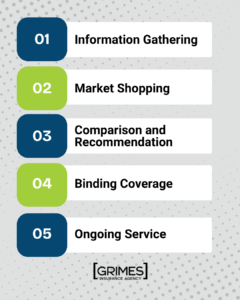
What Are the Steps to the Home Insurance Shopping Process?

Graphic depicting the 5 steps of the insurance quote process

Step 1: Starting the Conversation With Grimes

Most homeowners come to us at one of two points: right after they have put an offer in on a home, or once they already have a contract and are waiting on a closing date. Homeowners might also be working with a lender or realtor to help them find the right home coverage. 

Wherever you are in the process, we work with your timeline, not against it. Our team works with multiple local lenders and realtors, making Grimes Insurance Agency a trusted resource in evaluating home insurance.

You can also start a quote at any time by completing the online quote form found on our website.

Step 2: Grimes Gathers Important Information

Getting accurate quotes means getting accurate information. To help you find the best coverage, we’ll ask you for varying information about:

You:

Your Home:

Full name

Property address

Date of birth

House and construction type

Gender

Roof age and condition
Marital status

Square footage

Driver’s license number

Occupancy details

Basic contact information

While you’ll provide most of this information in your quote form, your Grimes agent might also ask you to share additional information about your home’s amenities and features. 

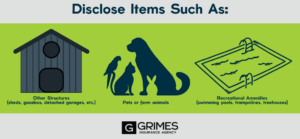
Do you have a pool? A shed? Pets? Maybe even chickens? If so, it’s important information to disclose. 

Graphic outlines of a shed, group of animals and a swimming pool with overlay text "Disclose Items Such as:"


Why is this information important?

Insurance premiums, coverages, and quote options are all influenced by the information you provide. Multiple factors can affect the policy options available to you. 

For example, let’s say you do have 10 chickens that roam your property. Or maybe, you’ve built a backyard guesthouse for when your in-laws visit. Excluding such information from your quote risks your policy being denied. Some carriers have specific rules regarding amenities and acreage, which makes asking specific questions all the more important. 

Now, this doesn’t necessarily mean you need to tear down the shed and rehome the chickens. But it does mean you should share the information with your agent so that you can discuss your options. There are additional coverage options that may help you protect your amenities, animals, and acreage, without risking your homeowner’s policy.

Remember, we ask because it matters, and we would rather catch it early than have an insurance carrier decline later in the process. 

Step 3: Grimes Shops Multiple Insurance Providers

This is where we put our detective skills to use.

Once we have your information, we begin comparing quotes from the multiple insurance carriers Grimes Insurance represents

As an independent insurance agency, we are not limited to a single company. While your homeowners policy will come from a specific insurance carrier (like Allstate or Liberty Mutual), we help you look for the best options. We can review multiple carriers at once to see which are willing to insure your home, the coverages they offer, and how their premiums compare. 

This is an important step, because not many homeowners understand their options before buying. 

Curious how independent agents differ from other types of agencies? Read more about How Independent Agencies Work.

During this time, we are also looking for all available discounts, eligibility, and reviewing which premium options best fit your home’s situation. 

While discounts can vary from state to state, you might be eligible for a discounted premium when purchasing a home in Texas. Some of these savings options include: 

  • Bundling your home and auto policies
  • Equipping your home with security systems
  • Maintaining a claim-free history

Your claims history plays a larger role than you might realize. Watch this video to understand how insurance providers review your history and how it can affect your coverage options and discounts:

The goal isn’t simply to find the lowest price, but the best coverage option that keeps you and your home protected. 

After all, the cheapest policy is not always the best value. A lower premium may come with higher out-of-pocket costs, fewer coverage options, or a carrier that is more difficult to work with during a claim. 

Once we have reviewed the available options (aka, double and triple-checking all information), we’ll narrow the results down to your best options and share them with you before walking through each one together.

Step 4: Reviewing Your Coverage Options

This is where we pass the baton back to you– but don’t fret, we’ll walk you through each option before you make a decision.

Insurance policies can contain unfamiliar terms, coverage limits, and endorsements that are difficult to evaluate on your own. Rather than simply sending over a quote and asking you to choose, we take the time to explain what each coverage does and how it may impact you after a loss. 

Some of the most common coverages you’ll review include:

  • Dwelling coverage: Helps pay to rebuild your home after a covered loss.
  • Personal property coverage: Helps cover belongings inside your home.
  • Loss of use coverage: Helps pay for temporary living expenses if your home becomes uninhabitable after a covered claim.
  • Optional endorsements: Additional coverage options that may provide protection beyond what’s included in your standard policy.

Before you reach this step, take the time to review How to Evaluate Home Insurance Quotes to prepare you to make a more informed decision. 

Step 5: Choosing Your Policy and Getting Coverage in Place

Once you have reviewed your options and chosen the fit, your Grimes agent will finalize your policy with a coverage effective date that aligns with your closing date. For most homeowners, the push to find home insurance comes from their lender. When that’s the case, your insurance information is sent directly to your lender and added to your escrow account as part of your monthly mortgage payment. 

How Long Does the Process Take?

If all information is accurate and verifiable, quotes can be reviewed within hours of the initial conversation with your agent. 

Your coverage effective date will align with your closing date (the day you officially take ownership of your home). Some homeowners come to us months before their closing date, or three days before closing. While it’s best to shop for insurance a month in advance to avoid coverage issues, many coverages can begin within days of shopping. Most lenders require purchasing insurance before closing, so it’s important to communicate with your mortgage lender as you shop.

Step 6: Life as a Grimes Client

Buying your policy is just the beginning of the relationship. 

Once your coverage is in place, we will remain available to you throughout the life of your policy. If you run into claims or policy changes, we will help you walk through each situation.

It’s important to remember that home insurance is not a “set it and forget it” purchase. After beginning your policy, you will be transferred to our department dedicated to existing customers. At every renewal, the retention team personally reviews your policy and re-shops it across our insurance carrier network, ensuring you are still receiving the best rate and coverage. 

Getting a Home Insurance Quote With Grimes

Purchasing homeowners’ insurance can feel overwhelming, especially for first-time buyers. Between lender requirements, coverage options, and comparing quotes, there is a lot to keep track of.

However, instead of wondering what comes next, you now have what you need to be prepared. You know the steps, the information you’ll need, and how your agent will help evaluate your options along the way– and that makes all the difference. 

At Grimes Insurance Agency, our goal is to make the process easier. For the past 78 years, our passion for educating customers has helped West Texans make insurance decisions they feel good about. Transparency about the process, from beginning to end, makes all the difference.

Ready to get started? Request a quote with Grimes Insurance Agency. We’ll help you compare your options, understand your coverage, and find a policy that fits your home’s needs before closing day.

Home Insurance vs. Home Warranty: What’s the Difference?

Are you trying to figure out whether you need home insurance, a home warranty, or both, but aren’t entirely sure what the difference is?

If your roof was damaged in a hailstorm and your refrigerator broke down in the same week, do you know which product would cover each? For many homeowners, that distinction isn’t clear until something breaks.

Confusing the two terms is a common mistake, and one that can lead to real financial pain: You treat a $6,000 hail repair as a home warranty claim that only covers mechanical failures. Or, you file an HVAC breakdown under a home insurance claim… only to discover it is excluded.

By the time the denial arrives, the cost is already yours… and it usually isn’t cheap.

At Grimes Insurance Agency, we have been helping West Texas homeowners navigate home coverage decisions since 1948. We work with homeowners who are confused about the overlap, and more importantly, the gaps between these two products every week.

In this article, you will learn:

  1. What home insurance covers
  2. What a home warranty covers
  3. Where each one falls short
  4. How to evaluate whether you need one, the other, or both

What Does Home Insurance Cover?

Home insurance covers sudden, accidental losses caused by specific perils. It is not optional if you carry a mortgage. Your lender requires it for the life of the loan. 

A standard homeowners policy covers four primary areas:

Your home’s structure 

Damage to your walls, roof, foundation, and permanently attached systems from covered perils like fire, lightning, windstorm, hail, vandalism, and theft.

Personal property 

Your belongings inside the home are covered against the same perils. High-value items, such as jewelry and electronics, may have sublimits.

Liability protection 

If someone is injured on your property and sues, home insurance covers legal defense costs, medical bills, and judgments up to your policy limit.

Additional living expenses 

If a covered loss makes your home uninhabitable, it pays for temporary housing and related costs while repairs are completed. A good rule of thumb is to ensure the limit is sufficient to cover several months of housing costs if you were displaced.

Home insurance does not cover mechanical breakdowns, normal wear and tear, or appliance failures, regardless of the cost of repairs.

In West Texas, home insurance is particularly important due to the region’s severe hail exposure. A single hail event can cause $3,000 to $8,000 in roof and exterior damage. Most Lubbock policies include a separate wind and hail deductible of 1 to 2 percent of the dwelling value. 

Interested in learning more about how risks and perils affect your home insurance? Watch this video to understand the differences between the two:

What Does a Home Warranty Cover?

A home warranty is a service contract that covers the repair or replacement of major home systems and appliances when they break down due to normal wear and use. It is optional and purchased separately. 

A standard home warranty typically covers:

Major systems 

HVAC, electrical, plumbing, and water-heater failures due to normal wear and use.

Appliances 

Refrigerator, dishwasher, oven, washer, and dryer breakdowns.

What it does not cover 

Pre-existing conditions, improper installation, cosmetic damage, code violations, or damage caused by external events like storms, fire, or flooding.

Exclusions like these are why getting a thorough home inspection before purchasing a home is so important. Inspections can help identify existing issues that a home warranty or standard home insurance policy likely won’t cover.

Home warranties typically cost $400 to $700 annually and charge a service fee of $75 to $150 per claim. Coverage terms vary significantly by provider; reading the contract before purchasing is essential.

When Does Home Insurance Apply vs. a Home Warranty?

The simplest way to understand the difference is this:

Insurance is for things outside of your control. A fire starts, the house floods, or hail destroys the roof. 

A home warranty is designed to cover mechanical systems and appliances that fail due to normal wear and tear. This includes items such as your water heater, main appliances, and HVAC system.

Both products ultimately get things fixed, but they are not the same when it comes to who fixes them and what triggers the coverage. 

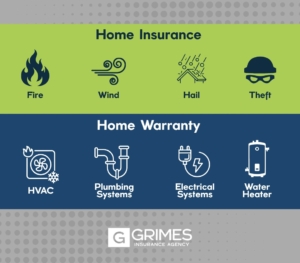
Graphic comparison of what home insurance vs. home warranty covers, information from text.


A home warranty covers mechanical failures due to age and use. Home insurance responds to sudden damage from external events.

These are different triggers, and neither product fills the other’s gap.

What’s Not Covered Under Home Insurance and Home Warranties?

Home insurance gaps

Home insurance does not cover mechanical breakdowns or gradual deterioration. If your HVAC system fails on a 100-degree July day, your home insurance policy will not pay for the repair or replacement, regardless of the cost. The same applies to your water heater, refrigerator, or any other system that fails due to age.

Home warranty gaps

Home warranties do not cover damage from external events. If a hailstorm damages your roof or a fire destroys your kitchen, a home warranty will not cover the damage. Home warranties also frequently contain exclusions for pre-existing conditions, improper maintenance, or systems that have not been properly serviced. 

The gap between them

Neither product covers everything. A homeowner with only home insurance is exposed to mechanical failures. A homeowner with only a home warranty is exposed to storm damage and structural losses. The overlap between the two is minimal. They are designed to cover entirely different risks.

How Can You Tell if You Have a Home Insurance Gap? 

If you have home insurance but no home warranty and your HVAC is fifteen years old, you have a gap. If you have a home warranty but minimal or outdated home insurance, you have a bigger problem.

Do You Need Home Insurance and a Home Warranty?

For most homeowners, yes, but for different reasons.

Home insurance is not optional if you carry a mortgage. Your lender requires it, and failing to comply violates your loan agreement. Even for homeowners who own their property outright, the financial exposure from fire or a liability judgment makes home insurance a practical necessity.

A home warranty is optional but worth evaluating based on your home’s age and the condition of its systems.

If your home has older systems or appliances that are more likely to require repairs, a home warranty may be worth considering. However, coverage varies by provider, and some companies may limit coverage based on your home’s systems. 

For a newer home with systems still under manufacturer warranty, an additional home warranty may add limited value. For a home with an aging HVAC, older appliances, or a water heater approaching the end of its life, a warranty can prevent a single mechanical failure from becoming a multi-thousand-dollar out-of-pocket expense.

The more important question is whether you understand what each product does and does not cover before you need to file a claim. 

Home Insurance vs Home Warranty: Side-by-Side Comparison

Home Insurance
Home Warranty
What it Covers Sudden damage from perils Mechanical breakdown from wear
Is it Required? Yes, with a mortgage No
Typical Annual Cost $1,400- $1,800 in Texas $400- $700
Covers Storm Damage? Yes No
Covers Liability? Yes No
Covers Gradual Wear? No Yes
Covers Appliance Failure? No Yes

Get the Right Coverage for Your Home

You now understand the difference between home insurance and a home warranty, where each one applies, and where each one falls short. Because home insurance and home warranties cover different risks, most homeowners choose to carry both. Whether a home warranty makes sense depends on factors such as your home’s age, the condition of major systems, and your ability to pay for unexpected repairs.  

Grimes Insurance Agency has been helping West Texas homeowners build complete home coverage since 1948. We represent multiple top-rated carriers and will review your current home insurance policy to ensure the coverage you carry actually fits your home and situation.

Are you ready to make sure your home is fully protected? Before requesting a quote, explore your Lubbock home insurance options and learn how local coverage can be made easy.


Frequently Asked Questions

Is a home warranty the same as home insurance? 

No. Home insurance covers sudden damage from specific perils, such as fire, storm, and theft. A home warranty covers mechanical breakdowns of systems and appliances from normal wear and use. 

Do I need both home insurance and a home warranty? 

Home insurance is required if you carry a mortgage. A home warranty is optional but worth considering if your home has aging systems or appliances. Most homeowners benefit from carrying both since the two products cover entirely different risks.

How much does a home warranty cost in Texas? 

Home warranties typically cost $400 to $700 annually in Texas, plus a $75 to $150 service fee per claim. Coverage terms vary significantly by provider.


Disclaimer: The information provided in this article is for general informational purposes only and does not constitute legal, financial, or insurance advice. Coverage options, terms, and availability may vary. Please consult with a licensed professional for advice specific to your situation.

How Much Does Home Insurance Usually Cost in Lubbock?


Quick Answer:

Home insurance in Lubbock typically ranges from under $1,000 per year for new, lower-value homes to $3,000-$4,000 or more for higher-value or older properties. Texas homeowners pay significantly more than the national average due to frequent hail and wind exposure.

Your exact premium depends on factors like your home’s age, roof condition, replacement cost, deductible structure, claims history, and credit-based insurance scoring.


Are you paying too much for home insurance?

Are you unsure if your current coverage is actually enough to protect your home?

Most homeowners in Lubbock don’t have a clear benchmark for what “normal” insurance costs look like. That uncertainty often leads to one of two problems: overpaying for coverage they don’t understand, or being uninsured when a major loss occurs.

Grimes Insurance Agency has been helping Lubbock homeowners navigate home insurance since 1948. As an independent agency, we work with multiple carriers to compare real pricing differences so you can see what coverage actually costs in today’s market. 

By the end of this article, you’ll understand what you should actually be paying in Lubbock and how to lower it without reducing coverage. 

We will specifically cover:

  1. What home insurance typically costs in Lubbock
  2. What is driving your specific rate up or down
  3. Five ways to lower your premium without reducing protection

What Does Home Insurance Cost in Lubbock?

Home insurance in Lubbock typically costs between $1,000 and $4,000 per year. Most homes fall between $1,500 and $3,000, depending on age, roof condition, and coverage limits. 

Home insurance in Texas is more expensive than the national average. Bankrate’s 2025 data reported an average annual premium of $3,899 in Texas for $300,000 in dwelling coverage, compared with a national average of 2,424. Texas homeowners pay roughly 60 percent more than the national average, primarily due to severe weather exposure (can you say West Texas wind and hail?)

Based on policies we’ve reviewed in the Lubbock market, a 2026 new build valued at $200,000 might come in under $1,000 a year. A higher-value new build at $700,000-$800,000 could run $3,000-$4,000. Older homes at similar values often land on the higher end due to age and risk factors.

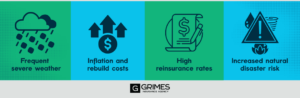
In Lubbock, your actual premium will depend heavily on your roof, deductible structure, claims history, credit-based insurance score, and the insurance carrier pricing your home. The Texas Panhandle faces frequent severe hail and wind risk, which pushes premiums and deductibles higher than in most parts of the state.

The range between the lowest and highest premiums for similar homes in the same ZIP code can be significant. That gap is why shopping across multiple carriers matters more here than in most markets. 

What Factors Increase Home Insurance Costs in Lubbock?

Your Home’s Age and Construction

In our experience, homes built before 1970 get a more careful review before approval. This is because outdated electrical and plumbing systems can increase the likelihood of a claim. In some cases, we’ve seen age affect whether clients can receive coverage at all.

Insurance carriers have refused to insure a home until specific upgrades are made. For example, a recent client insuring their Lubbock home was denied coverage for their 1950s home until they replaced an outdated fuse box. 

What your house is made of can make a world of difference, too. Carriers also consider your home’s framing and materials. For instance, wood frame construction carries a higher fire risk than brick or masonry.

The older the home is, the more of a risk it can be, which often results in a higher premium.

Your Roof

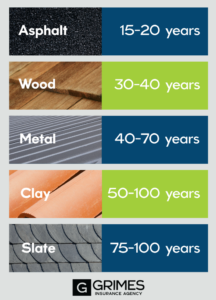
Roof age and condition can directly affect both your premium and your coverage terms. As roofs age, some insurers switch roof claims from replacement cost to actual cash value, or restrict coverage on older roofs entirely. Replacing your roof with impact-resistant shingles rated Class 3 or higher may qualify for a premium discount. In Texas, Class 4 roofs receive the highest available credit when the insurer recognizes the product. 

Wind and Hail Deductibles

Standard policies in Lubbock separate the wind and hail deductible from your base deductible. That separate deductible often runs 1 to 2 percent of your dwelling’s value. 

Let’s say your home has a dwelling amount equal to $300,000. You decide on a 2% wind and hail deductible, making your fixed out-of-pocket cost for such a claim $6,000.

So, if the home was damaged in a hailstorm and repairs cost $9,000, you would pay up to $6,000 for the claim, and your insurance provider would pay the remaining $3,000.


Dwelling Amount

1% Deductible 2% Deductible

$200,000

$2,000 $4,000
$300,000 $3,000

$6,000

$500,000 $5,000

$10,000

Your Coverage Limits

Replacement costs reflect what it would actually cost to rebuild your home from the ground up at current labor and material prices. In West Texas, that number is often higher than the market value, and insuring below it leaves you with a gap if you ever need to rebuild. 

Your Claims History and Insurance Score

How often are you filing insurance claims? While insurance is built to protect you in such instances, a recent and frequent claims history can raise your premium or limit your options at renewal. Texas insurance carriers are also permitted to use credit-based insurance scores as a rating factor. A strong credit profile can meaningfully lower your premium. A poor one can raise it. 

Curious about what affects your insurance score? Watch this video to learn what you can do to keep your score in check. 

 Your Location Within Lubbock

Proximity to a fire station, flood zone designation, and neighborhood loss history all factor into carrier pricing. Location-based risk factors vary by insurer and are not always disclosed when purchasing a policy. This is why working with an independent agent who knows the local market matters. 

Are you curious about what makes working with an independent agency different? Take the time to read and learn more about the benefits of working with an independent agent.

What Kind of Home Insurance Coverage Do I Need?

Dwelling Coverage

Dwelling coverage is the amount insurers pay for damage caused during a covered incident. This coverage reflects your home’s replacement cost, which is how much it would cost to repair your home based on the current price of supplies and labor.

It’s important to remember that this amount is not the same as your home’s current market value, or what you originally paid for it. The gap between those numbers is larger than most homeowners expect.

For example, imagine the house you bought 25 years ago for $250,000 suddenly caught fire and burned to the ground. Due to the inflationary price of labor and materials, rebuilding your home could now cost $380,000 or more. Working with a local contractor or your insurance agent to stay up to date on current labor and material rates can help you accurately estimate your rebuild cost over time. 

Personal Property Coverage

This coverage can protect your personal items within your home and typically defaults to 50 or 70 percent of your dwelling limit. However, high-value items such as jewelry, electronics, and firearms often have per-item sublimits well below their actual value. Higher-value items can be scheduled separately as an add-on (also known as an endorsement) to your current home insurance policy.

Keep in mind that while endorsements can create additional coverage, not all add-ons provide a consistent payout. Read Homeowners Insurance Add-Ons That Rarely Pay Off before adding an endorsement to your policy.

Liability Coverage

This protects you if someone is injured on your property and sues. The standard $100,000 limit is a common starting point, but many homeowners should consider a limit of at least $300,000. Opening a personal umbrella policy can extend that protection further for a relatively small additional premium.

Additional Living Expenses

This coverage pays for temporary housing if your home is uninhabitable after a covered loss. A good rule of thumb is to ensure the limit is sufficient to cover several months of housing costs if you were displaced.

5 Ways to Lower Your Home Insurance Cost in Lubbock

  1. Install impact-resistant roofing: Class 4-rated shingles may qualify for some of the largest roof-related insurance discounts in Texas, depending on the carrier.
  2. Raise your deductible: A higher deductible can lower your premium, but make sure you can comfortably afford the out-of-pocket costs after a claim.
  3. Bundle home and auto: Combining policies with one carrier can often unlock multi-policy discounts.
  4. Improve your home’s security: Features like monitored systems, smoke detectors, and deadbolts may qualify for insurance discounts.
  5. Shop your policy at renewal: Home insurance rates change over time, so comparing quotes at renewal can help you find better coverage or pricing. 

Learn more about how to save on your premiums and which savings options are available for you. 

How Grimes Helps Lubbock Homeowners Find the Right Home Insurance Rate

Finding and paying the appropriate rate for home insurance can be overwhelming. It involves multiple factors in a constantly changing market, leaving homeowners in the dark about what they’re paying for. 

However, this guide has helped shed some light on the home insurance process. You now know what home insurance typically costs in Lubbock, what raises your rates, and have five specific actions that can help you lower your rates without sacrificing protection. 

Before your next renewal, ask yourself:

  • Does my dwelling coverage reflect my current replacement cost?
  • Do I know how much I’m paying for my wind and hail deductible?
  • Does my current insurance carrier still offer the most competitive option for my coverage situation?

If you cannot answer those questions with confidence, it may be time to review your home insurance policy.

Grimes Insurance Agency has been helping Lubbock homeowners compare home insurance options since 1948. We represent multiple insurance carriers and can help you compare real pricing differences for your specific home and location. 

Before requesting a quote online, read our guide on how to evaluate a home insurance policy so you can make a more informed decision.


Frequently Asked Questions

What is the average home insurance cost in Texas? 

Bankrate reports a Texas average of $3,899 per year for $300,000 in dwelling coverage, compared with a national average of $2,424. Your Lubbock premium will vary based on your home’s age, roof condition, claims history, and the coverage limits you carry.

Why is home insurance more expensive in Lubbock than in other parts of the country?

Lubbock and the Texas Panhandle face frequent severe hail and wind events. Carriers price that weather exposure into every policy written here, which pushes premiums above the national average.

What is a wind and hail deductible? 

A separate deductible that applies specifically to wind and hail claims, independent of your base deductible. It typically runs 1 to 2 percent of your dwelling’s value and is standard in most Lubbock policies.

Should I insure my home for its market value or replacement cost? 

Replacement cost. Market value reflects what a buyer would pay for your home. Replacement cost reflects what it would actually cost to rebuild it. In Lubbock, those numbers often differ.

Does bundling home and auto insurance always save money? 

Not always. Multi-policy discounts are real, but bundling does not guarantee the lowest combined rate. An independent agent can compare bundled and unbundled pricing across carriers to find the best overall value.

Disclaimer: The information provided in this article is for general informational purposes only and does not constitute legal, financial, or insurance advice. Coverage options, terms, and availability may vary. Please consult with a licensed professional for advice specific to your situation.