The Best Car Insurance Options for Teen Drivers in West Texas
Quick Answer:
For most families with a teen driver, the best insurance setup includes higher-than-minimum liability limits, collision, comprehensive, and uninsured motorist coverage. Adding your teen to your existing policy, choosing an appropriate vehicle, and taking advantage of available discounts can help manage the higher premium without creating coverage gaps.
Adding a teen driver to your car insurance can be one of the biggest premium increases your family faces. It tends to be a juggle between maintaining a manageable price and determining which coverage setup gives your family the protection you need.
A 16-year-old can double or triple your policy cost overnight, adding $3,211 a year on average. Most families respond by looking for ways to cut coverage and reduce the number of policies. However, that’s the wrong move.
The families who end up with the best outcome are the ones who understand which coverage is non-negotiable, which options are genuinely flexible, and which discounts actually move the needle.
At Grimes Insurance Agency, we help West Texas families structure teen-driver coverage every week. We see the same mistakes repeatedly, and we see which setups protect families and which ones leave them exposed. We’ve been determined to help families get this right since 1948.
In this article, we’ll break down:
- The best coverage setup for your teen driver
- The best way to structure your policy
- The best ways to lower the added
Why Does Teen Driver Insurance Cost So Much?
You’re not the only one asking this question. It’s a common curiosity our clients have.
The fact is this: teen drivers (between ages 16 and 19) are statistically involved in accidents nearly three times more than drivers over 20. Insurance carriers price that statistical risk into every policy the moment a teenager is added. The premium increase may not be negotiable, but the coverage decisions you make around it are.
Let’s review what we consider some of the best options together.
What Makes a Teen Driver’s Insurance Coverage “Best”?
“Best” doesn’t necessarily mean the cheapest policy.
For this article, we consider the best teen-driver setup to be the one that provides strong protection against the financial risks a young driver is most likely to create while giving the family reasonable ways to manage the additional premium.
That means we’re looking at four things:
- Protection: Does the coverage adequately protect your household if there’s a serious accident?
- Vehicle exposure: Does the policy protect the vehicle your teen actually drives?
- Local risk: Does the coverage account for risks common to West Texas, such as severe weather?
- Cost management: Can you reduce the premium through discounts, vehicle selection, deductibles, or carrier comparisons without eliminating important protection?
We recently helped a household with three teenage drivers find their best coverage. In their case, removing rental reimbursement coverage made sense because they had additional vehicles at home. In those situations, Grimes Insurance Agency can help you find ways to reduce your premium while still keeping other important protections in place.
What is the Best Teen Car Insurance Option?
For most families, the best coverage setup combines four important types of protection:
- Higher-than-minimum liability limits
- Collision coverage
- Comprehensive coverage
- Uninsured motorist coverage

It seems like a lot, but we’ll help you break it all down. Here’s why each one earns a place in our recommended setup.
What Liability Limits Should a Teen Driver Have?
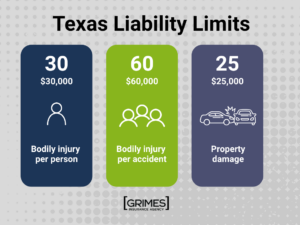
In Texas, drivers are required to purchase minimum liability insurance, commonly expressed as 30/60/25. This includes at least:
- $30,000 per person for bodily injury
- $60,000 per accident for bodily injury
- $25,000 for property damage
However, those minimums may not provide enough protection for a household with a teen driver. A serious accident can result in medical bills, property damage, or other losses that exceed minimum limits.
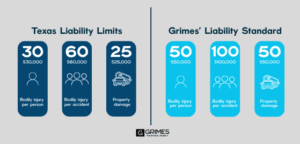
At Grimes Insurance, our liability standard for clients is 50/100/50.
That means $50,000 per person for bodily injury, $100,000 per accident for bodily injury, and $50,000 for property damage.
The Insurance Information Institute (III) recommends an even higher minimum liability coverage of 100/30/100 when adding a teen driver.
Why this is our best option: A teen driver’s increased accident risk makes adequate liability protection especially important. The goal isn’t to assume your teen will cause an accident; it’s to make sure your family is prepared if an unexpected accident happens.
Should a Teen Driver Have Collision Coverage?
Collision coverage involves vehicle damage caused by colliding with another object. This includes other vehicles, road signs, buildings, trees, and other types of property.
Because teen drivers have less experience behind the wheel, we consider keeping collision coverage one of the strongest protection choices for a vehicle a teen regularly drives.
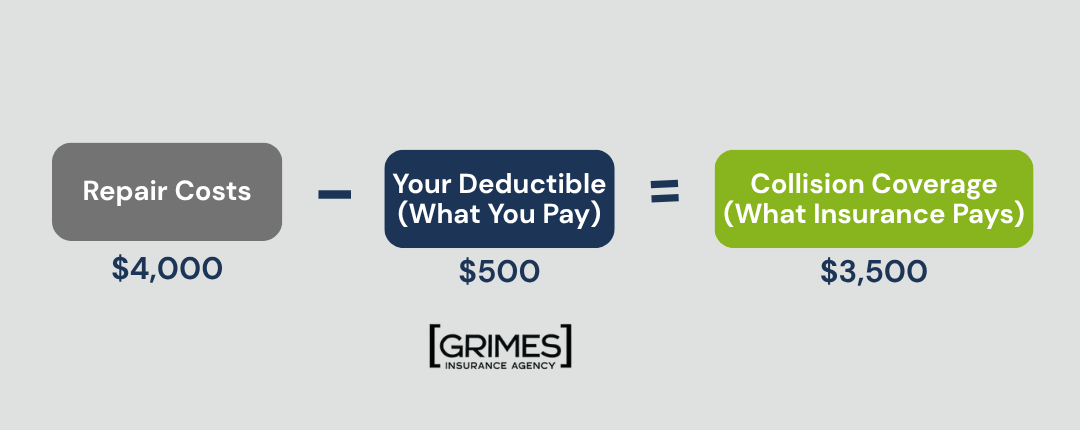
Dropping collision coverage may lower the premium, but it also means your family could be responsible for the vehicle’s repair or replacement costs after a covered accident.
Why this is our best option: The premium savings from dropping collision coverage may not justify the financial exposure if your family can’t comfortably replace or repair the vehicle.
Is Comprehensive Coverage Worth It for a Teen Driver?
Comprehensive coverage protects against damage that isn’t caused by a collision, including weather, theft, and other covered events.
For West Texas families, hail and dust weather deserves special consideration.
Comprehensive coverage isn’t legally mandatory simply because you live in West Texas, but our region’s hail exposure makes it an important coverage to think about.
In our experience, we’ve seen a single storm can cause $3,000 to $8,000 worth of damage. However, annual comprehensive premiums are typically cost-effective, running a little over $134 per year.
Why this is our best option: If your teenager’s vehicle is exposed to frequent severe weather, saving money by dropping comprehensive insurance can create a much larger financial risk than the premium savings.
Does a Teen Driver Need Uninsured Motorist Coverage?
Uninsured motorist coverage is designed to help cover any injuries caused during an accident involving an uninsured driver, and many drivers are quick to remove it to save on their premium.
However, one in eight Texas drivers carries no insurance (ouch). If one of them hits your teen, uninsured motorist coverage pays for the damage and injuries that would otherwise come out of your pocket.
Why this is our best option: Your teen’s insurance protection shouldn’t depend entirely on the other driver having adequate coverage.
Interested in adding uninsured coverage to your auto policy? Watch this video to first understand your rights in an uninsured driver accident before discussing with your agent:
The Best Options for Structuring Teen Driver Coverage
Should You Add Your Teen to Your Existing Car Insurance Policy?
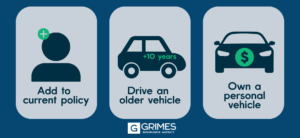
For most families, the best starting point is adding their teen to the existing family auto policy. Your current multi-car, bundling, and other applicable discounts may help offset part of the teen-driver surcharge.
Why this is our best option: Keeping the teen on the family policy is often the simplest way to maintain the household’s existing coverage structure while taking advantage of discounts already available to you.
That doesn’t mean your insurance company will always offer the lowest price. Teen-driver pricing can vary significantly between insurance carriers, so it’s helpful to research before settling with your current policy.
If you’re interested in comparing cost options, Grimes Insurance Agency can help you shop across carriers. We’d love to help you review your coverage and find your best option.
Should Your Teen Drive an Older Vehicle?
If your family has multiple vehicles, consider which one your teen will regularly drive.
Assigning your teen to an older, lower-value vehicle can reduce the collision and comprehensive premium compared with assigning them a newer or more expensive vehicle.
Now, this doesn’t mean the oldest vehicle in the driveway is automatically the best choice. Safety features, reliability, condition and whether the vehicle is appropriate for a new driver should all be considered.
Why this is our best option: It can reduce the cost of insuring a teen without eliminating important coverage.
What if Your Teen Owns Their Own Vehicle?
If the vehicle ownership belongs to your teenager, it changes the dynamic. Most insurance companies require teenagers who own their vehicle to purchase a separate policy, apart from their parents. However, the process of doing so is often expensive and requires a co-sign from a parent.
What are the Best Ways to Lower Teen Driver Insurance Costs
Once you’ve established the coverage your family needs, look for discounts and policy changes that lower the premium without sacrificing important protection. Some of the top savings strategies we recommend include:
1. Ask About a Good Student Discount
Most carriers offer this for teens who maintain a B average or higher. We consider this one of the simplest discounts for eligible teen drivers to look into.
Requirements vary by carrier, so confirm what documentation and grade requirements apply to your policy.
2. Ask About Driver Education Discounts
Completing an approved driver education course also qualifies for premium credits with most Texas carriers.
Before paying for a course specifically to receive an insurance discount, confirm with your agent that the course qualifies with your carrier.
Some courses that may be worth looking into include:
- Drive Safe (endorsed by the National Safety Council)
- Aceable
- Texas Driving Safety
The Texas Department of Licensing and Regulation (TDLR) maintains information about approved driver education providers.
3. Consider a Telematics Program
Usage-based programs (also known as telematics) monitor driving behavior and may reward qualifying drivers with discounts over time.
This can be one of the better options for families whose teen consistently demonstrates safe driving and who are comfortable with the program’s monitoring.
Before enrolling, understand what the program tracks and how the carrier uses that information:
4. Consider a Higher Deductible
Raising the collision deductible on an older assigned vehicle can reduce the premium without removing the coverage.
This option is best for families that could comfortably pay the higher deductible if an accident occurred.
A lower premium isn’t worth much if your household can’t afford the out-of-pocket expense after a claim.
Finding the Best Teen Car Insurance With Grimes
Adding a teen driver can create a significant increase in your insurance premium, but the lowest premium isn’t necessarily the best outcome.
The best setup balances strong protection with practical ways to manage the added cost.
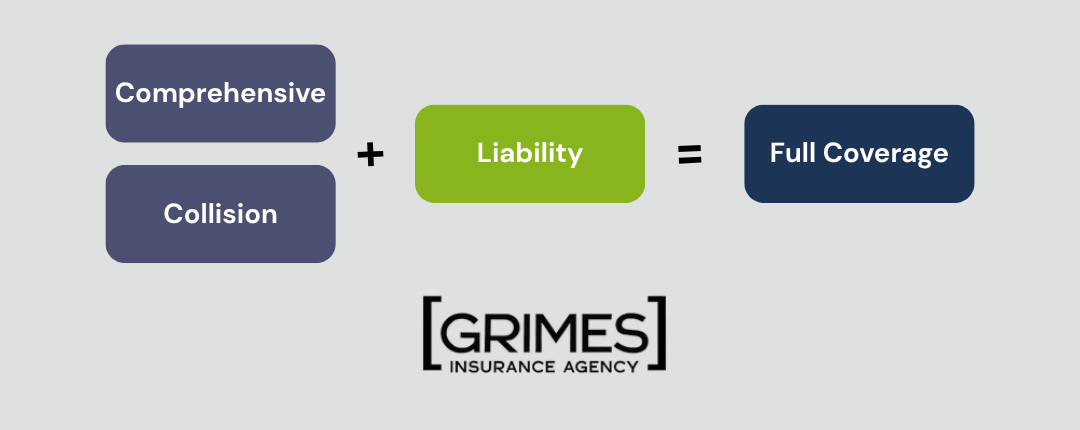
For most West Texas families, that means full coverage with higher liability limits, uninsured motorist coverage, adding the teen to the existing policy when it makes sense, and assigning the teen to an appropriate vehicle.
If you’re trying to figure out what works right for you, give us a quick call. We can provide some free advice on which direction to lean. And even if you don’t work with us, we want you to feel equipped to find and get the best insurance possible.
If you’re still unsure and want to learn more about managing coverage costs, read 7 Ways to Lower Your Car Insurance to understand which changes can reduce your premium without creating new coverage gaps.
Grimes Insurance Agency has been helping West Texas families structure teen driver coverage since 1948. If you want help comparing coverage, deductibles, and carrier pricing for your household, our team can help you review your options.
Frequently Asked Questions
How much does adding a teen driver to your car insurance policy increase your premiums?
Adding a teen typically increases a family’s premium by 50 to 100 percent or more, depending on the carrier, the teen’s age, and the vehicle they drive.
Should a teen driver have their own policy or be added to the family policy?
For most families, adding the teen to the existing policy costs less. A separate policy makes more sense when the teen owns their own vehicle.
What is the best car insurance coverage for a teen driver?
Full coverage, which is liability at higher-than-minimum limits, collision, comprehensive, and uninsured motorist, is the best setup for most teen drivers. The goal is not the lowest premium but the coverage that performs when a teen’s higher accident risk results in a claim.
Disclaimer: The information provided in this article is for general informational purposes only and does not constitute legal, financial, or insurance advice. Coverage options, terms, and availability may vary. Please consult with a licensed professional for advice specific to your situation.