
How is Insurance Risk Calculated?
Quick Answer: Insurance companies calculate risk by estimating how likely you are to file a claim and how expensive that claim could be. Factors like your home’s condition, driving history, location, and insurance score all influence how carriers evaluate your risk. While you cannot control every factor, understanding these details can help you make better insurance decisions and potentially improve your risk profile over time.
When you receive an insurance quote, it can feel like your premium number appears out of thin air.
Why does one home cost more to insure than another? Why can two drivers with similar vehicles receive completely different rates? Why does one insurance company accept a risk that another one denies?
The answer comes down to one thing: risk assessment.
For the past 78 years, Grimes Insurance has helped West Texas families and businesses understand the factors that affect their coverage options. From hail exposure and aging roofs to changing carrier requirements, we’ve helped policyholders navigate what influences their insurance risk.
In this article, you will learn:
- What insurance risk actually means
- How insurance companies evaluate homes, vehicles, and claims history
- What factors can increase or decrease your risk
- What steps you can take to improve your insurance risk profile
What is Insurance Risk?
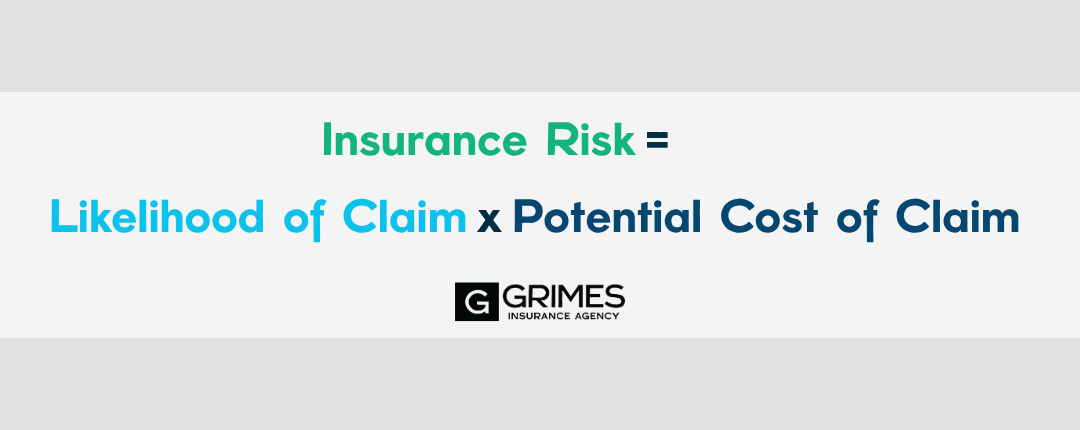
Insurance risk is the possibility that a loss (aka, claim) will happen and the potential cost of that loss.
When an insurance company evaluates your risk, they are essentially asking themselves two questions:
- How likely is this person, home, or vehicle to have a claim?
- How expensive could that claim be?
Let’s look at two homes, for example.
A newer home with updated features, good maintenance, and no claims history may represent a different level of risk than an older home with visible damage and previous losses.
The same applies to auto insurance. A driver with multiple at-fault accidents represents a different risk than a driver with a clean driving record. Or a teenager driving a vehicle represents a different risk than an experienced driver operating the same car.
Insurance companies use this information to determine what they are willing to insure and what price makes sense based on that risk.
How Do Insurance Companies Evaluate My Risk?
Every insurance carrier has its own underwriting guidelines. While most of these guidelines overlap, each company tends to have a certain “appetite” for risk. This means different companies may look at the same home, driver, or situation and reach different conclusions.
These carrier appetites boil down to a common combination of factors when determining your risk. Depending on whether you’re insuring your home or vehicle, insurers review specific items.
How is my home insurance risk evaluated?
When insuring your home, insurers review information like your:
- Home age and condition
- Home construction type
- Roof age and condition
- Attractive nuisances (pools, trampolines, etc.)
- Property features
How is my auto insurance risk evaluated?
When insuring your vehicle, insurers review information such as your:
- Vehicle type (make, model, and year)
- Driving habits
- Gender, age, and marital status
- Occupation
What additional details affect my insurance risk?
For both types of coverages, insurers also review specific details, like:
- Location: Where do you live? Where do you drive?
- Weather exposure: Are you located in an area with frequent storms, hail, or flooding?
- Claims history and insurance score: How often have you filed claims?
Living in hail-prone areas like West Texas can influence how carriers evaluate risk. In our experience, many homeowners are surprised to learn that factors like roof age and previous hail claims can affect eligibility and coverage options. These factors can also affect premium pricing.
How does my claim history and insurance score affect me?
Claims history is one of the biggest pieces of the risk puzzle.
While insurance is designed to protect you during a loss, frequent or recent claims can affect your rates or your ability to qualify for certain coverages. Texas insurance carriers are also permitted to use credit-based insurance scores as a rating factor. A strong credit profile can meaningfully lower your risk, while a poor one can raise it.
Before purchasing insurance, you can review your claims history using a CLUE (Comprehensive Loss Underwriting Exchange) report. This report summarizes your previous insurance claims and is one of the main resources carriers use when evaluating your application.
If you’re wondering how insurers view your previous claims, this video explains how claims history can affect your home or auto coverage options:
What Can I Do to Lower My Insurance Risk?
Think about lowering your risk by showing insurance carriers that you are taking steps to prevent losses.
You can’t control every factor that affects your insurance risk, but you can improve your risk profile over time through maintenance, responsible habits, and proactive decisions. Let’s explore what this can look like:
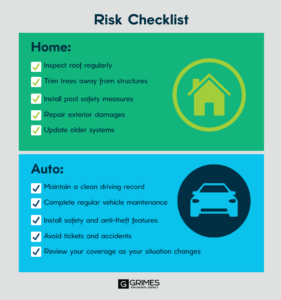
How can I lower my home insurance risk?
Updating and maintaining your home’s exterior is one of the best ways to lower your risk.
Does your brick have discoloration? Are there cracks in your sidewalk or driveway? Do you have overhanging trees in your yard? If so, your next steps might include:
- Repairing visible damage to your home, fencing, and concrete
- Maintaining your roof
- Trimming trees away from your roofline
- Installing a fence around your swimming pool
- Securing trampolines with safety nets and ground stakes
Many homeowners do not realize that preventative maintenance can influence how carriers view the overall condition of their property.
How can I lower my car insurance risk?
While personal demographics are an important factor for car insurance risk, they aren’t details you can necessarily change. However, you can improve your risk profile by taking extra care in your driving habits. Some examples include:
- Maintaining a clean driving record
- Participating in a telematics program to track good driving
- Maintaining a strong credit history
- Avoiding unnecessary claims when practical
While these changes don’t guarantee an immediate premium reduction, they can improve how insurance companies evaluate your risk over time.
How can talking with an agent lower my insurance risk?
Remember how insurance carriers often have appetites for risk? Your insurance agent can help you understand how those differences affect your options.
One of the best times to think about insurance is before making a purchase or major change. Whether you’re deciding between two homes, comparing vehicles, or considering renovations, speaking with your agent beforehand can help you understand how those decisions may affect your coverage options.
How Can Understanding Risk Help Me Make Better Insurance Decisions?
Insurance risk can feel complicated, but the basics are simple: insurance companies are trying to understand how likely you are to experience a loss and how costly that loss could be. Factors like your home’s condition, driving history, location, and insurance score help carriers make that decision.
If you’re frustrated by your insurance costs or unsure why your premium changed, understanding your risk is the first step toward making better decisions.
Your next step is to learn how your insurance risk may affect your coverage options. Read about how much home insurance costs in Lubbock to better understand what factors influence your premium.
If you still have questions about your personal risk profile, Grimes Insurance can help you review your coverage options and understand what steps may improve your situation.


