How to Tell if You’re Underinsured

Ever felt like the ground beneath your feet was swept out from under you? That’s what hearing the words, “you’re not covered,” is like for many policyholders. Most people don’t discover they’re uninsured until they’re already filing a claim, which can quickly become a costly surprise.

With over 78 years of serving West Texas homeowners and drivers, Grimes Insurance has helped thousands of policyholders identify coverage gaps before they become costly claim surprises. One of the most common issues we see isn’t people without insurance, but people whose coverage quietly stopped matching their lives. 

The good news is that underinsurance is usually preventable. By the end of this article, you will know:

  1. How to tell if you’re uninsured
  2. What factors contribute to underinsurance
  3. What to do if you’re underinsured

What are the Biggest Signs You’re Underinsured?

Underinsurance looks different depending on what you’re trying to protect, but the warning signs usually fall into two categories: 

  • Your home coverage no longer reflects what it would cost to rebuild or replace your belongings.
  • Your auto coverage no longer reflects today’s vehicle values or your financial situation.

Life changes like remodeling your home, buying a newer vehicle, adding a teen driver, or increasing your income can all create coverage gaps without you realizing it. 

Let’s look at each one together. 

How Can You Tell if Your Home is Underinsured?

The type of home you have and upgrades you’ve made to it are some of the biggest indicators of sufficient coverage. But first, it’s important to understand why this matters. Your answer? Rebuilding costs. 

Rebuilding cost vs. market value

We’ve seen many underinsured homeowners confuse their rebuilding cost with market value… which are two completely different numbers. 

  • Market value reflects what someone would pay for your home. 
  • Rebuilding cost reflects how much it would cost to reconstruct your home after a total loss, based on current labor and material costs. 

These costs change constantly, and selling your home is different than rebuilding it.

It’s also important to keep in mind that rebuilding a home in Lubbock isn’t priced the same as rebuilding one in Dallas or San Antonio. Whether your home is properly insured depends on more than just its value on Zillow!

A simple way to sanity-check your coverage is to compare your policy’s dwelling limit with today’s estimated rebuilding cost per square foot in your area. To determine your area’s rebuild costs, you can often find them online or by contacting your local construction company or contractor yourself. Using these numbers, you can plug them into a simple formula:
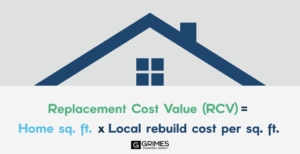
 

Formula image: Home sq. ft. x local rebuild cost per sq. ft. = replacement cost value (RCV)


 If those numbers aren’t even close, it’s time to review your policy. 

Other signs your home might be outdated include:

Your personal property has changed

One of our favorite ways to explain personal property goes like so:

Imagine your home is Barbie’s Dream House (use your imagination!). Then, picture yourself flipping it upside down.

Everything that falls out is your personal property. Your furniture, electronics, clothing, and appliances not built into the home are all items to consider for insurance. If your home experienced a total loss, and replacing everything would cost significantly more than your policy allows, your contents coverage might need attention.  Contact Grimes Insurance Agency to review your coverage with an agent. 

You’ve renovated or added structures

Insurance companies don’t automatically know when you’ve made home updates. 

Whether you’ve finished out a shop, added square footage, and finally remodeled the kitchen of your dreams– your insurance carrier needs to know about it. If you don’t tell your carrier, your policy may still reflect what your home looked like years ago. 

If disaster struck and you filed a claim, your policy’s limits will only reflect your home’s original condition from when you bought it. Meaning, anything not covered by insurance will be paid out-of-pocket. We’ve seen homeowners invest tens of thousands of dollars into improvements, only to discover it’s not covered by their current insurance policy. 

You’ve added solar panels

Many homeowners assume solar panels are automatically covered because they’re attached to the home. However, that’s not always trueespecially in hail-prone areas like West Texas. 

Some insurance policies include them in standard policies, while others require adding an endorsement. There are even some carriers that won’t insure homes with solar installations at all. 

If you’ve gone solar and want to know how to protect your home’s newest addition, read Do Solar Panels Affect My Home Insurance? To learn more. 

The bottom line: it pays (and saves) to discuss your home’s changes with your insurance carrier and agent. 

How Can You Tell if Your Auto Insurance is Underinsured?

One of the most common questions we’ve heard is “how little car insurance can I get away with?” 

If you lease or loan a vehicle, you’re required by your lender to purchase full coverage for your vehicle. This includes liability, comprehensive, and collision coverage.  However, if you own your vehicle, the state of Texas only requires you to purchase minimum liability limits of 30/60/25

That means:

  • $30,000 for injuries to one person
  • $60,000 for injuries per accident
  • $25,000 for property damage

If you want to understand exactly what separates minimum liability from full protection, read Liability vs Full Coverage Car Insurance Explained for a direct side-by-side comparison.

How Driving With Minimum Liability Can Make You Uninsured

While minimum liability might seem sufficient, it’s the biggest cause for uninsured drivers.

Why? Because realistically, very few vehicles on the road today are only worth $25,000. 

Imagine driving down the loop, and you total someone’s $60,000 SUV. If your property damage limit is only $25,000, you’d personally owe the remaining $35,000 out of pocket. 

And remember that $25,000 doesn’t cover just one vehicle. It also covers:

  • Other vehicles
  • Buildings
  • Fences
  • Mailboxes
  • Guardrails
  • Other property damaged in the accident

For many drivers, carrying only the state minimum leaves very little room for today’s repair and replacement costs. 

What Happens if an Uninsured Driver Hits You?

Now, let’s put the shoe on the other foot. Even if you were to increase your own liability limits, another driver might not. 

If someone with minimum coverage (or had no insurance at all) were to hit you, uninsured and underinsured motorist coverage could protect you from paying out of pocket for someone else’s lack of coverage.

Learn more about uninsured motorist coverage and how it can protect you in an accident:


What to Do if You’re Underinsured

Finding out you’re underinsured doesn’t necessarily mean you need an entirely new insurance policy. In many cases, a few updates to your existing coverage are enough to better protect your home, vehicles, and finances.

Here are the first steps to take: 

Review Your Current Policies

Start by looking at your homeowners and auto policies. Review details such as:

Home Auto
Your dwelling coverage Your liability limits
Your personal property limits Your deductibles
Your home’s replacement cost The drivers (and their ages) listed on your policy

The goal is to understand what you have before deciding what needs to change. If you find your situation has changed and coverage is lacking, insurance endorsements can be helpful additions. Before discussing endorsements with your insurance agent, learn more about what insurance endorsements are and why they matter.

Think About What’s Changed Since You Bought Your Policy

Ask yourself whether anything in your life has changed, such as:

  • Getting married and combining households
  • Having children
  • Adding a permit or licensed teen driver to your household
  • Receiving a significant raise or building more assets
  • Renovating your home
  • Building a detached garage or workshop at your home
  • Purchasing expensive jewelry or collectibles

Any of these changes could mean your current coverage no longer reflects your actual risks. 

Talk to Your Insurance Agent

If you think you may be underinsured, schedule a policy review. An experienced agent can help you compare your current coverage with your needs and explain where gaps may exist. 

That doesn’t always mean increasing your limits. Sometimes it’s updating your home’s rebuild cost, adding endorsements, or adjusting limits to better match your current risks.

Review Your Coverage Regularly

Insurance isn’t something you should set up once and forget.

A good rule of thumb is to review your coverage every year or whenever you experience a major life change. Keeping your policy up to date is one of the easiest ways to avoid unpleasant surprises if you ever need to file a claim. 

How Grimes Insurance Helps You Avoid Being Underinsured

Underinsurance is easy to miss because life changes, and your policy often doesn’t.

A home renovation, a new driver, or a newer vehicle can all create coverage gaps without you realizing it. The good news is that most of those gaps are easy to fix once you know they’re there.

At Grimes Insurance, we review your coverage based on where you are today, not when you first bought your policy. We’ll help you identify potential gaps and explain your options so you can make informed decisions. 

If you’re wondering whether your coverage still fits your life, your next step is to learn how Grimes can help you build a personalized insurance policy around your specific needs. 
Insurance Policy Lapses Explained

Executive Summary:

An insurance lapse is any period of time when your insurance policy is no longer active. Whether it’s caused by a missed premium payment, cancellation, or non-renewal. You’re uninsured and financially responsible for any claims that occur during this time. Insurance lapses tend to make future coverage more expensive and even limit your insurance provider options. This article explains what a lapse is, how it happens, and how to avoid it.


Does missing an insurance payment mean you’re immediately uninsured? What does having an insurance lapse actually mean?

If you’ve ever asked these questions, just know you’re not the only one who’s curious. Insurance terminology and timelines can be confusing… and costly. 

After 78 years of helping West Texans with their insurance needs, we’ve seen firsthand how coverage misunderstandings can cost policyholders thousands of dollars. At Grimes Insurance, we prioritize helping clients understand the coverage basics and answer their questions. 

In this article, you’ll learn exactly what an insurance lapse is, how it happens, and what you can do to avoid one. 

What is an Insurance Policy Lapse?

An insurance lapse is any period of time when your insurance policy isn’t active, meaning you don’t have coverage during that time. We’ve seen coverage lapses that have lasted one day, six months, or even a year. 

What causes an insurance policy lapse?

Insurance coverage lapses can occur for a combination of reasons, including: 

  • Missing a premium payment (the most common)
  • Cancelling your policy
  • Policy non-renewal

Since it’s the most common, this article will focus more on missed payment scenarios. Curious if cancelling and a non-renewal are the same thing? Read more about the differences between a policy cancellation and non-renewal from the Texas Department of Insurance.

Will insurance lapse on a missed payment?

Life gets busy. Bills pile up, credit cards expire, bank accounts change, and reminders get forgotten about. We’ve seen all of these situations lead to an unexpected lapse in coverage. 

Fortunately, insurance companies don’t typically cancel your policy the moment you miss your payment. Many carriers offer a grace period (usually between 10-20 days) before canceling your policy, but the length varies by insurer and state. However, not all insurance carriers have the same grace period standards… so take this information with a grain of salt! 

If a payment is not made before the grace period ends, your insurance policy and coverage will lapse. 

What Happens After My Insurance Policy Lapses?

Many people assume that if they pay the overdue premium a few days later, their coverage simply picks up where it left off. Unfortunately, that’s not always the case. 

Like grace periods, insurance carriers have their own reinstatement rules.

Some carriers may allow your policy to be reinstated back to the cancellation date, creating no break in coverage. Others don’t.

Progressive, for example, reinstates coverage beginning the day after your payment is received. If your policy had been canceled on Monday and you paid on Wednesday, you’d have a two-day lapse in your coverage, even though your policy is active again. 

What happens if damage occurs during a lapse?

Once your policy lapses, the biggest question becomes: What happens if something goes wrong before your coverage is active again?

Imagine your monthly premium went unpaid… and you back your car into the neighbor’s mailbox. Or maybe a pipe bursts at home and your kitchen is flooded. 

If damage occurs while your insurance has lapsed, you’re responsible for paying the bill yourself. 

Because insurance companies won’t cover losses that occurred while your policy was inactive, many require you to sign a no-loss statement before reinstating your coverage. This document confirms that no accident, theft, or property damage occurred during the lapse.

If a loss did occur during that time, keep in mind that:

  • The loss is uncovered by insurance (aka, you pay out of pocket)
  • Your premium rates will most likely increase
  • Your insurance risk profile will be affected
  • Your provider may require purchasing a new policy (depending on length of lapse) 

Curious about what a policy lapse has to do with insurance risk? Read How Insurance Risk is Calculated to learn more.

What Happens If My Mortgage or Lender Requires Insurance? 

If your home or vehicle is financed because of a lease or mortgage, your lender requires you to maintain insurance to protect the property to cover your loan. If your policy lapses, your lender may purchase force-placed insurance on your behalf. 

Force-placed insurance protects your lender’s financial interest in the property, not yours. While it satisfies the lender’s requirement that the property be insured, it generally doesn’t provide the same protections as a standard homeowners or auto insurance policy. It also tends to be more expensive. 

Think of force-placed insurance as coverage for your lender’s investment, not your financial well-being. It’s not a substitute for carrying your own insurance policy. 

We’ve seen clients learn this lesson the hard way.

A policyholder’s homeowners insurance lapsed, and their mortgage company purchased force-placed insurance on the home. Because there was still an insurance policy tied to the property, the homeowner assumed they were fully covered. 

Months later, their roof was damaged. When they filed a claim, the force-placed policy wasn’t designed to provide the same protection as a standard policy. The claim wasn’t covered the way they expected, and they ultimately had to pay for the roof repairs out of pocket before they could secure traditional homeowners insurance again. 

It’s a costly reminder that even a short lapse in coverage can have long-lasting financial consequences.

How Do I Avoid an Insurance Policy Lapse?

All of this talk about losing coverage is scary, we know. Fortunately, preventing a lapse is usually much easier than dealing with the consequences afterward.

A few simple ways to stay covered include:

  • Set up automatic payments when possible (which could qualify you for a discounted premium!)
  • Don’t ignore (or wait for) calls or emails from your insurance carrier or agent about your policy status
  • Keep your payment information up to date (delete expired credit cards, update your address changes, etc.)
  • Read every payment reminder or cancellation notice you receive
  • If you’re unsure whether your policy is active, call your insurance agent directly.

Even if you’ve already experienced a lapse, don’t assume you can’t get coverage again. While your options may be more limited and premiums higher, there are still insurance providers willing to insure drivers and homeowners after a lapse. The sooner you speak with your insurance agent, the more options you’ll typically have. 

How Can Working With Grimes Insurance Prevent a Policy Lapse?

An insurance lapse can happen to anyone. Life gets busy, payment dates are overlooked, and before you know it, you could be without coverage when you need it most. However, you’re not alone in sorting it all out. 

At Grimes Insurance, our job doesn’t end once your policy is in place. Since 1948, our retention team has worked proactively to contact clients when their policy may be at risk. We’re in your corner when it comes to:

  • Reminding you about payment deadlines (on average, at least 30 days beforehand)
  • Avoiding unnecessary lapses in coverage
  • Understanding your coverage basics

While every insurance carrier has different reinstatement rules, our goal is to help you be proactive before you ever have to worry about unexpected coverage gaps. 

Now that you know how policy lapses happen, what they affect, and how to avoid them, the best next step is making sure your own coverage is where it should be. Whether you want to check your policy status, catch up after a lapse, or just have questions, contact Grimes Insurance Agency to get back on track.

How is Insurance Risk Calculated?

Quick Answer: Insurance companies calculate risk by estimating how likely you are to file a claim and how expensive that claim could be. Factors like your home’s condition, driving history, location, and insurance score all influence how carriers evaluate your risk. While you cannot control every factor, understanding these details can help you make better insurance decisions and potentially improve your risk profile over time.


When you receive an insurance quote, it can feel like your premium number appears out of thin air. 

Why does one home cost more to insure than another? Why can two drivers with similar vehicles receive completely different rates? Why does one insurance company accept a risk that another one denies?

The answer comes down to one thing: risk assessment. 

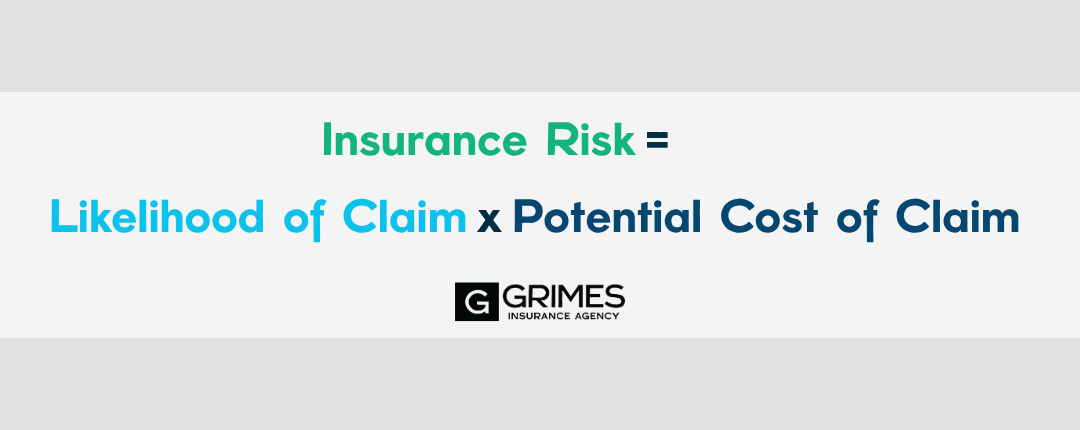
Graphic depicting image of "Insurance risk formula". Reads "Insurance risk = likelihood of claim x potential cost of claim"


For the past 78 years, Grimes Insurance has helped West Texas families and businesses understand the factors that affect their coverage options. From hail exposure and aging roofs to changing carrier requirements, we’ve helped policyholders navigate what influences their insurance risk. 

In this article, you will learn:

  1. What insurance risk actually means
  2. How insurance companies evaluate homes, vehicles, and claims history
  3. What factors can increase or decrease your risk
  4. What steps you can take to improve your insurance risk profile

What is Insurance Risk?

Insurance risk is the possibility that a loss (aka, claim) will happen and the potential cost of that loss. 

When an insurance company evaluates your risk, they are essentially asking themselves two questions: 

  • How likely is this person, home, or vehicle to have a claim?
  • How expensive could that claim be?

Let’s look at two homes, for example.

A newer home with updated features, good maintenance, and no claims history may represent a different level of risk than an older home with visible damage and previous losses. 

The same applies to auto insurance. A driver with multiple at-fault accidents represents a different risk than a driver with a clean driving record. Or a teenager driving a vehicle represents a different risk than an experienced driver operating the same car. 

Insurance companies use this information to determine what they are willing to insure and what price makes sense based on that risk. 

How Do Insurance Companies Evaluate My Risk?

Every insurance carrier has its own underwriting guidelines. While most of these guidelines overlap, each company tends to have a certain “appetite” for risk. This means different companies may look at the same home, driver, or situation and reach different conclusions.

These carrier appetites boil down to a common combination of factors when determining your risk. Depending on whether you’re insuring your home or vehicle, insurers review specific items.

How is my home insurance risk evaluated?

When insuring your home, insurers review information like your:

  • Home age and condition
  • Home construction type
  • Roof age and condition
  • Attractive nuisances (pools, trampolines, etc.)
  • Property features

How is my auto insurance risk evaluated?

When insuring your vehicle, insurers review information such as your:

  • Vehicle type (make, model, and year)
  • Driving habits
  • Gender, age, and marital status
  • Occupation

What additional details affect my insurance risk?

For both types of coverages, insurers also review specific details, like:

  • Location: Where do you live? Where do you drive?
  • Weather exposure: Are you located in an area with frequent storms, hail, or flooding?
  • Claims history and insurance score: How often have you filed claims? 

Living in hail-prone areas like West Texas can influence how carriers evaluate risk. In our experience, many homeowners are surprised to learn that factors like roof age and previous hail claims can affect eligibility and coverage options. These factors can also affect premium pricing. 

How does my claim history and insurance score affect me?

Claims history is one of the biggest pieces of the risk puzzle. 

While insurance is designed to protect you during a loss, frequent or recent claims can affect your rates or your ability to qualify for certain coverages. Texas insurance carriers are also permitted to use credit-based insurance scores as a rating factor. A strong credit profile can meaningfully lower your risk, while a poor one can raise it. 

Before purchasing insurance, you can review your claims history using a CLUE (Comprehensive Loss Underwriting Exchange) report. This report summarizes your previous insurance claims and is one of the main resources carriers use when evaluating your application. 

If you’re wondering how insurers view your previous claims, this video explains how claims history can affect your home or auto coverage options:


What Can I Do to Lower My Insurance Risk?

Think about lowering your risk by showing insurance carriers that you are taking steps to prevent losses. 

You can’t control every factor that affects your insurance risk, but you can improve your risk profile over time through maintenance, responsible habits, and proactive decisions. Let’s explore what this can look like:

How can I lower my home insurance risk?

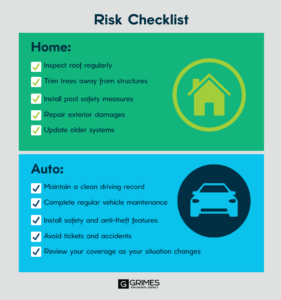
Updating and maintaining your home’s exterior is one of the best ways to lower your risk.

Does your brick have discoloration? Are there cracks in your sidewalk or driveway? Do you have overhanging trees in your yard? If so, your next steps might include: 

  • Repairing visible damage to your home, fencing, and concrete
  • Maintaining your roof
  • Trimming trees away from your roofline
  • Installing a fence around your swimming pool
  • Securing trampolines with safety nets and ground stakes

Many homeowners do not realize that preventative maintenance can influence how carriers view the overall condition of their property.

How can I lower my car insurance risk?

While personal demographics are an important factor for car insurance risk, they aren’t details you can necessarily change. However, you can improve your risk profile by taking extra care in your driving habits. Some examples include: 

  • Maintaining a clean driving record
  • Participating in a telematics program to track good driving
  • Maintaining a strong credit history
  • Avoiding unnecessary claims when practical

Graphic depicting image of two checklists to assess home and auto risks. Checklist information comes from above infortmation.

While these changes don’t guarantee an immediate premium reduction, they can improve how insurance companies evaluate your risk over time. 

How can talking with an agent lower my insurance risk?

Remember how insurance carriers often have appetites for risk? Your insurance agent can help you understand how those differences affect your options. 

One of the best times to think about insurance is before making a purchase or major change. Whether you’re deciding between two homes, comparing vehicles, or considering renovations, speaking with your agent beforehand can help you understand how those decisions may affect your coverage options.

How Can Understanding Risk Help Me Make Better Insurance Decisions?

Insurance risk can feel complicated, but the basics are simple: insurance companies are trying to understand how likely you are to experience a loss and how costly that loss could be. Factors like your home’s condition, driving history, location, and insurance score help carriers make that decision. 

If you’re frustrated by your insurance costs or unsure why your premium changed, understanding your risk is the first step toward making better decisions. 

Your next step is to learn how your insurance risk may affect your coverage options. Read about how much home insurance costs in Lubbock to better understand what factors influence your premium.

If you still have questions about your personal risk profile, Grimes Insurance can help you review your coverage options and understand what steps may improve your situation.

What are Insurance Endorsements and Why Do They Matter?

Have you ever looked through your insurance policy and wondered what all those endorsements actually mean?

Or maybe you’ve asked yourself whether you can make your policy more specific. 

If so, you’re not alone. Insurance policies are full of unfamiliar terms, and it’s rarely obvious which coverages are standard, which are optional, and whether you’re protected for the things that matter most.

Since 1948, Grimes Insurance Agency has helped West Texas families understand exactly what they’re covered for – and what’s worth adding.

In this guide, you’ll learn:

  1. What insurance endorsements are
  2. Why insurance companies add them
  3. How endorsements can help customize your policy to better fit your life.

What is an endorsement? 

An endorsement is a change or addition to your base insurance policy that either expands, limits, or clarifies your coverage. In a nutshell, it allows you to customize your coverage to your needs. Endorsements can also be referred to as an insurance rider or add-on

It’s important to remember that endorsements can be added to a policy by the insurer (your carrier) or the insured (you). 

Why would my insurance carrier add an endorsement to my policy?

Simple answer: because it’s required. Depending on your insurance provider and where you’re located, endorsements can vary. All insurance carriers licensed in Texas, for example, must comply with the Texas Department of Insurance’s endorsement standards. 

Aside from the state requirements, however, every insurance carrier can build its own list of endorsements. Whether it’s Allstate, Germania, or another provider, endorsements are often different across companies.

Why would I need to add an endorsement to my policy?

Insurance policies are not one-size-fits-all. Since not all policies are the same, you might have some areas where you want extra protection. 

For example, your home insurance policy might cover jewelry theft, but the set limit is $1,500. However, you own a highly valuable watch collection. If two of the $2,000 watches were stolen, the standard policy would only cover a maximum of $1,500, minus your deductible, leaving you responsible for the remaining amount.  

Graphic with images depicting what endorsements can do. On left, outward facing arrows (expand), in middle, triangle sign with exclamation mark (limit), and on right, magnifying glass (clarify)

Why Do Insurance Endorsements Exist?

Think of endorsements as taking your insurance policy to a tailor. You can purchase a standard policy off the rack, where it either fits you well or needs to be taken in (or let out) a couple of places for a better fit. The result is a unique insurance policy that fits you and your coverage needs like a glove.

What are the Types of Endorsements?

Some endorsements come “pre-sewn” into every policy the carrier sells, while others are custom alterations you request. Endorsements typically fall into two categories: standard/mandatory and enhanced/optional. Let’s look at the basics and define each type.

Standard/Mandatory

Optional/Enhanced

Included in policy

Added by request
Usually $0

Usually increases premium

Required by carrier/state

Based on your needs
Cannot usually remove

Can customize limits

What are Standard/Mandatory Endorsements?

These types of endorsements are the ones already built into your policy. This is either because they’ve been required by your state’s department of insurance, or they are specific to your insurance carrier. You can’t remove them, and in most cases, you’re not paying extra for them. They are simply part of doing business with that carrier in your state. 

Remember our tailor metaphor? Sometimes the shop has a house rule that they automatically stitch a specific feature into every jacket, while you have to pay extra for it at another tailor across town. 

A great example of this is sewer and water backup coverage. If a residential sewer main were to overflow, it could cause expensive damage within your home and stretch your home insurance policy thin. 

Most traditional national carriers exclude this from their basic home insurance policies. If you want protection from sewer damage, you often have to purchase it as a separate coverage. 

However, some companies (especially those specific to a particular region) can rewrite the rules. For instance, instead of making it an add-on, Germania Insurance automatically includes sewer and water backup coverages on its basic home policies up to your home’s total dwelling limit.  

This is just one example of how endorsement options can vary between carriers. Remember that not all insurance providers and endorsements are exactly the same. If you’re interested in comparing your insurance endorsements, contact Grimes Insurance Agency to walk through your policy with an agent. 

What are Enhanced/Optional Endorsements?

On the other hand, enhanced/optional endorsements are coverages you can choose to add or increase, based on what you actually own and how you live. This is where you can truly make your policy your own. 

Depending on what your policy is insuring, some common examples include:

Home  Auto
Buried utility lines Rideshare coverage
Equipment breakdown coverage Roadside assistance
Scheduled personal property Rental car reimbursement
Water backup coverage Custom parts and equipment

If you’ve recently added something valuable to your home, keep expensive equipment on your property, or want greater coverage for your vehicle, it’s worth discussing endorsements with your insurance agent. 

How Much Do Insurance Endorsements Cost?

Like endorsements, this answer can also vary.

Since they are part of the carrier’s base policy and not an add-on, standard/mandatory endorsements are typically included at no additional charge. If you ever see one of these itemized on your policy, don’t be surprised if it’s listed at $0. 

However, if you were to enhance your coverage (aka, raise your premium, expand protection, etc.) or add additional protections, optional/enhanced endorsements are where costs come in. It’s important to note that not all optional endorsements are a flat add-on and often allow you to dial your coverage up or down to fit your budget needs. 

Bringing back our examples from earlier, some carriers give you the option to:

  • Increase jewelry coverage limits OR
  • Lower water damage coverage

In other words, you often have some control over the tradeoff between cost and coverage when it comes to optional endorsements. 

The best way to know exactly what something will add to your premium is to ask. Requesting a quote and discussing it with your insurance agent will help you spell out the numbers for your specific policy. 

Are Insurance Endorsements Something You Need?

Remember that aside from standard/mandatory endorsements, additional coverages aren’t always necessary. A standard policy might provide you adequate coverage that doesn’t require further adjustment. However, the value of endorsements isn’t always obvious until the moment you need it. 

Standard coverage might satisfy until a storm, a break-in, or a car accident hits. At that point, being fully covered or taking care of a gap yourself depends on whether your coverage accurately reflects what you own.

Whether you’re considering additional coverage or not, it’s worth having the conversation. 

Grimes Insurance Can Help You Find the Right Coverage Fit

Insurance endorsements may seem like complicated policy language, but they’re really tools that help your coverage better match your life. Whether you need additional protections for valuable belongings or specific risks, endorsements allow you to customize your policy instead of relying on a one-size-fits-all approach. 

Without reviewing your endorsements, you may not realize there are gaps in your coverage until after something unexpected happens. Taking the time to understand what your policy includes (and what it doesn’t) can help you feel more confident about your protection.

For 78 years, Grimes Insurance Agency has helped West Texas families navigate their insurance options and find coverage that fits their unique situations. If you’re unsure whether your current coverage fits your needs, your next step is to review your policy with an insurance professional. Read more about requesting a quote with Grimes Insurance Agency to see how our team can help you understand your options and make informed coverage decisions.