
How to Tell if You’re Underinsured
Ever felt like the ground beneath your feet was swept out from under you? That’s what hearing the words, “you’re not covered,” is like for many policyholders. Most people don’t discover they’re uninsured until they’re already filing a claim, which can quickly become a costly surprise.
With over 78 years of serving West Texas homeowners and drivers, Grimes Insurance has helped thousands of policyholders identify coverage gaps before they become costly claim surprises. One of the most common issues we see isn’t people without insurance, but people whose coverage quietly stopped matching their lives.
The good news is that underinsurance is usually preventable. By the end of this article, you will know:
- How to tell if you’re uninsured
- What factors contribute to underinsurance
- What to do if you’re underinsured
What are the Biggest Signs You’re Underinsured?
Underinsurance looks different depending on what you’re trying to protect, but the warning signs usually fall into two categories:
- Your home coverage no longer reflects what it would cost to rebuild or replace your belongings.
- Your auto coverage no longer reflects today’s vehicle values or your financial situation.
Life changes like remodeling your home, buying a newer vehicle, adding a teen driver, or increasing your income can all create coverage gaps without you realizing it.
Let’s look at each one together.
How Can You Tell if Your Home is Underinsured?
The type of home you have and upgrades you’ve made to it are some of the biggest indicators of sufficient coverage. But first, it’s important to understand why this matters. Your answer? Rebuilding costs.
Rebuilding cost vs. market value
We’ve seen many underinsured homeowners confuse their rebuilding cost with market value… which are two completely different numbers.
- Market value reflects what someone would pay for your home.
- Rebuilding cost reflects how much it would cost to reconstruct your home after a total loss, based on current labor and material costs.
These costs change constantly, and selling your home is different than rebuilding it.
It’s also important to keep in mind that rebuilding a home in Lubbock isn’t priced the same as rebuilding one in Dallas or San Antonio. Whether your home is properly insured depends on more than just its value on Zillow!
A simple way to sanity-check your coverage is to compare your policy’s dwelling limit with today’s estimated rebuilding cost per square foot in your area. To determine your area’s rebuild costs, you can often find them online or by contacting your local construction company or contractor yourself. Using these numbers, you can plug them into a simple formula:
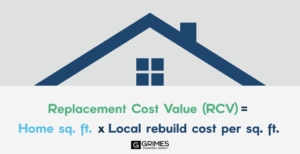
If those numbers aren’t even close, it’s time to review your policy.
Other signs your home might be outdated include:
Your personal property has changed
One of our favorite ways to explain personal property goes like so:
Imagine your home is Barbie’s Dream House (use your imagination!). Then, picture yourself flipping it upside down.
Everything that falls out is your personal property. Your furniture, electronics, clothing, and appliances not built into the home are all items to consider for insurance. If your home experienced a total loss, and replacing everything would cost significantly more than your policy allows, your contents coverage might need attention. Contact Grimes Insurance Agency to review your coverage with an agent.
You’ve renovated or added structures
Insurance companies don’t automatically know when you’ve made home updates.
Whether you’ve finished out a shop, added square footage, and finally remodeled the kitchen of your dreams– your insurance carrier needs to know about it. If you don’t tell your carrier, your policy may still reflect what your home looked like years ago.
If disaster struck and you filed a claim, your policy’s limits will only reflect your home’s original condition from when you bought it. Meaning, anything not covered by insurance will be paid out-of-pocket. We’ve seen homeowners invest tens of thousands of dollars into improvements, only to discover it’s not covered by their current insurance policy.
You’ve added solar panels
Many homeowners assume solar panels are automatically covered because they’re attached to the home. However, that’s not always true, especially in hail-prone areas like West Texas.
Some insurance policies include them in standard policies, while others require adding an endorsement. There are even some carriers that won’t insure homes with solar installations at all.
If you’ve gone solar and want to know how to protect your home’s newest addition, read Do Solar Panels Affect My Home Insurance? To learn more.
The bottom line: it pays (and saves) to discuss your home’s changes with your insurance carrier and agent.
How Can You Tell if Your Auto Insurance is Underinsured?
One of the most common questions we’ve heard is “how little car insurance can I get away with?”
If you lease or loan a vehicle, you’re required by your lender to purchase full coverage for your vehicle. This includes liability, comprehensive, and collision coverage. However, if you own your vehicle, the state of Texas only requires you to purchase minimum liability limits of 30/60/25.
That means:
- $30,000 for injuries to one person
- $60,000 for injuries per accident
- $25,000 for property damage
If you want to understand exactly what separates minimum liability from full protection, read Liability vs Full Coverage Car Insurance Explained for a direct side-by-side comparison.
How Driving With Minimum Liability Can Make You Uninsured
While minimum liability might seem sufficient, it’s the biggest cause for uninsured drivers.
Why? Because realistically, very few vehicles on the road today are only worth $25,000.
Imagine driving down the loop, and you total someone’s $60,000 SUV. If your property damage limit is only $25,000, you’d personally owe the remaining $35,000 out of pocket.
And remember that $25,000 doesn’t cover just one vehicle. It also covers:
- Other vehicles
- Buildings
- Fences
- Mailboxes
- Guardrails
- Other property damaged in the accident
For many drivers, carrying only the state minimum leaves very little room for today’s repair and replacement costs.
What Happens if an Uninsured Driver Hits You?
Now, let’s put the shoe on the other foot. Even if you were to increase your own liability limits, another driver might not.
If someone with minimum coverage (or had no insurance at all) were to hit you, uninsured and underinsured motorist coverage could protect you from paying out of pocket for someone else’s lack of coverage.
Learn more about uninsured motorist coverage and how it can protect you in an accident:
What to Do if You’re Underinsured
Finding out you’re underinsured doesn’t necessarily mean you need an entirely new insurance policy. In many cases, a few updates to your existing coverage are enough to better protect your home, vehicles, and finances.
Here are the first steps to take:
Review Your Current Policies
Start by looking at your homeowners and auto policies. Review details such as:
| Home | Auto |
| Your dwelling coverage | Your liability limits |
| Your personal property limits | Your deductibles |
| Your home’s replacement cost | The drivers (and their ages) listed on your policy |
The goal is to understand what you have before deciding what needs to change. If you find your situation has changed and coverage is lacking, insurance endorsements can be helpful additions. Before discussing endorsements with your insurance agent, learn more about what insurance endorsements are and why they matter.
Think About What’s Changed Since You Bought Your Policy
Ask yourself whether anything in your life has changed, such as:
- Getting married and combining households
- Having children
- Adding a permit or licensed teen driver to your household
- Receiving a significant raise or building more assets
- Renovating your home
- Building a detached garage or workshop at your home
- Purchasing expensive jewelry or collectibles
Any of these changes could mean your current coverage no longer reflects your actual risks.
Talk to Your Insurance Agent
If you think you may be underinsured, schedule a policy review. An experienced agent can help you compare your current coverage with your needs and explain where gaps may exist.
That doesn’t always mean increasing your limits. Sometimes it’s updating your home’s rebuild cost, adding endorsements, or adjusting limits to better match your current risks.
Review Your Coverage Regularly
Insurance isn’t something you should set up once and forget.
A good rule of thumb is to review your coverage every year or whenever you experience a major life change. Keeping your policy up to date is one of the easiest ways to avoid unpleasant surprises if you ever need to file a claim.
How Grimes Insurance Helps You Avoid Being Underinsured
Underinsurance is easy to miss because life changes, and your policy often doesn’t.
A home renovation, a new driver, or a newer vehicle can all create coverage gaps without you realizing it. The good news is that most of those gaps are easy to fix once you know they’re there.
At Grimes Insurance, we review your coverage based on where you are today, not when you first bought your policy. We’ll help you identify potential gaps and explain your options so you can make informed decisions.
If you’re wondering whether your coverage still fits your life, your next step is to learn how Grimes can help you build a personalized insurance policy around your specific needs.


