
What Makes a Home “High Risk” for Insurance?
Quick Answer:
A home is considered high risk for insurance when insurers believe it’s more likely to generate expensive claims. Factors such as an older roof, prior claims, poor credit, outdated construction, location, and liability risks (like pools and trampolines) can all increase premiums. They can also reduce coverage options or even lead to policy non-renewal. Fortunately, some of these risk factors can be improved.
Have you ever opened your home insurance renewal notice and wondered why your premium went up?
Maybe nothing changed about your home. You didn’t file a claim. You didn’t make any major changes. So why are you paying more?
Many homeowners are surprised to learn that insurance companies look at more than just the age and value of their home. Factors like your roof, location, and even certain property features can affect how your home is evaluated.
A high-risk classification may result in higher premiums, limited carrier options, coverage exclusions, or difficulty finding a policy with the protection you expect.
At Grimes Insurance Agency, we regularly review home insurance policies for West Texas homeowners and help identify the specific factors affecting coverage and pricing. Since 1948, our team has helped homeowners navigate challenges unique to this region, including severe hail storms, aging roofs, and changing insurance requirements.
By the end of this article, you will learn:
- What specific factors make a home high risk
- How insurers evaluate property and personal risk
- How being high-risk affects your coverage
- What steps you can take to lower your insurance risk profile
What Does High-Risk Home Insurance Mean?
When an insurance company classifies a home as high risk, it means they believe the home may be more likely to have a claim or that future repairs could be expensive.
Insurance companies look at two main things:
- How likely a claim is to happen
- How much that claim could cost
For example, a home with an older roof in a hail-prone area like Lubbock may be considered higher risk. Unfortunately, a greater chance of roof damage means a greater chance of needing to make a claim.
Now keep in mind, a high-risk label does not always mean you cannot get insurance. Different insurance companies evaluate risk differently, which is why one company may decline a home while another may offer coverage.
What Home Features Increase Your Home Insurance Risk?
High risk is a combination of factors that carriers weigh differently. Let’s review them together:
Roof Age and Condition
In our experience reviewing homeowners policies across West Texas, roof age is by far the most common reason otherwise well-maintained homes receive higher premiums.
In areas where hail seasons are severe and frequent, a roof over 15 to 20 years old may result in coverage restrictions or an actual cash value settlement. Some carriers will not write a new policy on a home with a roof beyond a certain age. Others will write it, but exclude wind and hail, which are the exact coverage most Lubbock homeowners need.
Some carriers go a step further and reduce the insurance payout as your roof gets older, often starting around 11 years. So instead of paying to replace your roof at full cost, they’ll only cover part of it, based on how old the roof is at the time of the claim. That means two homeowners with the same-aged roof and the same damage could get very different amounts back, depending on which carrier they’re with.
Construction Type and Age
Wood frame construction carries a higher fire risk than brick or masonry. Older homes present additional concerns, including outdated electrical systems, galvanized plumbing, and aging structural components, all of which increase the likelihood of claims.
One specific red flag we’ve seen many homeowners encounter is Federal Pacific Electric (FPE) panels. Many of these panels are found in older homes, and due to being outdated, some carriers won’t write a policy on a home with an FPE panel. Most carriers will require them to be replaced, and even updated panels can trigger additional underwriting review.
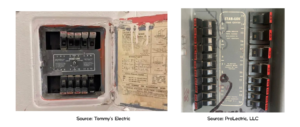
Federal Pacific Electrical Panels
Location and Geographic Risk
Proximity to a fire station and flood zone designation affect your risk profile, as well as your geographic location. In West Texas, geographic risk is elevated by the region’s severe hail exposure. Lubbock and the Texas Panhandle rank among the most active hail markets in the country.
Pool, Trampoline, and Dog Breed
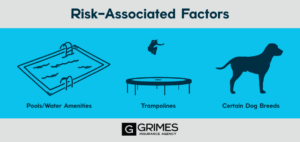
Home insurance risk also involves what’s in and around your house. Pools and trampolines (also known as attractive nuisances) pose a greater chance for claims.
The same can also be said about certain dog breeds (yes, even your dog!), due to the probability of dog bite claims or aggression. For example, some carriers might choose not to insure a home with specific dog breeds, like Pitbull Terriers or German Shepherds.
Some carriers exclude these risks entirely or require additional endorsements. However, if you own one of these dog breeds, or recently installed a new pool and diving board, don’t assume the worst. Contact Grimes Insurance Agency to discuss your coverage options with an agent and get help managing your personal risk.
Vacant Properties
A home that sits vacant, for example, one that’s listed for sale while the owner has already moved, is also a red flag to insurers. Standard homeowners policies often limit or exclude coverage on vacant properties, so a vacant-home endorsement or separate vacant policy may be required.
Prior Claims on the Property
A CLUE (Comprehensive Loss Underwriting Exchange) report tracks insurance claims filed on a property for up to seven years. Claims filed by a previous owner can affect your premium even if you purchased the home after the losses occurred. You can request and dispute your report once a year through the Lexis Nexis Consumer Portal.
Interested in learning more about what a CLUE report says about your risk profile? Watch this video to understand how insurance providers review your history and how it can affect your coverage options:
What Personal Factors Raise Home Insurance Risk?
Your Claims History
Claims history doesn’t only matter for your property. Your personal claims history also follows you wherever you insure a home. Multiple claims in a short period, even smaller ones, can increase your risk level. A single water damage or fire claim within the past three to five years is a significant consideration.
Your Credit Score
How often are you filing insurance claims? While insurance is built to protect you in such instances, a recent and frequent claims history can raise your premium or limit your options at renewal. Texas insurance carriers are also permitted to use credit-based insurance scores as a rating factor. A strong credit profile can meaningfully lower your premium. A poor one can raise it.
Gaps in Coverage History
A lapse in home insurance signals that you may have gone without protection. Non-renewal by a prior carrier is itself a risk signal; other carriers will see that history and price accordingly.
Curious about what an insurance lapse actually is? Read Insurance Policy Lapses Explained to learn about how they happen (and how to prevent them).
What Do Home Inspectors Actually Look For?
Most homeowners don’t realize their home gets a physical inspection, not just a paperwork review. Nearly every carrier now sends someone out to check the exterior of your home when you write a new policy and again when you renew it. Homes valued over $1 million may also require an interior inspection.
Inspectors are typically looking at:
- Fence condition
- Siding (no chips, dings, or damage)
- Fascia boards
- Roof condition
- Trees, bushes, or shrubs touching or overhanging the roof
- Cracks in the driveway or sidewalk
Detached structures like sheds, carports, and barns are held to the same standard as the home itself. If any of these are in poor condition, they can trigger the same “high-risk flags” as a bad roof or foundation.
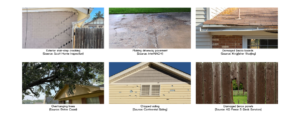
Home Inspection Damage Examples
If an inspection turns up an issue, your carrier will typically give you a set window, often about 30 days, to fix it and submit photos or receipts as proof. Miss that deadline, and the policy can be cancelled. It’s a good reminder that “high risk” isn’t always about the big, obvious factors. Sometimes it’s an overgrown tree branch or a peeling fence.
What Happens if Your Home is Considered High-Risk?
High-risk classification also affects what your policy will and will not cover. Some carriers respond by excluding specific threats or perils.
A home with a 22-year-old composition roof may have wind and hail excluded, which are the exact perils most likely to cause a claim in West Texas. A home with prior water damage claims may have water damage sublimits that reduce your insurance payout significantly.
Understanding whether your policy has exclusions driven by your home’s risk classification is as important as understanding your premium, because the exclusion may mean the most likely claim you face is the one your policy will not pay.
How to Lower Your Home Insurance Risk Profile
Some high-risk factors are fixed, such as your location, your home’s age, and your prior claims history. Others are addressable.
- Replacing an aging roof is the single most impactful property improvement for home insurance in West Texas. A new roof can restore full replacement cost coverage and eliminate wind and hail exclusions that some carriers impose on older roofs.
- Updating outdated electrical or plumbing systems reduces risk and can qualify your home for better underwriting terms.
- Maintaining a clean claims record limits future surcharges. Before filing a small claim, calculate whether the payout justifies a multi-year premium increase.
- Improving your credit score directly affects your home insurance premium in Texas, even when nothing about your home changes.
Ready to get your insurance score in check? Watch this video to learn more about what your score says about you and how you can improve it:
How to Lower Your Home Insurance Risk
There are a variety of factors that can make a home high risk: roof age, construction type, location, claims history, and credit score. Most homeowners who are overpaying have never identified which specific factor is driving the cost. That information gap is where unnecessary premium increases live, year after year.
The risk of doing nothing is real. Staying with a carrier that has classified your home as high risk, without shopping for alternatives or addressing the underlying factors, means paying more than you have to, potentially for coverage with exclusions you have never noticed.
Before your next renewal, ask your agent which specific factors are affecting your rate, whether any of them are addressable, and whether another carrier would price your home more competitively.
Now that you understand what high-risk classification means, the next step is making sure you understand the full picture of your home coverage. Read Home Insurance vs Home Warranty: What’s the Difference? to understand how the two products work together and where each one falls short.
Grimes Insurance Agency has been helping West Texas homeowners understand and manage home insurance risk since 1948. We represent multiple top-rated carriers and will review your home’s specific risk profile to identify which factors are driving your rate and whether a better option exists in the current market.
Frequently Asked Questions
What makes a home uninsurable?
Most homes are insurable. However, homes with severely deteriorated roofs or significant prior water damage may be declined by standard carriers but can often be placed through non-standard or surplus lines insurers.
Does an old roof make a home high-risk?
Yes. Roof age is one of the most heavily weighted factors in underwriting. In West Texas, an older roof can result in higher premiums, wind and hail exclusions, or actual cash value rather than replacement cost settlements on weather claims.
What should I do if my home insurance is non-renewed?
Contact an independent agent immediately. Non-renewal means your current carrier declined to continue the policy. An independent agent can access carriers that specialize in higher-risk properties.
Disclaimer: The information provided in this article is for general informational purposes only and does not constitute legal, financial, or insurance advice. Coverage options, terms, and availability may vary. Please consult with a licensed professional for advice specific to your situation.


