
Auto, Home, and Life Insurance Basics
Are you shopping for insurance, but have no idea where to start? Or maybe you already have a policy, but the terms and conditions still aren’t making sense to you. Between auto, home, and life insurance, understanding the policy you need (and how it works) can be overwhelming.
Wherever you are in your insurance journey, we can assure you that you’re not the only one who feels that way. At Grimes Insurance Agency, we’ve helped West Texas families and business owners understand their insurance options since 1948. In this guide, you’ll learn:
- What auto, home, and life insurance cover
- When each type is required
- What they typically cost
What is Auto Insurance?
Auto insurance is what helps protect you and your vehicle from a car accident. Whether you hit another person, a pole, or a tree falls on your vehicle, auto coverage is what helps you pay for the damage.
What are the types of auto coverage?
There are many types of auto coverage you can purchase:
| Type of Coverage | What it Covers |
| Liability (Bodily Injury and Property Damage) | Injuries sustained by someone else and damage caused to another person’s property |
| Physical damage (Collision and Comprehensive) | Damage to your vehicle either from hitting another object OR caused by things other than a car accident (hail, flood, theft, etc.) |
| Uninsured/Underinsured Motorists (UM/UIM) | Injuries caused to you from an accident involving a driver without insurance or enough insurance to cover your expenses |
| Medical Payments | Medical expenses for you or your passengers |
| Personal Injury Protection (PIP) | Medical expenses for you or your passengers, lost wages, and lost household services (childcare, home cleaning, etc.) |
Is auto insurance coverage required?
If you lease or loan your car, you’re automatically required to own full coverage on your vehicle. Full coverage insurance includes minimum liability, comprehensive, and collision coverage.
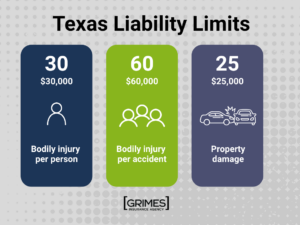
If you own your car, you have more flexibility. However, most states still require drivers to carry a minimum amount of liability coverage, even when their vehicle isn’t leased. In Texas, the state minimum is 30/60/25. This covers $30,000 per person, $60,000 per accident, and $25,000 in property damage.
However, keep in mind that minimum coverage often isn’t enough. According to Kelley Blue Book, the average new car buyer pays $49,191 for their vehicle! If you were to cause an accident with a newer car, the minimum property damage limit most likely won’t come close to covering the cost, leaving you personally responsible for the rest. As vehicle values continue to rise, we often recommend reviewing your liability limits instead of automatically choosing the state minimum simply because it’s the least expensive option.
Curious if minimum coverage could be your best bet? Read is minimum car insurance coverage ever enough to learn more about your auto coverage options.
How much does auto insurance cost?
Unfortunately, there is no single number that applies to everyone. Auto insurance premiums are calculated based on several factors specific to you and your vehicle, including:
- Your personal information
- Your driving record and claims history
- The make, model, and age of your vehicle
- Where you live and how often you drive
For example, full coverage insurance in Texas alone could cost you between $140-$260 in monthly premiums. However, your personal details are what drive those averages up or down.
However much your auto premiums might cost, Grimes Insurance is willing to help you find ways to lower your rates. To learn more about your potential savings, read How Grimes Helps Drivers Save on Car Insurance.
What Does Home Insurance Cover?
Homeowners insurance protects your house and your financial investment from sudden, accidental losses caused by covered perils such as fire, windstorms, hail, theft, and vandalism. to your home. If a pipe bursts in your home, or your house was damaged in a fire, home coverage helps pay for those specific situations.
What are the types of home insurance coverage?
A standard homeowners policy covers the following primary areas:
| Type of Coverage | What it Covers |
| Dwelling Coverage | Damage to your walls, roof, foundation, and permanently attached systems from covered perils (fire, windstorm, vandalism, etc.) |
| Other Structures Coverage | Repairs to structures on your property that are not attached to your home (sheds, carports, etc.) |
| Personal Property Coverage | Your belongings inside the home (appliances, furniture, personal items, etc.) |
| Liability | Legal defense costs, medical bills, and judgments if someone is injured on your property and sues |
| Additional living expenses | Temporary housing and related costs if a covered loss makes your home uninhabitable |
Is home insurance coverage required?
Homeowners who carry a mortgage are required to have home insurance for the life of your loan. If you live in a rented home or apartment, your landlord might require a different type of coverage called renter’s insurance, although it’s not legally mandated.
If your home is paid off, you’re legally allowed to drop your coverage. However, keep in mind that without homeowners insurance, you are left personally responsible for all damage costs if a loss were to happen.
How much does home insurance cost?
Like auto insurance, there are multiple factors that contribute to your home insurance premiums. Insurers look at details like your:
- Personal details
- Property address
- Home and construction type
- Roof age and condition
- Square footage
In Lubbock specifically, home insurance typically ranges from under $1,000 per year for new, lower-value homes to $3,000-$4,000 or more for higher-value or older properties. Keep in mind that because of our frequent hail and wind exposures (thanks to good ole’ West Texas), homeowners here often pay significantly more than the national average.
To learn more about what affects home insurance rates in Lubbock, read about How Much Home Insurance Usually Costs in Lubbock.
What is Life Insurance?
Life insurance is a policy designed to provide financial protection for the people who depend on you. If you pass away while your policy is active, your beneficiaries will receive a death benefit. The benefit helps cover expenses like:
- Funeral costs
- Mortgage payments
- Debts
- Childcare and education costs
- Everyday life expenses
What are the types of life insurance?
| Type of Coverage | What it Covers |
| Term life insurance | Coverage for a specific period of time (10, 20, or 30 years), typically at a lower cost |
| Permanent life insurance (also known as whole life) | Permanent coverage that lasts your entire life and can build cash value over time |
Is life insurance coverage required?
Life insurance isn’t legally required the way auto or home insurance can be. It’s a personal decision based on who depends on your income and what financial obligations you’d want covered if something happened to you.
Because it’s optional, life insurance is often something people put off… until they actually need it. Our recommendation? Don’t wait to discuss life insurance until it’s too late. Getting married, having a child, buying a home, or a change in income are all common situations where considering life insurance may be beneficial.
How much does life insurance cost?
Because they provide coverage for larger amounts of time, whole life policies typically cost more than term life policies. However, like any other type of insurance, your life insurance policy should be tailored to what you need. If not, you risk leaving your loved ones exposed once you pass away.
The monthly amount you pay for life insurance depends on a combination of factors, such as:
- Your age
- Your gender
- Your occupation
- Your health history
For example, a 30-year-old female might pay $184 in annual premiums for a 20-year, $500,000 term policy. On the other hand, a $500,000 whole life policy might cost the same policyholder around $3,292 in annual premiums.
If you’re curious about how term and whole life insurance compare beyond price, read term vs. whole life insurance to learn more.
Can I Buy Auto, Home, and Life Insurance Together?
Auto and home insurance are commonly bundled together, and there are real advantages to doing so. Some carriers offer a shared “common event” deductible, meaning if a single event, like a hailstorm, damages both your home and vehicle, you’d only pay one deductible instead of two. Staying with the same carrier over time can also come with loyalty perks and discounted premiums.
Now, life insurance isn’t typically bundled the same way auto and home are. We’ve seen it’s often written as its own separate policy and sometimes through a different carrier entirely. Unfortunately, most of our current insurance carriers do not offer bundling life with home and auto. Although carrier standards vary, it’s worth discussing a bundle with your insurance agent to see which options are available to you.
In recent years, we’ve seen drivers save on average 3-5% by bundling home and auto coverages. Adding a life or umbrella policy into that same bundle can help transform your premium with helpful discounts. To learn more about bundling your home and auto insurance, read To Bundle or Not to Bundle to see if it may be right for you.
Grimes Can Help You Find the Right Coverage
Choosing insurance doesn’t have to be confusing. Auto, home, and life insurance each protect a different part of your financial life. While they serve different purposes, they all have one thing in common: the right coverage today may not be the right coverage a few years from now.
Whether you’ve purchased a new home, upgraded your vehicles, welcomed a new family member, or simply haven’t reviewed your policies in a while, it’s worth taking time to ensure your coverage reflects your life. Now that you understand the differences between auto, home, and life insurance, you have a better idea of what each policy protects and how they can apply to your situation.
At Grimes Insurance Agency, we’ve spent decades helping West Texas families understand their coverage options. Recently, a client came looking for home and auto insurance. After answering their questions and walking them through their compared quotes, we helped them find the right coverage AND save over $2,000 for their needs!
For us, finding the right coverage isn’t just about finding the lowest premium, but making sure you have protection that fits your needs and budget. If you’re ready to compare policies or aren’t sure whether your current coverage is enough, your next step is to request a personalized insurance quote. We’ll walk you through your options, answer your questions, and help you determine which coverages make the most sense for you.


