4 Common Contractor Insurance Gaps
By: Ryan Rogers, Commercial Lines – Executive
Executive Summary:
Contractor insurance gaps can develop when your policy no longer matches the way your business operates. Four common problems include inaccurate information on your insurance application, taking on work outside your primary trade, relying on uninsured subcontractors, and overlooking workers’ compensation exposure. Reviewing these areas before a claim can help you identify potential gaps while there’s still time to address them.
Have you ever been on a leaky boat? Imagine stepping into a boat that looks perfectly sturdy on land. You expect it to keep you dry… until it hits the water and you find yourself in trouble. Soaked and sinking, you realize a sneaky little hole has left you exposed.
Contractor insurance gaps paint the same picture. What might look like a solid business policy can turn out to be full of holes, leaking coverage where (and when) your company needs it the most.
At Grimes Insurance Agency, we understand how the details of a contractor’s operations can affect coverage, eligibility, and cost. With over 75 years of commercial experience, we’ve seen how seemingly small details can create significant problems when they’re not addressed before a claim.
In this article, we’ll look at four common contractor insurance gaps, what causes them, and what you can do to identify them before they become a problem.
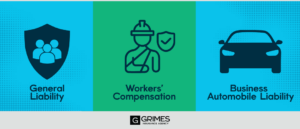
Note: This article focuses primarily on general liability and workers’ compensation exposures. A complete commercial insurance policy may also include commercial auto, property, tools and equipment, and other coverages.
1. What Happens if Your Contractor Insurance Application is Inaccurate?
One of the first places a coverage gap can develop is before your policy is even issued.
When you apply for contractor insurance, your carrier needs an accurate picture of your business to determine what it is willing to insure and how to structure your policy. That’s why many contractor and roofer policies require a supplemental application before coverage is bound.
Contractor Supplemental Application Example:
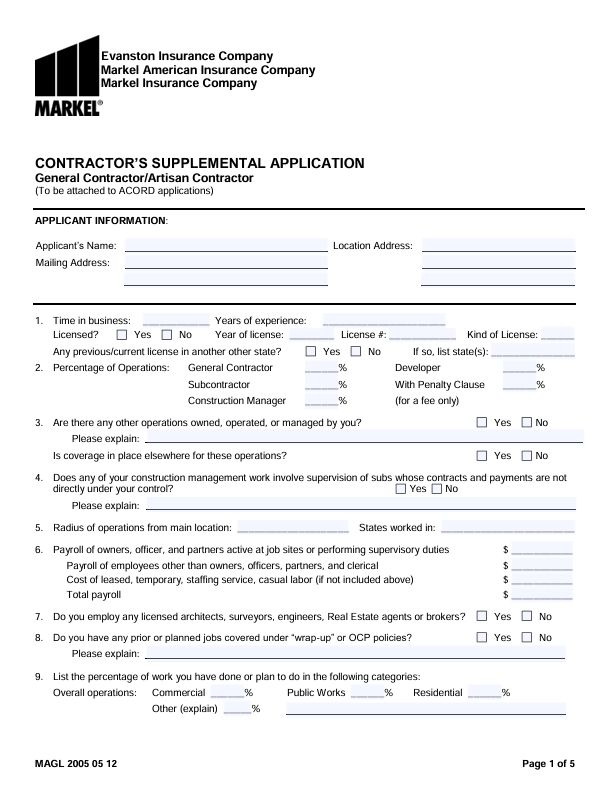
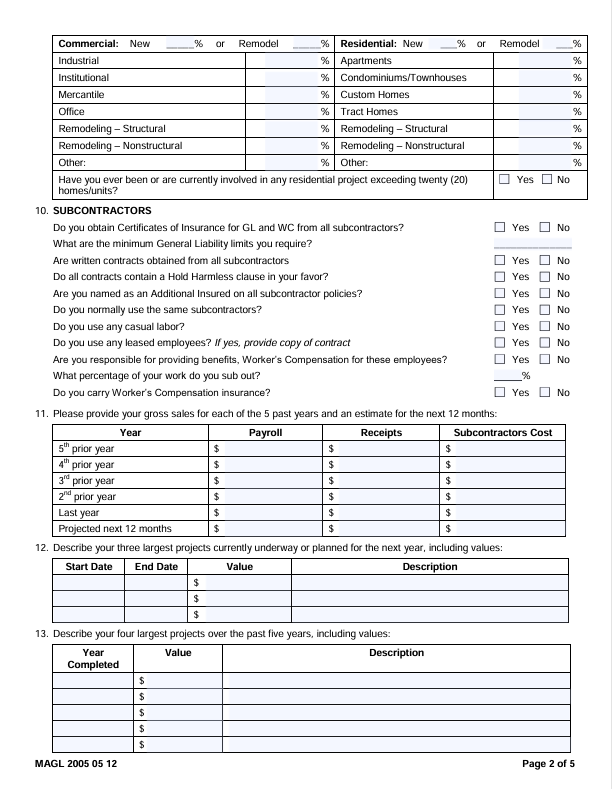
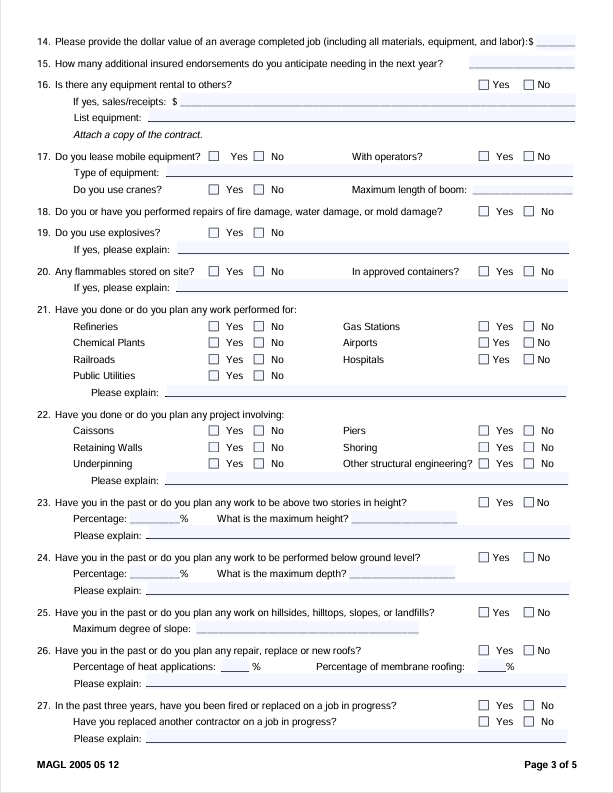
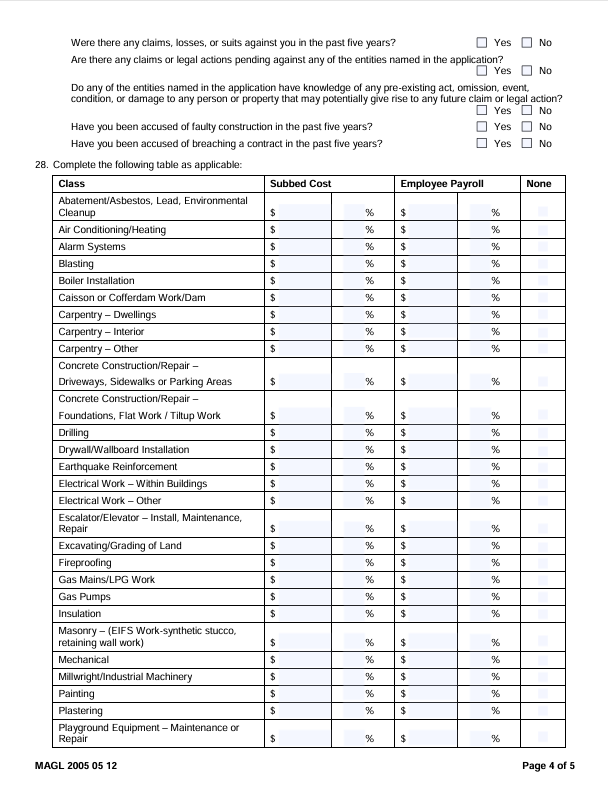
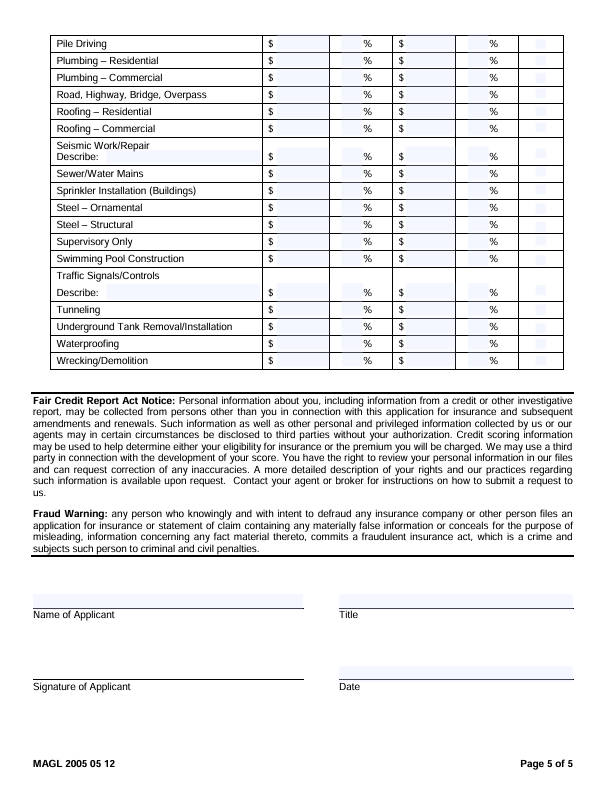
These applications can ask about details such as:
- The types of work you perform
- Whether you work on new construction or existing structures
- How often you use subcontractors
- Whether subcontractors carry their own insurance
- The size and scope of your projects
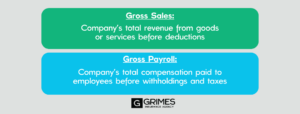
- Your estimated gross sales and payroll
A supplemental application is more than paperwork. It lays the foundation for the coverage and pricing you receive. The information you provide helps your insurance carrier understand the risk they’re being asked to insure.
What happens when the information isn’t accurate?
Sometimes an inaccurate answer is an honest mistake and can be corrected by talking with your agent. Other inaccuracies may be identified during the annual insurance audit, which reviews your business information and actual exposures.
However, waiting until the annual audit to make a change can end up being costly.
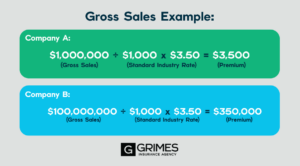
One of the most common mistakes we’ve seen happen is misestimating gross sales or payroll estimates. If your actual numbers are significantly higher (or lower) than your estimates, you could owe additional premium when those numbers are reviewed.
An example: a costly underestimation
In one prior roofing client example, the company estimated their annual sales at $6,000,000. Using this number as a factor, their original premium was rated at $50,000.
However, their sales nearly doubled their estimate, producing $11,000,000 in gross sales. After the yearly audit, they were billed an additional $39,000 in premium to settle the difference.
Sometimes, your business simply changes after the application is completed. And oftentimes, the change is for the good. Either way, the end result can be the same: your policy might not be reflecting the business you’re actually running.
How can you avoid this gap?
Complete the application based on how your business actually operates, not how you expect it to.
Before binding coverage, review your answers carefully. Make sure your work, subcontractor use, project types, sales, and payroll estimates accurately describe your business.
When you’re unsure how to answer a question, ask your agent to walk through it with you before submitting. Client education and understanding are an essential part of preventing coverage gaps.
If you’re ever unclear about your supplemental application information, or have additional insurance questions, feel free to give us a call, and Grimes Insurance Agency can help you sort it out.
2. Can Taking on Different Types of Work Create a Contractor Insurance Gap?
As a contractor, you probably consider yourself according to your primary trade:
“We’re a siding contractor.” “We’re a roofer!” “We’re a concrete contractor.”
But what happens when you start taking on work outside of that category?
A siding contractor, for example, may occasionally accept roofing, gutter, or exterior projects. That flexibility can help your business grow… but it can also create an insurance issue if your policy only reflects your primary trade.
Adding a higher-risk service can affect your classification, eligibility, or premium—even if that service represents only a small portion of your business.
Why can mixed-trade work create coverage problems?
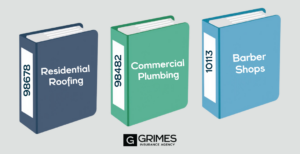
Insurance carriers use classifications to evaluate the risks associated with different types of contracting and commercial work. These look like numbered “class codes” assigned to your business, based on the type of work you offer.
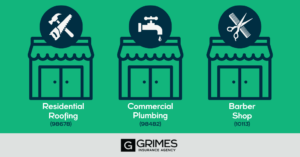
For example, a business may earn most of its revenue from siding, but occasionally take on roofing work. Roofing presents a different risk than siding, so your insurance carrier may need additional information before determining how that work should be classified and rated.
Want a more in-depth understanding of class codes? Read our Guide to Comparing Contractor Insurance Quotes to learn more about why these classifications matter.
How can you avoid this gap?
Tell your agent when your services change, even if the new work is occasional. Before adding a service, ask how it may affect your existing coverage, classification, eligibility, and premium.
If you regularly perform significantly different types of work, you may also want to discuss your business structure with your insurance agent and other professional advisers. Separate entities may make sense in some situations, but they are not appropriate for every contractor.
3. Does Your Contractor Insurance Account for Your Subcontractors?
Subcontractors can be helpful additions for your business operations. But hiring another company to perform work doesn’t automatically eliminate your exposure.
Imagine you hire a subcontractor who damages a customer’s property. Or their work contributes to a claim. Or, maybe they end up injured during a project.
You might expect their subcontractor insurance to respond, but do you actually know what coverage they carry?
The thing is, your general liability policy does not necessarily provide the same protection regardless of whether a subcontractor has their own insurance. Some policies may provide coverage in certain situations, while others may exclude work performed by uninsured subcontractors or apply different conditions.
Your policy’s language controls how your coverage responds to subcontractor-related exposures.
Why is this a common contractor insurance gap?
Texas is different from many states because not all contractors are required to hold a license or insurance. Whether a contractor needs a license can depend on the trade and the location where they work. Texas-specific licensing information should be reviewed alongside your own insurance requirements.
This can make it especially difficult to understand who you’re hiring, what insurance they carry, and how your own policy responds if they don’t have coverage.
What should you check before hiring a subcontractor?
Before hiring a subcontractor, consider:
- Does your contractor policy require specific insurance?
- Does the subcontractor carry general liability insurance?
- Does the subcontractor carry workers’ compensation insurance?
- Does your policy address uninsured subcontractors?
- What documentation should you collect?
Maintaining up-to-date documentation, like certificates of insurance (COI), is the best way to stay on top of these details before gaps happen. A certificate of insurance is the document you provide to customers, project owners, or contractors (like yourself) to prove your business carries the required insurance coverage.
Other helpful records to keep on file include:
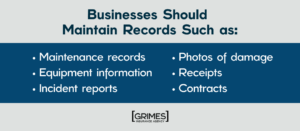
The goal isn’t simply to collect a certificate and check a box. It’s to understand where responsibility falls if something goes wrong.
If you regularly rely on subcontractors, talk with your agent about how your specific policy treats their work before you need to rely on that coverage.
4. Could You Have a Workers’ Compensation Insurance Gap?
It’s important to understand that not every insurance gap involves liability. Workers’ compensation can create another significant area of exposure.
Texas has different standards from many states when it comes to private employer workers’ compensation coverage. In fact, most private employers in Texas aren’t required to have workers’ compensation coverage. However, choosing not to subscribe can create different legal and financial exposures if an employee is injured.
The fact that workers’ compensation may be optional doesn’t mean the decision has no consequences.
How can you address this potential gap?
One option is to add workers’ compensation to your insurance policy. It may be an important way to protect your business, employees, and operations, but every business has different circumstances.
Talk with your insurance agent about your options and the exposures your company may face before deciding whether workers’ compensation is appropriate for your business.
How does your claims history affect your workers’ compensation costs?
If workers’ compensation is the right choice for your company, your claims history can also affect your premium costs through your experience modification factor (EMOD).
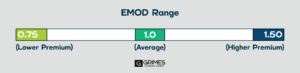
In simple terms, your EMOD is a scaled value that shows how your business compares to others within the industry based on your workplace losses. A higher EMOD increases your premium. A lower EMOD decreases it.
Interested in learning how to lower your company’s EMOD score? Read about How Much Contractor Insurance Costs to learn 4 ways to keep your score in check.
What Should You Do if You Think Your Contractor Insurance Has a Gap?
Contractor insurance gaps often develop when your business changes but your insurance doesn’t change with it.
Maybe the application doesn’t accurately describe your business. Maybe you’ve added work since the policy was issued. Or maybe you’ve assumed coverage where your business’ policy simply doesn’t include it.
Each one can create an exposure that’s difficult to recognize until something happens.
If your business has changed since your last policy review, you don’t have to wait for renewal (or a claim) to find out whether your coverage still fits. Give our team a call, and we’ll connect you with an agent to review your current coverage.
At Grimes Insurance Agency, we can help you identify potential gaps and determine whether your policy reflects the business you’re actually running. Unsure if Grimes may be the right fit? Learn Why West Texas Contractors Trust Grimes with their business insurance needs. Even if you don’t work with our team, we want your business to be well equipped with the right coverage.