
A Guide to Comparing Contractor Insurance Quotes
By: Ryan Rogers, Commercial Lines – Executive
If you’ve ever received multiple contractor insurance quotes and the premiums look nearly identical, how do you know which one is right for you? Price is easy to compare, but it doesn’t tell you whether two policies provide the same coverage.
To most policyholders’ surprise, price alone rarely tells the whole story. Two quotes can carry nearly identical premiums and still protect one business dramatically better than the other. So, what else are you supposed to look for? It’s a question we’ve helped answer for decades.
At Grimes Insurance Agency, our commercial lines team has helped contractors compare their options for over 78 years. We currently represent several commercial contractors and are dedicated to educating clients about the right coverage for their business.
By the end of this article, you will know:
- What to look for when comparing contractor quotes
- How to know which contractor coverage is the best fit
- What questions you should ask when comparing
A quick note before we dive in: everything below focuses on general liability coverage. A full commercial insurance package for a contracting business typically also includes commercial auto, property, workers’ comp, and sometimes umbrella coverage – each with its own set of considerations.
What Should I Look for When Comparing Contractor Insurance Quotes?
There’s more to your insurance policy than price, especially when insuring your contractor business. The thing is, businesses are built differently. While you may be in a similar contracting market, your business is unique to you. In the same vein, your policy should be, too.
What your policy covers should be specific to the work you do. From our experience with local contractors, there are four items you should pay attention to when comparing your insurance quote:
- Your company’s classification codes
- How your company’s policy is rated
- The exclusions listed on your policy
- How your policy includes subtractors
Let’s break each of these down together.
1. Verify your insurance classification codes
A classification (often shortened to class) code is a number used by insurance companies to group businesses and jobs by their levels of risk.
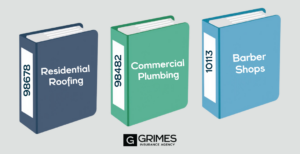
Think about it like a library; There are thousands of books all organized by genre, author, and title. The same idea applies to insurance classification codes. Contractors, barber shops, and insurance agents are all classified differently.
Why do class codes matter?
Class codes can drive your premium rate. Specifically for general liability insurance, it can also affect your eligibility for a policy.
Think about it this way: a plumber’s class code carries a lower rate than a roofer’s simply because roofing naturally has a greater risk. Even something that sounds low-risk, like window cleaning, can jump into a much higher-rated class once the work goes above two stories.
Who assigns classification codes?
Because not all states rely on the same kind of classification system, it can vary. However, a common system insurers use is the National Council of Compensation Insurance (NCCI).
There are also specific classification codes for different types of commercial insurance. Meaning, you often have more than one class code to look for. This article is specifically discussing general liability. However, other types of commercial insurance that use specific class codes include:
- Workers’ compensation
- Commercial auto
- Commercial property
Class codes can get more complicated when you look beyond general liability. To understand how classification codes affect different types of commercial insurance, USA Business Services Inc. breaks down how these codes are used across different policies in its guide to commercial class codes.
How can your contractor business be misclassified?
You could be accidentally misclassified in a few different ways. Sometimes the wrong information gets passed along, or maybe your underwriter made an assumption based on incomplete details.
Either way, the fix is the same: ensure that your insurance agent has a full, accurate picture of what your business does before a quote is ever built. If you’re insured as a roofing contractor, but also offer gutter repair services, it’s important to communicate that with your agent so that your class codes reflect correctly in your quoted premium.
How do I find my classification code?
You might look at your contractor’s quote and realize that you don’t even know your business’ class. You’re not the only one.
There are a handful of websites where you can search for your classification based on your industry and the type of commercial insurance you’re purchasing. Consider reviewing your class code using one of these tools:
- RT Specialty Connector
- Insurance Xdate
- NCCI Class Look-Up (must have your NCCI login)
While these tools can be a helpful resource, always verify your classification information with your insurance agent before assuming your codes are correct.
2. Understand how your contractor policy is rated
Contractor policies are typically rated one of two ways:
- Based on your gross sales
- Based on your payroll
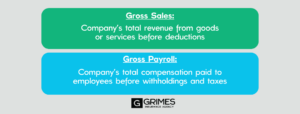
On paper, a payroll-based quote often comes in lower. However, in practice, payroll tends to be far more volatile than gross sales. A stronger year, a few new hires, or some overtime can push your payroll up dramatically.
That difference is more important than you might think, and it typically gets caught (and billed for) when annual audit time comes around.
In our client experiences, gross sales tend to move less dramatically year to year, making it a steadier number to build a policy around. If two quotes look similar, but one is based on payroll and the other on gross sales, don’t assume they’re apples to apples. The payroll-based policy may look cheaper today and cost you more down the road in unexpected premium jumps.
Interested in learning more about how these rates affect your commercial policy? Read How Much Does Contractor Insurance Cost? to understand how your policy can be calculated.
3. Carefully review the exclusions listed in your policy
This is the step where quotes that look nearly identical can turn out to be worlds apart.
What is an exclusion?
Exclusions are the specific situations or types of work a policy won’t cover. If a loss were to happen because of the excluded cause, your insurance provider would not pay for the incident. This information is often buried deep in the pages of a policy most people never read.
An exclusion example: A local roofing company
A recent client insuring their roofing company was paying around $6,000 a year for a policy that excluded “hot work”. Hot work is any labor involving torches or heat, which many roofers use to melt tar or adhesive when securing roof flashing, even if torch-down roofing isn’t their main service.
When their crew accidentally started a fire that spread to a garage, the total uncovered claim cost roughly $89,000 (ouch!). Because hot work was excluded from their policy, none of the damage was covered, causing the business owner to pay the entire amount out of pocket.
That’s the risk of chasing the lowest number. Most contractors don’t realize what they may be giving up in coverage just to get to a lower price.
4. Ask about your policy’s subcontractor usage
If your business relies heavily on subcontractors, this is one of the most important (and commonly overlooked) pieces of a quote.
Some policies will cover labor performed by uninsured subcontractors. Others will exclude it outright. If you’re using subs and haven’t confirmed which category your policy falls into, you could be assuming coverage that simply isn’t there.
This is especially relevant in Texas, where not all contractors are required to carry insurance or hold a license to take on work. It’s common, which means it’s worth a direct conversation with your agent about how your policy treats uninsured subcontractor work.
How do I know which contractor insurance quote is best?
Once you’ve looked beyond the premium, you can start comparing the quotes based on how well each one fits your business.
Instead of asking, “Which quote is cheapest?” begin to ask, “Which quote gives my business the coverage it needs at a price that makes sense?”
A simple way to do this is to put your quotes side by side and look for meaningful differences, like this:
| Quote 1 | Quote 2 | |
| Annual premium | $5,400 | $5,900 |
| Class codes | Roofing | Roofing + gutter work |
| Rating basis | Payroll | Gross sales |
| Liability limits | $1 million/ $2 million | $1 million/ $2 million |
| Exclusions | Hot work | No hot-work exclusion |
| Subcontractor provisions | Excludes certain uninsured subcontractor work | Provides coverage for eligible subcontractor work |
Quote 1 is $500 cheaper. But if the contractor performs hot work and regularly uses uninsured subcontractors, the cheaper quote may not provide the coverage their business actually needs. On the other hand, if the two quotes provide essentially the same coverage and one costs significantly more, it’s reasonable to ask the agent why.
So, is quote 1 or 2 the best? Your answer: The better quote is the one that appropriately covers the contractor’s actual operations and needs.
The goal isn’t necessarily to find a quote that wins every category. It’s to identify why the quotes are different and decide whether those differences matter to your business.
Learn more about how you can find the best insurance for your contracting business:
What Questions Should You Ask Before Choosing a Contractor Insurance Policy?
If you’re having trouble determining how two quotes differ, take them back to your agent and ask them to explain the differences.
Here are a few questions to start with:
- Why is one quote more expensive than the other?
- Are both quotes using the same classification codes?
- Are there any coverage differences I should be aware of?
- Is either quote excluding work that my business performs?
- How does each policy treat subcontractor labor?
- Is there anything about either quote that you would recommend I change based on my business?
It’s important to remember that you don’t have to do the comparison alone. At Grimes Insurance, your agent is with you at every step of the process. If you find yourself confused between quotes, call our office, and we can help explain your options and which may be the best fit for your business.
The Best Contractor Insurance Quote Isn’t Always the Cheapest
When you first receive a handful of insurance quotes, the premium is probably the number you’ll notice first. But the real question is what your business is getting for that premium.
Before you choose your contractor insurance policy, put your quotes side by side, identify the differences, and ask your agent to explain anything you don’t understand.
If you’re still comparing contractor insurance options and would like to walk through them with an agent, give us a call, and we’ll connect you. At Grimes Insurance, we can help you understand the differences between your options and determine which coverage may be the best fit for your business.
Unsure if Grimes may be the right fit? Learn Why West Texas Contractors Trust Grimes with their business insurance needs. Even if you don’t work with our team, we want your business to be well equipped and covered.


