
What Happens if a Business is Underinsured?
By: Carlos Chavira, Commercial Lines – Executive
Executive Summary:
If your business insurance doesn’t cover the full cost of a claim, you may have to pay the difference out of pocket. The right coverage depends on your business’s services, property, employees, vehicles, contracts, and potential risks. Reviewing your policy regularly can help you identify coverage gaps before an accident or lawsuit puts your business finances at risk.
Is your business actually covered, or do you just have “enough”?
The danger of being underinsured isn’t a risk business owners think about until something actually happens. A lawsuit, property damage, or an accident on a job site can quickly turn into an expensive problem when your insurance doesn’t cover the full loss.
Grimes Insurance Agency has helped West Texas businesses navigate their insurance needs since 1948. And over the years, one thing has proven true: having insurance doesn’t necessarily mean you have enough coverage to protect your business.
So, what happens when your coverage falls short… and what can you do about it?
By the end of this article, you’ll know:
- What it means to be underinsured
- What can happen when your coverage isn’t enough
- How to recognize potential gaps before you need to file a claim
What does it mean for a business to be underinsured?
A business is underinsured when its insurance coverage isn’t enough to handle a loss, damage, lawsuit, or professional claim. You have an insurance policy, but your limits, coverages, or details don’t fully match the risks your business regularly faces.
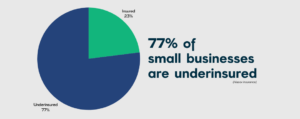
The most common reason? Business owners often want the minimum coverage for the lowest price. It’s a conversation we have with nearly every client, and we get it. In fact, 77% of small businesses are underinsured!
Running a business isn’t cheap, and trying to insure it isn’t always either. But choosing coverage based only on price can leave your business exposed to much larger expenses later.
What are the financial consequences of your business being underinsured?
When a claim exceeds your policy limits, your business is responsible for paying the difference. Depending on the size of the loss, that expense could affect more than your insurance loss history. The cost of underinsurance could:
- Deplete your business savings
- Impact your company cash flow
- Affect your current operations
The bottom line: being underinsured is expensive.
An Unfortunate (And Expensive) Underinsured Example
We’ve had many clients come to us for direction after encountering an underinsured accident.
For example, a contractor was once hired to install an AC in a strip mall center. While using a crane to lift it toward the roof, the unit slipped and crashed into the stores next door. As you can imagine, the total cost of the damage exceeded their insurance limits, forcing the contractor to pay the remainder of the bill out-of-pocket.
While it’s a story no business owner wants to imagine themselves in, it’s an eye-opening reminder to ensure your coverage limits are sufficient before a claim occurs.
Fortunately, you don’t have to wait for a claim to discover a coverage gap. Grimes Insurance Agency can help you anticipate where your current policy may fall short. Feel free to call our office to discuss your business’ coverage with our commercial team.
How do you know if your business is underinsured?
Insurance gaps can develop when your coverage no longer matches the way your business operates. Even if you have an active policy, changes to your services, revenue, employees, or projects can create risks worth reviewing.
Some signs your business might be experiencing insurance gaps include:
- Your policy lists inaccurate or outdated information
- You’ve added new or different services
- Your business has changed in size (either grown bigger or smaller)
- You rely on uninsured subcontractors
- You’ve purchased new equipment or company vehicles

These are just a few examples of how a policy can fall short of a business’ actual needs. For a closer look at each issue, read our guide to 4 Common Contractor Insurance Gaps to learn how you can avoid being underinsured.
How can you avoid being underinsured?
You can’t predict every accident or lawsuit, but you can take practical steps to make sure your insurance doesn’t fall behind.
Start your renewal review early
Waiting until the last minute can limit your opportunity to compare options and ask questions.
We recommend contacting your insurance agent around 60 days before your renewal date. That gives you time to review your current policy, discuss changes to your business, explore your options, and make informed decisions before coverage renews.
Review your coverage at least once a year
Tattoo it on your forehead. Make a reminder on your phone. Whatever you have to do to remember: don’t wait to think about your coverage! We’ve seen it one too many times where clients forget to update their coverage until it’s too late.

We recommend reviewing your coverage with an agent every year at renewal. A regular review gives you an opportunity to discuss your business’s operations, property, revenue, employees, vehicles, contracts, and plans. It can also help you identify changes that should be reported to your insurer.
Tell your agent when your business changes
Has your business grown, taken on larger jobs, increased revenue, or made other meaningful changes? If so, bring them up to your insurance agent when they happen.
Even if the change seems minor, it may affect how your business’s risk is assessed or what coverage is appropriate. More importantly, it can help prevent surprises when you need to make a claim.
We’ve had many clients expand their business to include multiple trades. For instance, a plumbing company wanted to start offering HVAC services. Because the client shared this with their agent, our commercial team modified their existing policy before they took on an uncovered job.
A quick chat with your agent can make a world of difference for your insurance policy. If you’re getting ready to discuss your business’s coverage, feel free to call our office anytime to connect with a Grimes agent.
Check your insurance requirements and exclusions
While the Texas Department of Insurance (TDI) provides a standard for how businesses should be insured, our state doesn’t require most businesses to carry workers’ compensation or general liability insurance to operate. However, your industry, contracts, and business activities may determine what coverage you need or are required to carry.
For example, a local roofing company was paying around $6,000 a year for a policy that excluded hot work, which is a common type of labor for roofers. After the crew accidentally started a fire that caused roughly $89,000 in damage (ouch!), the exclusion left the business owner responsible for the uncovered loss.
Before assuming your current policy is sufficient, check a few things:
- Does your landlord, lender, client, or project agreement require specific coverage or limits?
- Does the business you run have specific insurance or bonding requirements?
- Does your policy currently exclude any necessary coverages your profession needs?
- Do your business vehicles have the appropriate insurance coverage and meet applicable requirements?
- Are your employees adequately covered and taken care of by your insurance policy?
Meeting a legal or contractual requirement doesn’t automatically mean you have enough coverage for every potential loss. Review your policy limits alongside your actual business risks, and talk with your insurance agent if you’re unsure whether your coverage is adequate.
Compare more than just the premium
A lower premium may be appealing, but it doesn’t tell you everything you need to know about a policy.
When comparing insurance options, look at the coverage provided, limits, exclusions, deductibles, and any requirements that apply to your business. Two policies with similar prices may not provide the same protection.
Are you having trouble deciding between policy quotes? Read our Guide to Comparing Contractor Insurance Quotes to learn what to keep in mind for decision time.
The goal isn’t to buy the most insurance possible, but to understand your risks and choose coverage that fits your business and budget just right.
Grimes Insurance can help you properly insure your business
Being underinsured can turn an unexpected accident or lawsuit into a significant financial burden. A successful business is bound to change and grow. And it only makes sense that your coverage changes with it. When it doesn’t, that’s when underinsured accidents happen.
Your insurance should reflect the business you operate today, not just the one you started with. Renewing your coverage regularly, keeping your business details accurate, and asking questions about your policy can help you identify potential gaps before you need to rely on it.
Not sure whether your business has the right coverage? You don’t have to figure it out alone. Grimes Insurance Agency has helped local businesses review their policies since 1948, and we’re ready to help you do the same.
You can request a business insurance quote anytime and discuss your policy with an agent. Or, if you’re not quite ready for a quote, read Why West Texas Contractors Trust Grimes to learn how we have your business’ back.


