
3 Steps for Filing a Storm Claim in Texas
By: Becky Wooten, Customer Advisor
Executive Summary:
After a hail or windstorm damages your home, start by documenting any visible damage and arranging an inspection with a reputable, local roofer. Contact your insurance agent promptly to understand your policy, wind and hail deductible, and claim-reporting requirements before deciding how to proceed. If you have a mortgage, verify your lender’s information on your policy and ask about its requirements for handling insurance claim payments.
Taking these steps can help you understand your options, prepare for the claims process, and avoid preventable delays.
It’s a warm, sunny day in West Texas. The forecast calls for clear skies and no rain in the foreseeable future. Until, all of a sudden, the sky turns dark. Before you know it, your front yard is flooded, and you begin to hear the familiar rhythm of hail on your roof.
In an area like ours, wind and hailstorms can develop quickly, leaving Lubbock homeowners wondering what to do first. Should you call a roofer? Should you file an insurance claim? How much will your deductible cost? And what happens if your mortgage company is involved in the claim payment?
With so many decisions to make, it’s easy to feel overwhelmed.
Grimes Insurance has been helping West Texas families navigate insurance questions since 1948. We understand how important it is to know what your policy covers, what you may have to pay out of pocket, and what to expect when storm damage occurs.
In this guide, we will:
- Walk you through 3 steps to take after a hail or windstorm
- Explain why each one matters
- Help you prepare for the insurance claims process
- Explain what to expect when storm damage occurs
What should I do first after a hail or windstorm?
Short on time? Watch our video summary below:
1. Have a local roofer inspect your roof
After a hail or windstorm, start by documenting any visible damage and arranging an inspection with a reputable local roofer.
You might notice missing shingles, damaged gutters, dents on metal surfaces, or debris around your property. However, some roof damage can be difficult to identify from the ground.
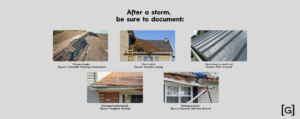
Keep in mind that while there are general roofing contractors that can complete most of these repairs, not all roofing contractors take on additional construction. You may be referred to a different contractor for some damage repairs.
If your home is in immediate need of repair, including gaping holes, active leaks, etc., call your roofer to ask how they recommend preventing further damage. Please hear us: DO NOT climb onto your roof to inspect it yourself. Roofs can be slippery, unstable, or otherwise dangerous after a storm. So, it’s best to leave that job to the professionals.
How do I look for a reputable roofer?
Following a major storm, you may see roofing contractors from outside the area going door to door. Before hiring someone, take time to check their reputation, references, proof of insurance, and experience with similar projects.
A reputable roofer should be able to:
- Inspect your roof for visible storm damage
- Document damage with photos and other evidence
- Provide an estimate for necessary repairs
- Explain what work may be needed
- Help you understand the repair process
A local company may also be easier to reach if questions or problems come up after the work is completed.
If you’re looking for a roofing contractor in the Lubbock area, ask for recommendations and compare qualified companies before making a decision. Many of our local clients have successfully worked with West Texas Commercial Roofing and Hartman Roofing Lubbock.
Remember that a roofer’s inspection and estimate are not the same as an insurance coverage decision. Your insurer determines coverage under your policy, and the amount it pays may differ from a contractor’s estimate.
If possible, obtain documentation and an estimate to help you understand the potential repair costs. However, don’t delay contacting your insurance agent while waiting for an inspection. Your policy may include specific claim-reporting requirements or deadlines.
2. Call your insurance agent before you file a claim
Before deciding how to proceed with a claim, contact your insurance agent or carrier to discuss your coverage, deductible, and reporting requirements.
A storm can cause thousands of dollars in damage, but the amount you may receive from an insurance claim depends on your policy, the covered damage, your deductible, and other applicable terms.
One detail that can catch homeowners off guard is a separate wind or hail deductible.
How much is a wind and hail deductible in Texas?
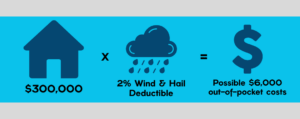
In West Texas, wind and hail deductibles are calculated as a percentage of your home’s insured dwelling (also known as Coverage A) limit, rather than a fixed dollar amount. This is common in places with a higher risk of hail, wind, tornadoes, and other storm events. In our area, that percentage is commonly 2%.
For example, if your policy has a $300,000 dwelling limit and a 2% wind and hail deductible, your deductible (aka, what you’re required to pay up to) would be $6,000.
 While a 2% deductible is the most common across carriers, some policies can go up to 5%. Let’s look at a few different examples of dwelling limits:
| Home value | 2% wind and hail deductible | 3% wind and hail deductible | 5% wind and hail deductible |
| $250,000 | $5,000 | $7,500 | $12,500 |
| $300,000 | $6,000 | $9,000 | $15,000 |
| $400,000 | $8,000 | $12,000 | $20,000 |
**These are examples, not actual quotes or a statement of what every Texas homeowner pays.
Your deductible is determined by the terms of your individual policy, including the value used to calculate it. A percentage-based deductible can mean paying several thousand dollars out of pocket before insurance contributes to a covered loss.
Should I File an Insurance Claim for Storm Damage?
Deciding to file a claim depends on your circumstances.
Before making a decision, you should consider:
- The estimated cost of repairs
- Your policy’s applicable deductible
- Whether the damage appears to be covered
- Any policy requirements or deadlines for reporting the damage
- The potential out-of-pocket cost
At Grimes Insurance, we understand how stressful storm damage can be.
For example, imagine a hailstorm leaves $6000 in damage when your deductible is $5000. If your claim is approved, the insurer would pay about $1000, and your premium could rise at renewal by more than that. Some homeowners still file, and that’s a reasonable choice, especially if they’re worried the damage could turn out to be worse than it looks.
But we also know how stressful it is to pay more out of pocket than you expected, or to run into a surprise in your coverage when you can least afford it. That’s why we encourage homeowners to learn their deductible before a storm hits, so whether you file a claim or decide not to, you’re making an informed choice.
The important thing is to understand your coverage and potential out-of-pocket cost before making a decision.
Interested in learning more about what the claims process looks like? Read How Does Grimes Insurance Agency Handle Claims? to understand how your insurance agent will walk you through each step.
3. Verify your mortgage information
If you have a mortgage on your home, check that your mortgage company’s name and information are correct on your homeowners insurance policy.
Why does this matter?
Because all mortgage companies have a certain process they must follow for your claim to be handled… and it’s important to understand it.
Your mortgage lender has a financial interest in your property and may be listed on an insurance claim check. Depending on the circumstance, the lender may need to endorse the check, review repair information, or release funds in stages.
If the information on your policy is outdated or incorrect, correcting it later can mean a delayed claims process or payment. This is particularly important if you’ve refinanced your home or changed lenders.
Before you need to file a claim:
- Review your current insurance declarations page.
- Check the mortgage company’s name and listed information.
- Contact your insurance agent if anything appears outdated or incorrect.
- Ask your agent what documentation is needed to update the policy.
Taking a few minutes to verify your mortgage information now may help prevent an insurance headache later.
What Should I Do When My Insurance Claim Check Arrives?
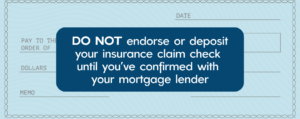
Once your insurance claim check does arrive, do not endorse or deposit it until you’ve confirmed your mortgage company’s requirements for handling it.
The process for handling an insurance claim check can vary by lender. Your mortgage company may have specific instructions for endorsing, depositing, or releasing funds for repairs. Some lenders may also require repair estimates, contractor information, photographs, inspections, or other documentation.
If you sign it before following their process, it can create major issues.
Before signing or depositing the check:
- Review the payee (who is named on the payment)
- Contact your mortgage company and ask what steps they require
- Ask about documentation they require
- Follow the lender’s instructions
Don’t assume the process is the same for every lender, as they can vary. Confirm the requirements with your mortgage company first.
What Should I Do Next After a Texas Storm?
A storm can leave you wondering whether you have damage, what your insurance will cover, and how much you’ll have to pay yourself.
Start by documenting the damage, getting a reputable local inspection, understanding your deductible, and confirming your mortgage information.
If you need help understanding your policy or have questions about your coverage, Grimes Insurance has been helping West Texas families since 1948. We can help you understand your policy and walk through your options before you decide how to proceed.
To talk with an agent about how your policy may approach a storm claim, Grimes Insurance is available to you. Feel free to call our office anytime to connect with an agent and discuss your coverage. Or, read Home Insurance vs. Home Warranty: What’s the Difference? so you can tell them apart when a storm comes.
Frequently Asked Questions About Hail and Wind Damage in Texas
What’s the first thing to do after a hailstorm in Texas?
Start by having a reputable local roofer inspect your property for storm damage and document what they find. Then review your insurance coverage and deductible before deciding how to proceed with a claim.
Should I call my insurance company before filing a claim?
It’s a good idea to talk with your insurance agent or carrier before filing so you understand your coverage, deductible, and claims process.
Why is my hail or wind deductible so high?
Some homeowners insurance policies use a separate wind/hail deductible that is calculated as a percentage of the home’s insured value. The exact amount depends on your policy.
For example, a 2% deductible on a $300,000 insured home would be $6,000.
Can I cash my insurance claim check myself?
Not necessarily. If you have a mortgage, your lender may be included on the claim payment and may have specific requirements for handling the funds. Contact your mortgage company before endorsing the check.
Should I file an insurance claim if my roof has storm damage?
It depends on your policy, deductible, the extent of the damage, and your circumstances. Talk with your insurance agent or carrier and review your policy before deciding how to proceed.


