
What Does Full Coverage Car Insurance Actually Include?
By: Cole Chapman, Sales Leader
Executive Summary:
Full coverage generally combines liability, collision, and comprehensive insurance.
- Liability covers injuries and property damage you cause to others.
- Collision covers damage to your vehicle from a covered collision.
- Comprehensive covers covered non-collision damage, such as hail, theft, fire, and animal strikes.
Full coverage does not automatically include rental reimbursement, gap coverage, roadside assistance, or every type of injury-related coverage. Your limits, deductibles, exclusions, and vehicle use all affect what your policy actually covers.
If a hailstorm damages your vehicle next week, would your insurance cover the repairs? What if your car is totaled and you still owe more on your loan than it’s worth?
Many drivers hear “full coverage” and assume it covers anything that happens to their vehicle. In reality, “full coverage” is an informal term for a combination of coverages, and important gaps can still exist.
At Grimes Insurance Agency, we have been helping West Texas drivers understand their auto coverage since 1948. We write policies across multiple insurance providers, helping drivers compare available options and make educated decisions about their coverage.
By the end of this article, you will learn:
- What full coverage actually includes
- What full coverage doesn’t cover
- How liability, collision, and comprehensive coverage work together
- What West Texas drivers should review before their next claim
What is Full Coverage Car Insurance?
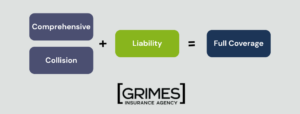
Full coverage is a term used for a combination of three separate coverages bundled together: liability, collision, and comprehensive.
Each coverage addresses a different risk. Understanding what each piece does and does not do is what full coverage actually means in practice.
Does Full Coverage Include Liability Insurance?
Liability coverage pays for injuries and property damage you cause to other people in an accident, up to your policy limits.
For example, if you cause an accident and damage another vehicle, your liability coverage can help pay for the other driver’s injuries.
Liability coverage protects you from claims for damage you cause to others; it does not pay to repair your own vehicle.
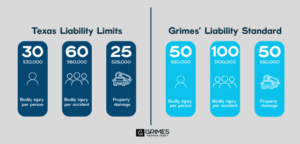
In Texas, minimum liability limits of 30/60/25 are required. This includes:
- $30,000 per person for bodily injury
- $60,000 per accident for bodily injury
- $25,000 per accident for property damage
However, a single serious accident involving a newer vehicle or a significant injury can exceed those limits, leaving you personally responsible for the difference.
For this very reason, Grimes Insurance’s recommended liability standard for clients is 50/100/50. That means:
- $50,000 per person for bodily injury
- $100,000 per accident for bodily injury
- $50,000 for property damage
Does Full Coverage Include Collision Insurance?
Collision coverage pays to repair or replace your vehicle after a covered collision, minus your deductible.
That can include:
- Crashing into another vehicle
- Hitting a pothole
- Running into stationary objects (guardrails, mailboxes, poles, etc.)
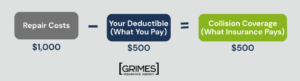
For instance, let’s say you accidentally reversed into a pole. Repairing the damage to your vehicle costs $1,000, and you have a deductible of $500.
If the loss is covered, your insurance would only pay for the remaining $500 cost, leaving you responsible for the deductible amount.
Does Full Coverage Include Comprehensive Insurance?
Comprehensive coverage protects your vehicle from covered damage that isn’t caused by a collision. This coverage pays for damage from things like:
- Hail
- Theft
- Fire
- Flooding
- Falling objects (trees, debris, etc.)
- Hitting an animal
In West Texas, comprehensive coverage is highly recommended. Lubbock and the Texas Panhandle face some of the most severe hail activity in the country. In our experience, we’ve seen how a single hail storm can cause $3,000 to $8,000 in damage to a vehicle.
For West Texas drivers, comprehensive coverage is the single most practically valuable component of full coverage and the one most likely to pay out in any given year.
However, comprehensive doesn’t cover everything. Normal wear and tear, mechanical breakdown, and personal belongings left in the vehicle generally aren’t covered.
To learn more about the differences between collision and comprehensive insurance, watch this video to understand what they cover:
What Does Full Coverage Not Include?
While having liability, collision, and comprehensive coverage helps you cover the major bases, they don’t mean that every expense associated with an accident is covered.
For example, a driver with “full coverage” might assume a cracked windshield, a rental car after an accident, and a break-in are all automatically handled. In reality, each of those depends on which specific coverages and endorsements are on the policy.
Comprehensive may cover the windshield, but rental reimbursement and personal property inside the vehicle often are not included unless added separately.
Several of these important coverages are separate and optional. Let’s review a few we recommend worth considering.
GAP Insurance
GAP (Guaranteed Asset Protection) insurance is an additional coverage that covers the difference between what you owe on your vehicle and what it’s worth.
For instance, if your vehicle is totaled, your insurer generally pays its covered actual cash value, subject to your policy and deductible. However, if you owe more on your loan than the vehicle is worth, you could still owe money after the insurance settlement.
GAP coverage helps fill that difference and is most often important on newer vehicles with significant depreciation.
What makes GAP coverage so important for newer vehicles? Watch this video to learn more:
Medical Payments Coverage and Personal Injury Protection
If you are injured in an accident, full coverage does not automatically pay your medical bills. Medical payments coverage and personal injury protection are separate add-ons that cover occupant injuries regardless of fault.
Medical payments coverage can help pay certain medical or funeral expenses resulting from an auto accident. PIP can also provide benefits for medical expenses and, depending on the policy, lost income.
|
Medical Payments |
Personal Injury Protection |
|
Medical expenses for you or your passengers |
Medical expenses for you or your passengers, lost wages, and lost household services (childcare, home cleaning, etc.) |
Rental Car Reimbursement Coverage
If your vehicle is damaged in a covered accident and can’t be driven, rental car reimbursement coverage helps cover the cost of a rental car. Without it, you may have to pay the rental cost yourself.
Watch this video to learn if adding rental car reimbursement to your policy is right for you:
Roadside Assistance
Roadside assistance is an endorsement meant to help you when your vehicle breaks down. While it’s not offered by all insurance providers, this coverage generally offers a variety of services to get your vehicle back up and running. Some of these services include:
- Towing
- Lockout service
- Tire changes
- Car battery jumping
- Delivery of gas, oil, or other vehicle fluids
- Extrication
Uninsured/Underinsured Motorist Coverage
Did you know that 1 in 8 Texas drivers are uninsured? We know… yikes.
If someone with minimum car insurance, or no insurance at all, were to hit you, uninsured/underinsured motorist coverage could help protect you. This type of coverage is designed to help cover any injuries caused to you during the accident, rather than leaving you to pay out of pocket for someone else’s lack of coverage.
Learn more about uninsured motorist coverage:
What Should You Check on Your Full Coverage Policy?
Rather than simply asking whether you have “full coverage,” review whether your coverage still fits your situation. To self-evaluate your coverage, we recommend you:
Check Your Deductibles
A higher deductible can reduce your premium, but it also increases your out-of-pocket cost when you file a covered claim.
Choose deductibles you could realistically afford after a loss. A $2,000 deductible might lower your monthly premium, but a $500 deductible might be the most feasible for your budget during an unexpected accident. The best way to decide on your deductible amount is to consider what you can realistically afford out of pocket.
Check Your Loan Balance
If you’re financing a newer vehicle, compare what you owe with the vehicle’s current value.
If you owe more than the vehicle is worth, ask whether gap coverage makes sense for your situation.
Check Whether Your Coverage Still Matches Your Vehicle’s Value
Once a car loan is paid off, some drivers drop collision and comprehensive coverage to save money on premiums… often without weighing what it would actually cost to repair or replace the vehicle out of pocket.
Dropping to liability-only can be the right call for an older vehicle worth relatively little. But for a vehicle that’s only a few years old and still holds significant value, that same decision could mean paying thousands out of pocket after an accident that isn’t your fault.
It’s worth pricing out what keeping collision and comprehensive would cost before dropping them by default.
If you’re considering dropping coverages from your policy, read 7 Ways to Lower Your Car Payment (Without Losing Coverage) first to ensure it makes sense for your situation.
How Grimes Insurance Agency Helps West Texas Drivers Review Coverage
Your insurance needs can change long after your auto policy is first written. The drivers who discover coverage gaps are not always the ones who made poor decisions. Sometimes their situation changes after the policy was written.
The vehicle got older. A loan was paid off. A new truck was purchased. A deductible that once made sense no longer fits the household budget.
Your coverage should change when your situation changes.
Because the goal isn’t simply to have “full coverage.” It’s to have coverage that matches your vehicle, your finances, and the risks you actually face.
Before your next renewal, ask whether your current policy still reflects your vehicle’s value, your loan status, your deductible, and how the vehicle is actually being used.
Grimes Insurance Agency has helped West Texas drivers understand their auto coverage since 1948. We work with multiple insurance providers so you can compare available options and make an informed decision.
Knowing what “full coverage” means is the first step. Knowing whether your current policy actually matches your situation is the next. Read Liability vs Full Coverage Car Insurance Explained to see how the two options compare and which one makes sense for your vehicle.
Frequently Asked Questions
Does full coverage cover everything?
No. Full coverage refers to liability, collision, and comprehensive combined. It does not cover medical bills, rental cars, the gap between your loan and vehicle value, or mechanical breakdowns.
Is full coverage required in Texas?
Texas only requires liability coverage. Lenders require full coverage if you are financing or leasing a vehicle. If you own your vehicle outright, full coverage is optional.
What is the difference between collision and comprehensive?
Collision coverage covers damage from accidents, such as hitting another vehicle or object. Comprehensive covers damage from everything else: hail, theft, fire, flooding, and animal strikes.
Do I need full coverage on an older vehicle?
Not necessarily. If your vehicle’s value is low relative to your deductible and annual premium, liability-only may make more financial sense.
Does full coverage apply to commercial vehicles?
Not if they are on a personal auto policy. Vehicles used regularly for business require a commercial auto policy. A personal full coverage policy may deny a claim if the vehicle was being used for business purposes at the time of the loss.
Disclaimer: The information provided in this article is for general informational purposes only and does not constitute legal, financial, or insurance advice. Coverage options, terms, and availability may vary. Please consult with a licensed professional for advice specific to your situation.


