
What Raises Your Car Insurance Rates the Most?
By: Niki Saavedra, Director of Operations
Executive Summary:
Where you live, the vehicle you drive, how much you use your car, your age, your credit-based insurance, and your driving and claims history are the biggest factors that can raise your car insurance rates. Your rate can also increase when nothing about your personal situation changes because insurers may adjust rates when claim costs, weather losses, or other market conditions change.
If your car insurance premium suddenly jumped at renewal, you are probably frustrated, wondering… what changed? You may not have had an accident, gotten a ticket, or changed vehicles, yet the number on your renewal notice is higher.
So, what actually raises car insurance rates the most?
At Grimes Insurance Agency, we regularly help West Texas drivers compare coverage after unexpected premium increases. As an independent agency, we work with multiple carriers, giving us a firsthand view of how various companies can price the same driver, vehicle, and coverage differently.
By the end of this article, you’ll know:
- The biggest factors that can increase your car insurance rates
- Which factors you can influence
- Which factors are outside of your control
- What to do when your premium increases
What Causes Car Insurance Rates to Increase?
Insurance companies use a process called underwriting to determine how much to charge for coverage. Each carrier uses its own rating formula based on something we like to call their “risk appetite”. This means different companies may look at the same driver, vehicle, or situation and reach different conclusions. Some common factors insurers review during underwriting include:
- Your age
- Your driving history
- Your credit information
- Your claims history
- Where you live
- The vehicle you drive
What if none of my information or situation changed?
Your premium can also change when the cost of paying claims changes across the broader insurance market. Inflation, vehicle repair costs, severe weather, and other factors outside of your control can affect what insurers need to charge to cover future claims.
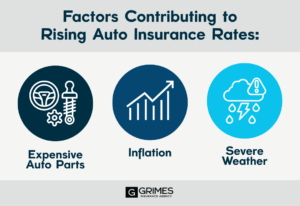
A higher renewal premium doesn’t necessarily mean you did something wrong. Sometimes your personal risk changes, and sometimes the cost of insurance changes as a whole.
The most useful way to understand a rate increase is to separate the factors you can influence from the ones you can’t. Let’s break them apart together.
What Car Insurance Rate Factors Can You Control?
Some of the factors affecting your premium are within your control, or at least within your ability to influence over time.
Your Driving Record
Your driving record is one of the clearest factors affecting how an insurance company evaluates your risk.
Accidents, speeding tickets, and other violations can affect your premium. A single at-fault accident can raise your rate by 30 to 40 percent and follow you for three to seven years, depending on the carrier. In Texas, a driver with a DUI conviction pays up to 92% more for auto insurance and can trigger a carrier non-renewal in some cases.
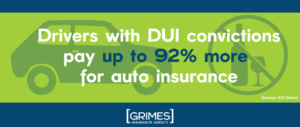
A clean driving record is the most effective way to avoid raising your car insurance rates.
Curious about what you can do about an accident on your record? Watch this video to learn more about options that may be available to you and your situation:
Your Claims History
Not only do accidents affect your rates, but so can making multiple claims after they happen.
While insurance is meant to protect you and your belongings when an incident happens, frequent or recent claims can affect your premium rates and eligibility.
This is because once you make an insurance claim, it’s later included in your Comprehensive Loss Underwriting Exchange (CLUE) report for up to seven years. In order to evaluate your risk, insurers use this report to review your claims history, considering both the number and type of claims you’ve filed.
For a more complete understanding of how your CLUE report can affect your policy rates, watch this video:
Your Credit-Based Insurance Score
Your CLUE report can also affect something called your insurance score. A credit-based insurance score is different from the credit score a lender may use when deciding to approve a loan.
In Texas, carriers are permitted to use credit-based insurance scores as a rating factor. These scores are different from your regular credit score and are used to help calculate the likelihood of future losses. Such scores give insurers a clearer idea of your risk profile when determining your premiums.
There is no universal method of scaling insurance scores; however, the LexisNexis Attract model provides a helpful foundation. LexisNexis scores are scaled from 200 to 997. A score of 770 or higher is considered favorable, whereas a score of 500 or lower is considered poor and negatively affects premium rates.
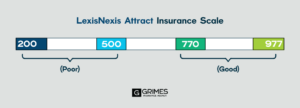
Drivers with poor credit can pay significantly more than drivers with strong credit for identical coverage.
Thankfully, your insurance credit score can change over time. If you find your credit situation improves significantly, ask your agent whether your current carrier can reconsider your insurance rating in time for renewal.
Car Insurance Rate Factors You Cannot Control
Other factors can affect your premium even when you haven’t had an accident, filed a claim, or changed your driving habits.
Your Age
Age is a large factor insurance companies consider when determining your premium.
Young drivers generally pay more because insurers have found that inexperienced drivers present greater statistical risk.
A 20-year-old female driver, for instance, pays on average $4,455 for full coverage car insurance, while a 40-year-old female pays $2,266 for identical coverage. Rates typically stabilize in the mid-twenties and continue improving with a clean record.
You can’t control your age, but you can control the driving record you build over time.
If you’re adding a young driver to your household policy, ask your agent how the change will affect your premium. To learn more about insuring young drivers, whether it’s yourself or a teenage driver, watch this video to know which 4 coverages to be on the lookout for:
Your Location
Where you live can also have a significant effect on what you pay for auto insurance.
Insurance companies consider multiple factors for different geographic areas, such as:
- Accident frequency
- Theft
- Uninsured drivers
- Claim patterns
Rates can even vary between ZIP codes within the same city!
For drivers in Lubbock and the surrounding Texas Panhandle, severe weather is another consideration. Hail and other storms can contribute to higher claim costs, ultimately affecting insurance pricing. For example, we’ve seen a single storm run clients $3,000 to $8,000 worth of damage.
Moving, even within the same city, can change your premium because your new location may have a different insurance risk profile.
If you’ve recently moved, don’t assume your new premium is the result of your own. It may be worth asking your agent whether your new location is affecting your rate.
Your Vehicle
What do you drive? While you can often control which car you purchase, you can’t necessarily control its parts and price.
Vehicles differ in their:
- Purchase price
- Repair costs
- Replacement costs
- Theft risk
- Safety features
- Likelihood of being involved in certain types of claims
A newer vehicle with expensive parts may cost more to insure than an older vehicle with lower repair costs. High-performance and luxury vehicles can also carry higher insurance costs.
Because of your vehicle’s role in your monthly premiums, here’s our advice: the cost of insurance should be part of the decision when you’re shopping for a vehicle, not something you discover after you buy it.
Before purchasing a new vehicle, we recommend asking your insurance agent for a quote. Two vehicles with similar purchase prices can have very different insurance costs.
Carrier Repricing and Market Shifts
This is one of the biggest reasons a driver can see an increase without anything changing personally.
Your insurance company doesn’t only price your individual risk. It also has to account for the cost of claims across its entire book of business.
If repair costs rise, vehicle replacement becomes more expensive, severe weather produces more claims, or other market conditions increase the cost of insurance, a carrier may adjust its rates.
Even if nothing changes in your personal risk profile, your premium can still increase. It may not be fair, but it’s how the insurance system works.
While increased carrier rates aren’t something you can control, you can control where you shop. If your insurance company’s rates have risen, consider comparing how other companies are charging for similar coverage.
What to Do When Your Car Insurance Rate Goes Up
If your premium increased, don’t immediately assume you need less coverage or that you’ve done something wrong.
Start by asking your agent this simple question: What specifically caused my rate to increase?
Once you know why your rate increased, you can determine whether the solution is to change something within your control or shop the market for a different price. Some common ways we’ve seen drivers lower their premiums include:
- Asking about discounts
- Consider adjusting your coverage
- Improve your credit score
- Raise your deductible
- Shop around for other rates
Grimes Insurance Agency Can Help You Shop for a Solution
A higher car insurance premium doesn’t always mean you made a mistake. Some increases come from factors you can influence, such as your driving, claims history, insurance score, or vehicle use. Others come from factors outside of your control, such as your age, location, vehicle costs, or changes in the insurance market.
The first step is to understand what changed. Then decide whether you can address the factor yourself, or whether it’s time to compare other insurance options.
At Grimes Insurance Agency, we’ve been helping West Texas drivers understand their insurance options since 1948. As an independent insurance agency representing multiple carriers, we can help you understand what’s driving your premium and compare options from different insurers in real-time.
Now that you understand why your rates might have increased, you might be ready to learn how to get your premiums back on track. Read 7 Ways to Lower Your Car Insurance (Without Losing Coverage) to learn which changes may help reduce your premium while keeping the coverage you need. Or, if you’re ready to discuss your coverage options, call our office to be connected with an agent.
Frequently Asked Questions
Why did my car insurance go up when I did not have any accidents?
Rates increase for reasons beyond your personal driving record, including carrier repricing, local claim trends, changes to your credit score, and market-wide adjustments.
How long does an at-fault accident affect my insurance rate?
Most carriers surcharge at-fault accidents for three to seven years. The exact period depends on the carrier and the severity of the accident.
Does my car insurance rate go up if someone else hits me?
Not-at-fault accidents can affect your rate with some carriers, particularly if you have multiple claims in a short period. Not-at-fault accidents can also remove an accident-free discount if your carrier offers one. Check your policy’s not-at-fault accident provisions and ask your agent how your specific carrier handles this.
Can I dispute a rate increase?
You cannot negotiate your rate directly with the carrier, but you can shop the market. If a carrier has repriced you based on factors that other carriers weigh differently, a better rate may be available elsewhere.
Does moving to a different part of Lubbock affect my rate?
Yes. Zip code is a rating factor, and rates can vary within the same city based on local accident, theft, and claim history. A move across town can affect your premium at your next renewal.
Disclaimer: The information provided in this article is for general informational purposes only and does not constitute legal, financial, or insurance advice. Coverage options, terms, and availability may vary. Please consult with a licensed professional for advice specific to your situation.


