
Comparing Car Insurance Quotes: What Actually Matters
Have you ever compared car insurance quotes and walked away more confused than when you started?
Is the cheapest quote you received your best option, or even a viable option?
Most drivers compare quotes by looking at one number: the monthly premium. But two quotes at different prices can offer identical protection, and two quotes at the same price can offer dramatically different coverage.
The difference only becomes visible when a claim is denied, or a settlement falls short.
At Grimes Insurance Agency, we compare quotes across multiple carriers for West Texas drivers every day. We see how much pricing varies for identical coverage and how often the lowest quote comes with exclusions or deductible structures that create real exposure. We have been helping drivers cut through that confusion since 1948.
By the end of this article, you will learn:
- Which coverages to compare
- Which comparison mistakes to avoid
- How to determine if your auto quote is the right fit
How to Compare Car Insurance Quotes Fairly
Before you can compare prices, it’s important to be sure you’re comparing the same coverage. It’s no surprise that insurance terminology gets confusing, and coverage details and definitions tend to blur together.
When requesting multiple quotes, give each insurance carrier the same information and ask for the same coverage specifications, including:
- Liability limits
- Collision and comprehensive deductibles
- Uninsured/underinsured motorist coverage
- Rental reimbursement
- Other optional coverages that matter to your situation
A quote comparison is only meaningful when you’re comparing equivalent coverage from one carrier to another.
For example, imagine you receive these two quotes:
| Quote A | Quote B | |
| Monthly Premium | $150 | $175 |
| Liability Limits | 100/300/100 | 100/300/100 |
| Comprehensive Deductibles | $1,500 | $500 |
| Collision Deductibles | $1,500 | $500 |
| Uninsured/Underinsured Motorist | $50,000/$100,000 | $100,000/$300,000 |
| Rental Reimbursement | Not included | Included |
At first glance, Quote A looks better because it saves you $25 per month.
However, if you have a covered accident, you could pay an additional $1,000 toward your deductible compared with Quote B. Quote B also provides higher rental reimbursement and additional coverage.
That doesn’t automatically make either the perfect choice, but it demonstrates why comparing premiums alone can be misleading.
Before comparing quotes, it’s helpful to understand what the coverage actually means. Read Liability vs. Full Coverage Car Insurance Explained to ensure you know what you’re evaluating.
What Should I Look for in a Car Insurance Quote Beyond Price?
Are the liability limits high enough?
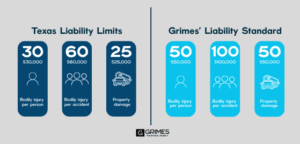
In Texas, minimum liability limits of $30,000 per person, $60,000 per accident, and $25,000 for property damage are a legal floor. Those are the legal limits, but not necessarily the amount of coverage that makes sense for every driver.
A serious accident can result in medical bills, vehicle damage, and other costs that exceed minimum limits. If your policy limit isn’t enough to cover the damages you’re legally responsible for, you could be responsible for the difference.
For this very reason, Grimes Insurance’s recommended liability standard for clients is 50/100/50. That means $50,000 per person for bodily injury, $100,000 per accident for bodily injury, and $50,000 for property damage.
In our experience, higher liability limits leave less room for coverage gaps. We find it’s better to be safe than sorry when purchasing liability coverage.
Remember, don’t compare premiums without first comparing the liability limits behind those premiums.
Can I afford the deductibles?
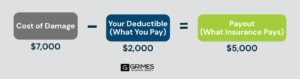
A deductible is the amount you pay out of pocket before your insurance pays for a covered loss.
For example, choosing a $2,000 comprehensive deductible may lower your premium compared to a $500 deductible. But if your vehicle suffers covered hail damage (a common phenomenon in West Texas), you’ll need to be prepared to pay that $2,000 before the policy pays the remaining covered amount.
The lowest premium isn’t necessarily the best value if the deductible would be difficult for you to afford after a loss.
What does the car insurance policy exclude?
Exclusions are the specific situations or types of losses your policy does not cover.
For example, if a policy excludes certain business use of a vehicle, that exclusion could become important if you’re using the vehicle for work when an accident occurs.
Ask what your policy excludes before you compare premiums.
A lower price doesn’t help if the policy doesn’t cover the situation you’re trying to protect yourself against.
How should I evaluate my insurance carrier?
If you could take only one thing away from this article, it should be this: price isn’t the only factor to consider when choosing an insurance carrier!
You can review financial-strength information from AM Best and complaint information from the Texas Department of Insurance as part of your research. It’s also worth asking questions about how claims are handled and what you can expect if you need to use your coverage. Grimes Insurance Agency can help you with this process. Call our office to connect and review your coverage options with an agent.
The company behind the policy matters because the value of insurance becomes most apparent when you need to file a claim
What Are the Most Common Mistakes Drivers Make When Comparing Quotes?
Comparing only the price
A lower quote may have higher deductibles, lower liability limits, or fewer optional coverages.
Assuming every carrier applies discounts the same way
Carriers can offer different discounts and may apply eligibility requirements differently. Ask each carrier which discounts are included and which ones you may qualify for.
Looking at a bundle without comparing the total cost
Bundling auto and home insurance can be one of the most helpful discounts. However, you should still compare the total cost and coverage for both policies.
Remember, a discount doesn’t automatically make a bundle the best overall option.
Ignoring coverage details that matter in your area
Living in West Texas comes with different risks than living in Dallas. Insurance carriers in this region sometimes impose restrictions on vehicle hail-damage claims, such as higher deductibles, actual cash value settlements for older vehicles, or limits on claim frequency.
Rather than assuming every carrier handles these situations the same way, ask the agent to explain the specific terms of the policy you’re considering.
What to Do Before You Choose a Car Insurance Policy
Before you choose a policy, take a few minutes to compare more than the dollar sign you see.
Check your current liability limits, collision and comprehensive deductibles, optional coverages, and any exclusions that apply to your vehicle.
Then discuss with your agent:
- Are the coverage limits the same between quotes?
- Are the deductibles and optional coverages the same?
- Are there exclusions or restrictions I need to understand?
- Have I considered the carrier’s financial strength and complaint history?
The best car insurance quote isn’t necessarily the cheapest. It’s the one that gives you the protection you need at a price that makes sense for your situation.
Now that you know what to look for, your next step is understanding what the quote process actually looks like. Read The Insurance Quote Process at Grimes Insurance Agency so you know what to expect before you request your next quote.
At Grimes Insurance Agency, we help West Texas drivers compare coverage and pricing across multiple insurance carriers so they can make a more informed decision.
Frequently Asked Questions
What is the most important thing to compare in car insurance quotes?
Coverage limits, deductibles, and policy exclusions matter more than the premium alone. Two quotes at the same price can offer different protection.
How do I make sure I am comparing quotes fairly?
Request quotes with identical coverage specifications from every carrier: same liability limits, same deductibles, and the same additional coverages.
Does the cheapest car insurance quote mean the least coverage?
Not always, but often. Lower premiums can reflect lower limits, higher deductibles, or missing coverages. Always verify what is behind the number.
How often should I compare car insurance quotes?
At every renewal. Carrier pricing shifts regularly, and the market changes. A policy that was competitive last year may no longer be so today.
Should you use an independent insurance agent to compare quotes?
It can depend. Independent insurance agents have access to multiple carriers, allowing you to compare multiple options at once. However, buying directly from a carrier (or a captive agent who works for your carrier) can also make sense for someone who prefers to handle the comparison and policy process independently.
Does an independent agent cost more than buying directly from a carrier?
No. The agent’s commission is built into the premium regardless of how you buy. In many cases, an independent agent finds a lower total premium by comparing multiple carriers simultaneously.
Disclaimer: The information provided in this article is for general informational purposes only and does not constitute legal, financial, or insurance advice. Coverage options, terms, and availability may vary. Please consult with a licensed professional for advice specific to your situation.


