
General Liability vs. Professional Liability: What’s the Difference?
By: Carlos Chavira, Commercial Lines – Executive
Executive Summary:
General liability insurance generally covers claims involving third-party bodily injury, property damage, and certain personal or advertising injuries. Professional liability insurance, also called errors and omissions (E&O), generally covers claims alleging mistakes or negligence in professional services. Depending on your business, you may need one or both.
The business world is full of risks. You might be a coffee shop owner who missed a spill on the floor… and a customer slipped and fell. Or maybe you’re a marketing consultant whose client claims your recommendations cost them thousands of dollars.
Both situations could lead to a claim against your business. But would the same insurance policy protect you in each case?
That’s where understanding the difference between general and professional liability becomes important. Choosing coverage based on risks you assume are taken care of can leave you with gaps when you need protection the most.
Since 1948, Grimes Insurance Agency has helped West Texas business owners understand their insurance options. As an independent insurance agency, Grimes helps businesses evaluate their risks and compare coverage options based on how they actually operate.
By the end of this article, you will know:
- What general liability insurance covers
- What professional liability insurance covers
- Which coverage your business needs
What does general liability insurance cover?
General liability insurance protects your business when your day-to-day operations cause physical harm or property damage to someone else. It generally covers:
- Bodily injury (slips, falls, or harm to another person)
- Property damage (damage to another person’s property)
- Advertising injury (certain offenses such as libel, slander, etc.)
For instance, let’s go back to the coffee shop example. If a customer slipped on a spilled drink and claims your business was responsible for their injury, general liability insurance may respond to the claim.
For contractors, general liability can be particularly important because work often takes place around customers, other workers, and someone else’s property.
Who is general liability insurance best for?

If your business interacts with customers, works on property, or creates risks of third-party injury or damage, general liability coverage is an important piece to evaluate.
- Contractors and construction businesses
- Retail stores
- Restaurants
- Businesses that work on clients’ property
- Businesses that regularly serve customers at their location
What does professional liability insurance cover?
Professional liability insurance, also known as errors and omissions (E&O), generally addresses claims alleging:
- Errors
- Omissions
- Negligence
- Failures in professional services.
In plain English: if a client makes a claim about an unanswered promise or a failed service on your part, professional liability can help cover it.
For example, imagine that you’re an accountant who makes a clerical error on a client’s tax return. Your error costs them thousands of dollars in IRS penalties, leaving you to clean up the mess. In this situation, professional liability coverage could help you pay for what you owe.

Who is professional liability insurance best for?
This type of coverage is particularly relevant for businesses whose clients rely on their expertise or professional services.
More specifically, we recommend professional liability insurance for businesses like:
- Marketing, design, or creative firms
- Financial consultants
- Legal advisors
- Architects
- Engineers
- Real estate agents
- IT and tech specialists
Even when a business delivers its services carefully, a client can still make a claim that its work caused a financial loss. Professional liability coverage can help address that type of risk, subject to the policy’s terms.
What’s the difference between general and professional liability insurance?
The main difference between the two coverages is the type of claim each policy addresses.
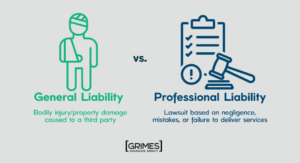
General liability focuses on third-party injuries and property damage, while professional liability focuses on claims related to professional services. Let’s break it down visually:
| General Liability | Professional Liability | |
| Main focus | Certain bodily injury, property damage, and personal or advertising claim | Claims about errors or negligence in professional services |
| Claim example | A restaurant serves contaminated seafood, resulting in multiple patrons becoming hospitalized due to severe food poisoning | An architect produces an incorrect blueprint, causing the contractor thousands of dollars in construction issues. |
| Commonly relevant for | Contractors, retailers, restaurants, and other customer-facing businesses | Consultants, accountants, designers, and other professional service providers |
Should my business ever have both general and professional liability insurance?
Depending on your business operations, possibly.
General and professional liability policies both cover specific risks, and some that one type of business may see more than another. However, there are some businesses that benefit from both coverages.
For example, a contractor might need general liability coverage for a property damage claim on their job site, as well as professional liability if a client claimed an error in their construction design. The same can apply to a marketing specialist who offers consulting services, while also working with clients at their business location.
The issue we see most businesses run into is assuming what is covered by one policy is still covered by the other. But that isn’t true. At the end of the day, a business could face a number of different risks. At Grimes, we see businesses with a combination of general liability and professional liability insurance often have the best of both worlds.
The right combination depends on your business activities, contractual requirements, policy terms, and understanding how potential risks are covered, rather than assuming when they occur.
If you’re feeling overwhelmed trying to decide, you don’t have to think it through alone. Call our office anytime to connect with a Grimes agent. We can help you identify potential gaps and determine which coverages make sense for your business.
Grimes Insurance can help your business find the right coverage
General liability and professional liability insurance address different kinds of claims. General liability focuses on certain injuries and property damage, while professional liability addresses claims related to your business’s services and expertise.
Understanding that distinction can help you ask better questions about your coverage and identify potential blind spots. As an independent insurance agency serving West Texas for over 78 years, Grimes Insurance can help you make the right decisions. With a network of 100+ carriers, we’re prepared to help you review your business’s risks and explore available options.
If you’re ready to review your coverage with an agent, start by requesting a business quote online. Or, if you’re still unsure, read What Happens if a Business is Underinsured? to learn how to prevent gaps for your business.
Frequently Asked Questions
Does general liability cover professional mistakes?
Generally, general liability is not designed to cover claims arising solely from professional errors or advice. Professional liability may address those claims, depending on the policy.
Can a small business need both policies?
Yes. A small business can have both physical operational risks and professional services exposures. Whether both policies are appropriate depends on the business and its requirements.
Is general liability insurance required in Texas?
Requirements depend on the business, applicable rules, and contractual obligations. Some customers and projects require coverage even when a universal requirement does not apply. Confirm the requirements relevant to your business.


