

How to Compare Life Insurance Companies
By: Michelle Wolfe, Personal Lines – Sales Executive
You’ve decided you need life insurance. You’ve even got a rough idea of term vs. whole life. But now, you’re staring at a list of companies, and every website promises the same thing: affordable coverage, fast quotes, and peace of mind.
So, how do you actually tell life insurance companies apart?
Working with a network of 20 different insurance carriers, Grimes Insurance Agency helps clients actively compare life insurance policies. Since 1948, we’ve been in the business of educating, guiding, and helping clients find the right coverage for families and individuals.
By the end of this article, you’ll understand which questions you should ask when comparing life insurance companies.
What Should You Compare When Choosing a Life Insurance Policy?
When comparing life insurance companies, the easiest thing to focus on is the number with the dollar sign. However, two policies with similar monthly premium prices can have very different features, restrictions, and options.
At a minimum, you should consider factors such as:
- The company’s history
- The policy terms
- Their offered conversion options and features
Let’s break it down into questions you can ask to narrow down your options.
How long has the life insurance company been in business?
A life insurance policy is designed to protect your loved ones years into the future. That makes the company behind the policy an important part of your decision.
Longevity can provide useful context. A company that has been writing policies for decades has a longer track record of serving customers and operating through different market conditions.
Let’s think hypothetically for a second. Imagine you’re looking for life insurance, and you come across two companies: Raider Life Insurers and Matador Life (disclaimer: these companies are purely fictional and for demonstration only!)
On paper, the policies they offer look the same. But the two biggest differences:
- Raider Life Insurers is newer, starting in 2018.
- Matador Life has been a well-established company since 1920
Which option would make you the most confident to insure your life?
Raider Life Insurers seems to have great reviews and feedback. But Matador Life’s client and market experience seem to surpass Raider Life Insurers’ by ninety-eight years! In this example, they’ve had a longer opportunity to build and prove their trust compared to a younger company.
However, keep in mind that a company’s age alone doesn’t tell you whether it’s financially strong or the right fit for you.
How is the life insurance company being reviewed?
It’s tempting to Google a company and let star ratings decide for you. However, life insurance isn’t a product most people write reviews about. It’s a tailored purchase that’s meant to protect you and your loved ones– it’s not like reviewing a restaurant or a pair of shoes.
How do you review a life insurance company’s ratings?
Reviewing a life insurance company involves different standards. The National Association of Insurance Commissioners (NAIC) recommends reviewing an insurance company’s financial stability, complaint history, and licensing details.
You can specifically do so using its on-site Consumer Insurance Search tool.
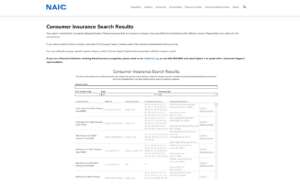
According to the Insurance Information Institute, other rating agencies and tools worth looking into include:
- A.M. Best Company
- Fitch Ratings
- Kroll Bond Rating Agency (KBRA)
- Moody’s Investor Services
- Standard & Poor’s Insurance Ratings Services
Let’s bring back our hypothetical company examples.
While reviewing both companies’ complaint histories, you notice Matador Life has had a large number of payout complaints in the previous year. Raider Life Insurers, however, has had no recent client complaints.
Even though Matador Life has been longer established, longevity doesn’t always equate to company health and success.
When comparing companies, look at financial-strength information and complaint history alongside the policy itself—not instead of it.
How does life insurance underwriting affect your policy?
Another important difference between life insurance companies is how they evaluate applicants.
Underwriting is the process insurers use to evaluate your health and other risk factors when determining whether to offer coverage and how much you may pay.
Personal factors considered during underwriting include:
- Your age
- Your gender
- Your health history
The underwriting process can affect both your eligibility for coverage and the premium you’re offered.

Why does your medical history matter for life insurance?
Contrary to belief, these factors aren’t random. These details help insurance companies determine the perceived risk of insuring you.
Do you smoke? Does heart disease run in your family? Have you been diagnosed with any chronic illnesses?
If so, you may be considered a higher risk. And the riskier you appear, the higher your premiums might be.
Is a medical exam required?
Whether you’re purchasing a term or whole life policy, medical exams have been a standard requirement for most life insurance companies. However, other forms of medical underwriting are becoming more popular.
Some insurers offer alternatives to a traditional medical exam, including:
These options can reduce or eliminate the need for a traditional exam, but they may also have different eligibility requirements, coverage amounts, costs, or policy features.
The important question isn’t simply whether a company requires an exam; it’s how the company’s underwriting process affects the coverage you can receive and what you’ll pay.
If you’re unsure how a particular carrier handles medical underwriting, give us a call if you need help. Ask your insurance agent to explain what information the company uses to evaluate your application.
What options and features are included with the policy?
Two companies can quote similar monthly premiums while offering different policy features.
That’s why the lowest quote isn’t automatically the best value.
Look at what’s actually included in each policy. Depending on the type of coverage, you may need to compare features such as:
- Available riders
- Guaranteed benefits
- Coverage flexibility
- Policy limitations and exclusions
- Future premium changes
- Cash value features, when applicable
Cash value features are specifically a good example of how much these can vary.
We recently worked with a client paying around $60-70 a month on a policy that was building cash value over time. A few years in, she’s already built up enough value that she could cash the policy in and recover what she’s paid. While this isn’t an option that’s available for every policy, it’s one to easily overlook if you’re only comparing the monthly premium.
That’s the kind of feature that doesn’t show up in a quick side-by-side of prices, but can make a real difference depending on what you’re looking for in a policy.
| Raider Life Insurers | Matador Life | |
| Coverage Amount | $500K | $500K |
| Monthly Premium | $65/mo. | $70/mo. |
| Available Riders | 2 available | 4 available |
| Cash Value | None | Builds cash value |
| Premium Structure | Fixed during term | May change after initial period |
| Exclusions/Limitations | High-risk activity exclusions | No additional exclusions listed |
The goal isn’t to find the cheapest policy on paper. It’s to understand what you’re getting for the premium you’re paying.
What are your policy’s conversion options?
If you’re buying a term policy, one of the most overlooked questions is whether it can convert to a permanent policy later.
Not all term life policies are convertible, and among companies that do offer conversion, the terms can vary. Some policies may allow you to convert your full coverage amount, while some may only allow you to convert a portion.
This is important to understand because a term conversion option can matter if your health changes during your policy’s term.
Curious about when converting a term life policy makes sense? Read What Happens if You Outlive a Term Life Insurance Policy? to learn about your available options.
How can Grimes Insurance Help You Compare Life Insurance Companies?
Comparing life insurance companies is about more than finding the lowest monthly premium. You also need to understand the company behind the policy, how it evaluates your application, what the policy includes, and what options you may have in the future.
Before choosing a policy, compare financial strength, underwriting, policy features, limitations, premiums, and conversion options side by side.
That’s where an independent insurance agency can help.
Grimes Insurance Agency works with multiple carriers, allowing us to compare available options and help you understand what you’re getting, not just what you’re paying.
To prepare for requesting your life insurance quote, read about The Insurance Quote Process at Grimes Insurance Agency. Or, if you want to get started on comparing your options, call our office today. You’ll be connected with a certified life insurance specialist, prepared to help you find the coverage you need.


