
How to Look for the Best Roofing Business Insurance Policy
By: Ryan Rogers, Commercial Lines – Executive
If you’re a roofing company owner shopping for commercial insurance, you probably want a simple answer: which policy gives me the best protection without paying for coverage I don’t need?
The problem is that there isn’t a single insurance carrier or policy that’s automatically “best” for every roofing company. Exclusions, coverage limitations, and/or coverage requirements make all the difference in what you actually pay and what your policy covers.
At Grimes Insurance Agency, we currently help insure several roofing companies, giving us firsthand experience with the unique coverage considerations roofers face. A policy that looks inexpensive can become very expensive when it doesn’t cover the work actually being performed.
Rather than fitting every roofer under the same type of policy, the right coverage depends on the work their business performs and what it needs.
The best commercial insurance for a roofing company:
- Doesn’t leave critical gaps in coverage
- Accurately classifies the operations performed by your business
- Covers the work your company actually performs
- Considers your company’s current and future growth
In this article, we’ll break down these four areas, so you know what to look for when comparing or renewing a roofing business insurance policy.
1. The Best Roofing Insurance Doesn’t Leave Room for Coverage Gaps
If it isn’t already obvious, roofing is a risky business. According to USA Business Insurance’s latest review, roofing contractors are considered one of the riskiest trades to insure for general liability. However, your risk extends beyond the physical labor involved in installing or repairing a roof.
This makes certain commercial policies nonnegotiable to properly cover your business:
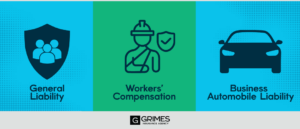
Why is general liability important for roofing companies?
Roofing carries two main types of risk on nearly every job, and general liability is what protects your business against both.
Water damage
If you’ve been in the roofing business for any length of time, it’s no surprise it’s one of the most common claims roofers face.
Even a small installation issue, like flashing that isn’t properly tucked under siding, can let water work its way behind the roofline and cause a sneaky (and costly) amount of damage.
Third-party property damage
Did equipment fall off the roof and dent a neighbor’s car? Did materials slip and damage a neighboring house?
Without appropriate liability coverage, those costs fall entirely on your business. That’s what makes it a foundational policy for your company to have.
Why is workers’ compensation important for roofing companies?
Texas doesn’t require most private employers to carry workers’ compensation insurance, but choosing not to carry it doesn’t eliminate the risk of an employee injury.
Without it, you’re stating your business will be a non-subscriber for Workers’ Compensation coverage, but this doesn’t relinquish responsibility in the event an employee is injured in the scope of work performed for your business. An injured employee may have other avenues to seek compensation from your business, depending on the circumstances.
Subcontractors can be another blind spot. Some policies cover uninsured subcontractor labor; others exclude it outright. This is especially important to understand in Texas, where not all contractors are required to carry insurance or hold a license to take on work.
If you haven’t confirmed which applies to you, you may be assuming coverage that isn’t there. To verify how subcontractors are covered under your policy, consider meeting with your insurance agent to discuss your specific policy.
Why is business auto liability important for roofing companies?
If your roofing company owns, leases, or regularly uses vehicles for business, business auto liability helps protect your company when one of those vehicles is involved in an accident that causes bodily injury or property damage to someone else.
For a roofing company, that could mean an accident involving a truck hauling materials to a job site, a company vehicle driven between projects, or another vehicle being used for business purposes.
What should roofing companies look for in a business auto liability policy?
When reviewing your commercial auto coverage, consider:
- Which vehicles are covered?
- Who is allowed to drive them?
- How are the vehicles being used?
- Are employees using personal vehicles for business?
The important thing is to make sure your business’ auto coverage reflects how your roofing company actually uses its vehicles. A policy that looks adequate on paper may not provide the protection you expect if your vehicles, drivers, or business use aren’t properly accounted for.
2. The Best Roofing Insurance Accurately Classifies Your Work
One of the first things to look at is whether your policy accurately describes the work your company performs.
If you do both residential and commercial roofing, both types of work need to be properly accounted for. Even if one represents a much smaller percentage of your business, it still affects how your company is classified.
Why does it matter how my roofing business is classified?
The simple answer: your classification helps determine how your business is rated and what premium applies to your operations. Let’s explore how.
Every business is given a number called a classification (or class) code. These codes are used by insurance companies to group businesses and jobs by their levels of risk. Plumbing companies, electrical contractors, roofing companies, and even barber shops have their own codes.
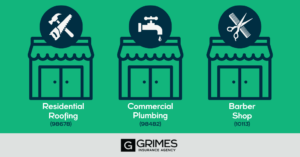
Each business also has additional codes specific to the type of commercial insurance they have. Let’s bring back the residential vs. commercial roofing example and look at general liability insurance.
If you’re a roofing company, you may have seen class codes similar to these:
| Residential roofing (three stories and under) | Commercial roofing (or residential over three stories) | |
| General Liability Classification Code: | 98678 | 98677 |
Further, if your company performs both residential and commercial roofing, your policy would reflect both codes.
A misclassification can affect how your business is rated, which is why it’s important to make sure your class code(s) accurately reflect the work your company performs.
Misclassification can also leave you exposed in the event of a claim. If the insurance company didn’t have the commercial class code on your policy, but an event occurs on a commercial job resulting in a claim, you might not have coverage if you’re not classified correctly on your insurance policy.
If your business has expanded into commercial roofing, started working on taller buildings, or added another type of operation, make sure your agent knows.
3. The Best Policy Covers the Roofing Work You Actually Do
A policy can look great on paper… until you find an exclusion that applies directly to your work. Then, you’re left uncovered for tasks you do every day.
Two of the most common exclusions roofing companies face include:
- Building story or height limits: Some policies may restrict roof work performed above a certain height
- Hot work exclusions: Restrict labor involving torches or heat (often used during roof flashing)
How do I know what to exclude or include on my business roofing policy?
It all boils down to being transparent about what your business does.
Let’s say your roofing company doesn’t regularly offer hot work. Instead of torch-down roofing, you offer a different method for your main service. However, you offer it for certain roofing projects on occasion.
Even if torch-down roofing isn’t your main operation, you should disclose additional services to your insurance agent to determine whether your policy provides the coverage your business actually needs.
Before you choose a policy, ask:
- Does the policy list any exclusions or limitations?
- Do those limitations match the buildings my company actually works on?
- Are there available endorsements to add protections to my policy?
- Does the policy address all of the roofing operations my company performs?
At the end of the day, the best policy isn’t the one with the longest list of benefits. It’s the one that doesn’t exclude a critical part of your operation.
4. The Best Roofing Policy Makes Sense for Your Company’s Growth
Roofing companies can have significant swings in revenue from one year to the next. Based on how your policy is rated, though, those swings can create major surprises during your next insurance audit.
What exactly is an insurance audit? Great question! Watch this video to learn about insurance audits, what to expect, and how your business can prepare for one.
Roofing policies are typically rated one of two ways:
- Based on your gross payroll
- Based on your gross sales
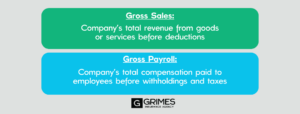
A gross payroll-based quote often comes in lower, but can change more often. A stronger year, a few new hires, or some overtime can push your payroll up dramatically.
Generally, gross sales are a steadier number to build a policy around. However, it’s still important to remain mindful (and realistic) about your company’s capability. We’ve seen how it can easily backfire firsthand.
An example: a costly underestimation
Based on a prior example, a roofing company client estimated their annual sales at $6,000,000. Using this number as a factor, their original premium was rated at $50,000.
However, their sales nearly doubled their estimate, producing $11,000,000 in gross sales. After the yearly audit, they were billed an additional $39,000 in premium to settle the difference.
How can you avoid a surprise audit bill?
As much as we wish it were possible, you can’t always predict how a fiscal year will play out. However, some of the best ways to keep audit surprises to a minimum include:
- Consistent communication with your agent
- Keeping an eye on your finances
As things change within your business, make them known to your agent. Updating your gross sales or payroll, or adding new operations as your business changes, can spread those costs over time, rather than surprising you with a single large bill.
Have you made any recent changes to your business? Contact Grimes Insurance Agency to speak with an agent about amending your commercial coverage.
Whichever option you decide to base your premium on, verify that it makes sense for your company’s growth. Consider where your company currently is and where you can realistically see yourself by the end of the year.
To dive deeper into what affects your commercial policy rates, read about how much contractor insurance costs.
How Do You Find the Best Roofing Business Insurance?
Finding the best roofing insurance isn’t about choosing the carrier with the cheapest quote or the longest list of coverage options. The right policy should accurately reflect your roofing operations, protect you from the risks you actually face, and make sense for the way your company is growing.
Before choosing or renewing your policy, review four key areas:
- Coverage gaps: Does your policy provide the coverage your business needs?
- Classification: Does your policy accurately describe the work your company performs?
- Exclusions: Are there limitations that could leave you uncovered for work you actually do?
- Growth: Does the way your policy is rated make sense for your expected sales or payroll?
You shouldn’t have to discover a coverage gap or a major premium adjustment after something goes wrong. Since 1948, Grimes Insurance has helped roofing companies look beyond the price of a policy and understand how their operations, classifications, exclusions, and growth can affect their coverage.
If your roofing company has changed, grown, or you want to know whether your policy still fits, Grimes Insurance Agency is available to help review your commercial coverage. Give our office a call to connect with an agent and review your current coverage. Or, if you’re ready to shop your policy, request a business insurance quote and explore your best options with our team.


