

How Do Independent Insurance Agencies Work?
Are you getting the best insurance coverage or just the most convenient one?
And if something went wrong tomorrow, would your policy actually protect you the way that you expect?
Most people buy insurance from whoever they used last time. The policy gets renewed automatically, the premium goes up a little each year, and nobody asks whether a better option exists. That habit is not necessarily bad, but it means most people have never seen what their coverage looks like compared to what else is available.
Understanding how independent insurance agents work changes that.
It gives you a clearer picture of how insurance is actually bought and sold, and what you may be missing without knowing it.
For 78 years, Grimes Insurance Agency has helped West Texas families and businesses compare coverage across multiple carriers and make informed insurance decisions.
In this article, you will learn what an independent agent is, how they differ from captive agents, what the quote process looks like, and what separates a good agent from one who just processes paperwork.
Independent vs. Captive Agents: What’s the Difference?
What is an Independent Insurance Agent?
An independent insurance agent represents multiple insurance carriers rather than a single company.
They are licensed professionals who evaluate your coverage needs, shop your risk across the carriers they represent, and recommend the policy that best fits your situation.
A key difference to keep in mind is that independent agents are not employees of any one insurer. They work on behalf of their clients.
When one carrier’s pricing is too high, or its underwriting guidelines do not fit your risk profile, an independent agent moves on to the next carrier.
This access matters more than most buyers realize. Insurance carriers offer low prices for some risks, but may decline others. An independent agent helps you find the best options instead of locking you into a single company’s product.
What is a Captive Insurance Agent?
A captive agent represents only one insurance company.
Captive agents work exclusively with one insurance carrier, meaning they can only offer that company’s products. If that company’s rates are higher than expected, or its coverages are not the right fit for your situation, a captive agent cannot help you find alternatives from other insurers.
That is not a criticism of captive agents. Many are knowledgeable professionals who serve their clients well within the products available to them. Because they focus on a single carrier, they often have an in-depth understanding of that company’s policies and processes. Their close relationship with the carrier can also help streamline quoting, policy changes, and claims support.
If you already have a specific insurance company in mind and are committed to working with that carrier, a captive agent may be a good fit. Rather than comparing options from multiple insurers, you can work directly with an expert on that company’s products and services.
Independent Agent |
Captive Agent |
| Represents multiple insurance carriers | Represents one insurance carrier |
| Not employed by any one insurer | Employed by a specific insurance company |
| Can shop between multiple companies and compare coverages | Shops within its company |
Learn more about the pros and cons of independent and captive agents:
The practical difference shows up in a few specific situations:
When your insurance needs fall outside a carrier’s appetite
Insurance companies have different guidelines for the types of risks they prefer to insure.
- If a captive agent’s carrier declines your application or offers a premium that doesn’t fit your budget, the agent’s options are limited to that company’s products.
- An independent agent can explore coverage options with other carriers that may be a better fit.
When market conditions change
A carrier that offered the most competitive rates a few years ago may not be the most competitive today.
- Captive agents review your options within the company they represent and can help determine whether that carrier still meets your needs.
- Independent agents can compare multiple carriers as your needs change or at renewal.
When you have multiple coverage needs
Some customers need coverage for a home, vehicles, a business, or life insurance.
- Captive agents offer coverage through one insurance company, which may appeal to customers who prefer to keep their policies with a single carrier.
- Independent agents can place those coverages with different carriers when doing so provides better coverage options or pricing.
How the Quote Process Works With an Independent Agent
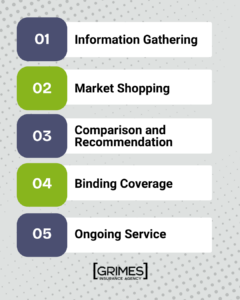
Step 1: Information gathering
Your agent collects the details needed to request accurate quotes. This information depends on the type of insurance you are requesting. For example, auto insurance quotes require information about your driving record, vehicle details, and where you live and drive.
Step 2: Market shopping
Your agent submits your information to the carriers they represent and collects quotes.
Step 3: Comparison and recommendation
Your agent presents the options, explains the differences in coverage and pricing, and makes a recommendation based on your situation. A good agent tells you which one fits and why.
Step 4: Binding coverage
Once you select a policy, your agent handles the paperwork and binds (also known as activates) your coverage.
Step 5: Ongoing service
A good independent agent does not disappear after the policy is written. They handle policy changes, certificates of insurance, claims questions, and annual reviews. When your situation changes, they adjust your coverage accordingly.
Will working with an independent agent cost more?
Independent agents earn a commission from the carrier when a policy is placed. That commission is built into the premium and does not cost you anything additional. You pay the same premium whether you buy directly from a carrier or through an agent.
This answers a common question: if an agent is paid by the carrier, whose interests does the agent represent?
A good independent agent’s interest is in placing you with the right carrier, because satisfied clients renew, refer others, and stay. An agent who churns through clients by placing them in the wrong policies does not build a sustainable business. That alignment of incentives is not perfect, but it is real.
How Grimes Works as an Independent Agency
Most people who have only worked with captive agents or direct carriers have never compared what other insurance companies would offer for the same coverage. Understanding how independent insurance agents work gives you a clearer picture of your options and helps you make more informed insurance decisions.
Whether you choose an independent or captive agent, the goal is making sure your coverage actually fits your needs.
Before your next renewal, ask yourself:
- Has my current agent shopped my policy across multiple carriers?
- Can my agent explain what my current coverage doesn’t include?
- Does my policy and its limits accurately reflect my current situation?
If the answer to any of those is no, that is worth a conversation.
When you work with Grimes Insurance, you will be supported by a team that cares about educating customers about their coverage. Whether you’re requesting a quote, filing a claim, or just asking questions, our top priority is to help you protect what matters most and understand why.
Now that you understand how independent agents work, your next step is to learn how Grimes Insurance Agency processes your claim. Be in the know about what happens after a loss and how a good agent helps you navigate the process.
Frequently Asked Questions
Does working with an independent agent cost more than buying directly from a carrier?
No. The agent’s commission is built into the premium regardless of how you buy. In many cases, an independent agent finds a lower total premium by shopping across multiple carriers.
How many carriers does a typical independent agent represent?
Some agents represent five to ten carriers. Others represent significantly more. The number matters less than whether the carriers they represent are competitive for your specific coverage needs.
Can an independent agent handle claims?
Agents do not pay claims, but they will help you understand the claims process, advocate on your behalf if a dispute arises, and connect you with the right contacts at the carrier.
Is an independent agent the same as an insurance broker?
Agents represent carriers and have binding authority. Brokers represent the client and typically submit applications to carriers without binding authority. In practice, most independent agents in Texas function with binding authority and serve the client’s interests.
What if I want to switch agents but keep my current policy?
In most cases, you can transfer your policy to a new agent without canceling or rewriting coverage. Contact the new agent and request a broker-of-record change.
Disclaimer: The information provided in this article is for general informational purposes only and does not constitute legal, financial, or insurance advice. Coverage options, terms, and availability may vary. Please consult with a licensed professional for advice specific to your situation.


