
Commercial Property Protection Tips To Reduce Risk
Commercial property owners face real threats every day-from break-ins to equipment failures to liability gaps. We at Grimes Insurance Agency know that protecting your building requires more than just hoping for the best.
This guide walks you through practical commercial property protection tips that actually reduce your risk. You’ll learn how to spot vulnerabilities, strengthen your defenses, and close insurance gaps before problems hit.
Conduct a Comprehensive Risk Assessment
Walk Your Property and Document What You Find
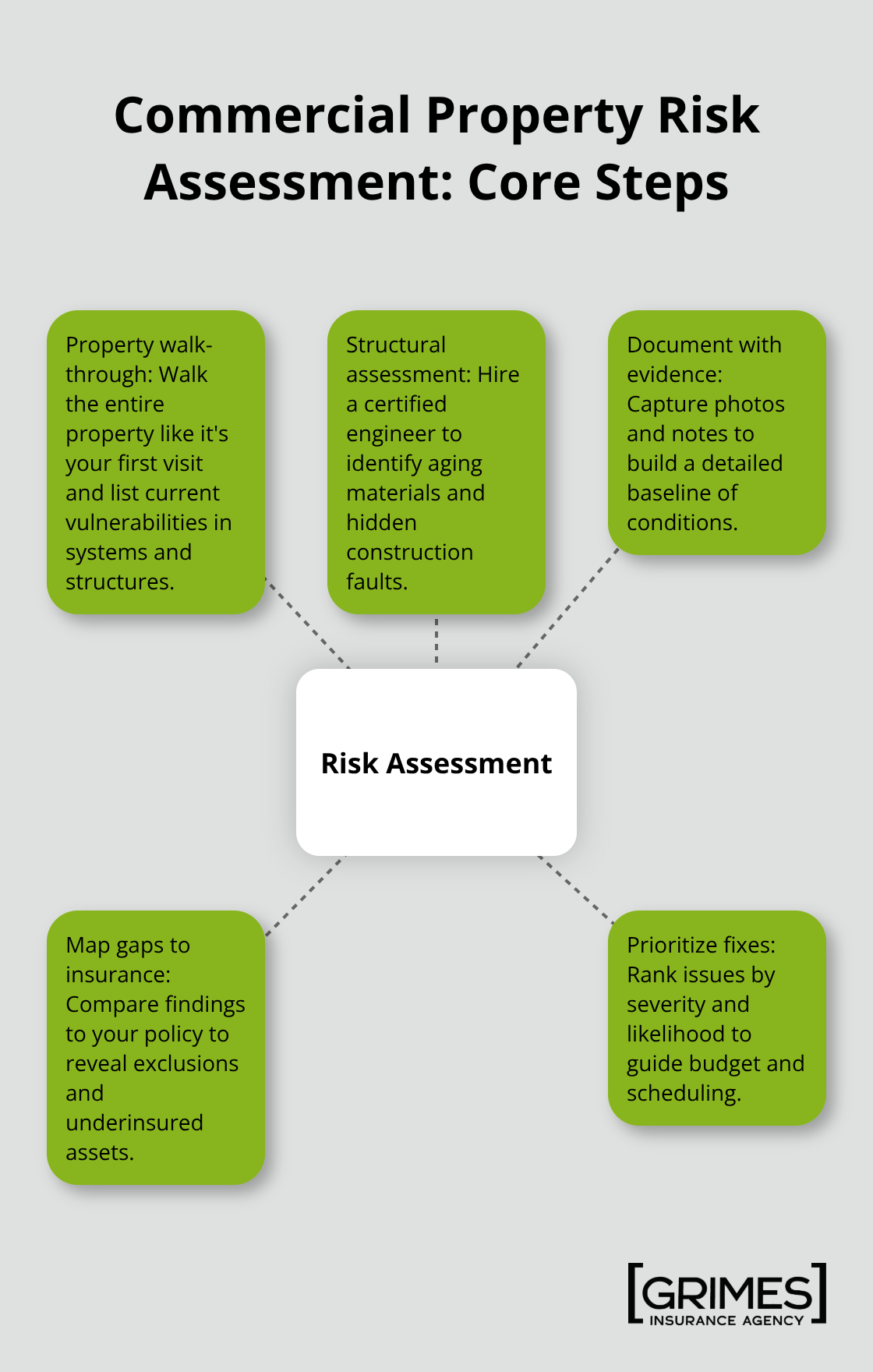
Start by walking through your property like you’re seeing it for the first time. Most commercial property owners skip this step and pay for it later. You need to identify what’s actually vulnerable right now, not what you think might be a problem. Check your electrical systems for outdated wiring, inspect plumbing for leaks or corrosion, examine your roof for damage, and look at structural elements for cracks or deterioration. This isn’t optional work-it’s the foundation of everything else you’ll do.
Hire a certified engineer to conduct a formal structural assessment. They’ll spot aging materials and construction faults that your eyes will miss. Then document everything with photos and notes. This creates a record you’ll reference when planning improvements and when working with your insurance provider.
Evaluate Your Security Systems Honestly
Your access control system is only as strong as its weakest point. Many property owners install fancy electronic locks on the front entrance and ignore the back door. Walk every entrance to your building and assess whether someone could get in without permission. Check if your current system requires visitor registration, whether you use keycards or biometrics, and if you have intercom verification at entry points. If you’re not requiring visitors to check in formally, you have a major gap.
Install robust physical barriers like secure fencing and controlled-entry gates. For interior access, implement role-based systems where employees can only reach areas relevant to their job. Add motion-activated lighting in parking areas and poorly lit zones (this deters crime far more effectively than you’d expect). Your surveillance system should cover entrances, corridors, stairwells, and loading docks with high-definition cameras. Remote monitoring capability matters because someone needs to watch when you’re not there. Make sure your video storage complies with data protection regulations and is securely backed up for investigations if incidents occur.
Review Your Insurance Coverage Against Your Actual Exposure
Your current policy probably has exclusions you’ve never read. Schedule a detailed review with your insurance provider to understand exactly what’s covered and what isn’t. Most commercial policies cover fire, water damage, and basic liability, but gaps exist around equipment failure, cyber incidents, and specific natural disasters depending on your location. If you’re in a high-risk area for floods or earthquakes, your standard policy likely doesn’t cover those events. The cost of adding that coverage now is far less than the cost of rebuilding without it.
Document your current coverage limits against your actual asset value. If you’ve added equipment or expanded your building, your coverage limits might not match your current exposure. Review your policy annually and after any major property changes. Don’t wait for a loss to discover your protection is inadequate. Once you understand your coverage gaps, you’re ready to move forward with the physical security measures that will actually protect your building and reduce your overall risk profile.
Implement Physical Security Measures
Install Surveillance Systems That Actually Work
High-definition cameras at every entrance, corridor, stairwell, and loading dock capture activity where someone could move through your building undetected. Remote monitoring capability matters because your cameras accomplish nothing if no one watches them during off-hours or when you’re closed. Video storage must comply with data protection regulations and stay securely backed up for investigations. Most property owners install cameras and then delete footage after 30 days, which defeats the purpose when you need evidence weeks later-store footage for at least 90 days minimum.
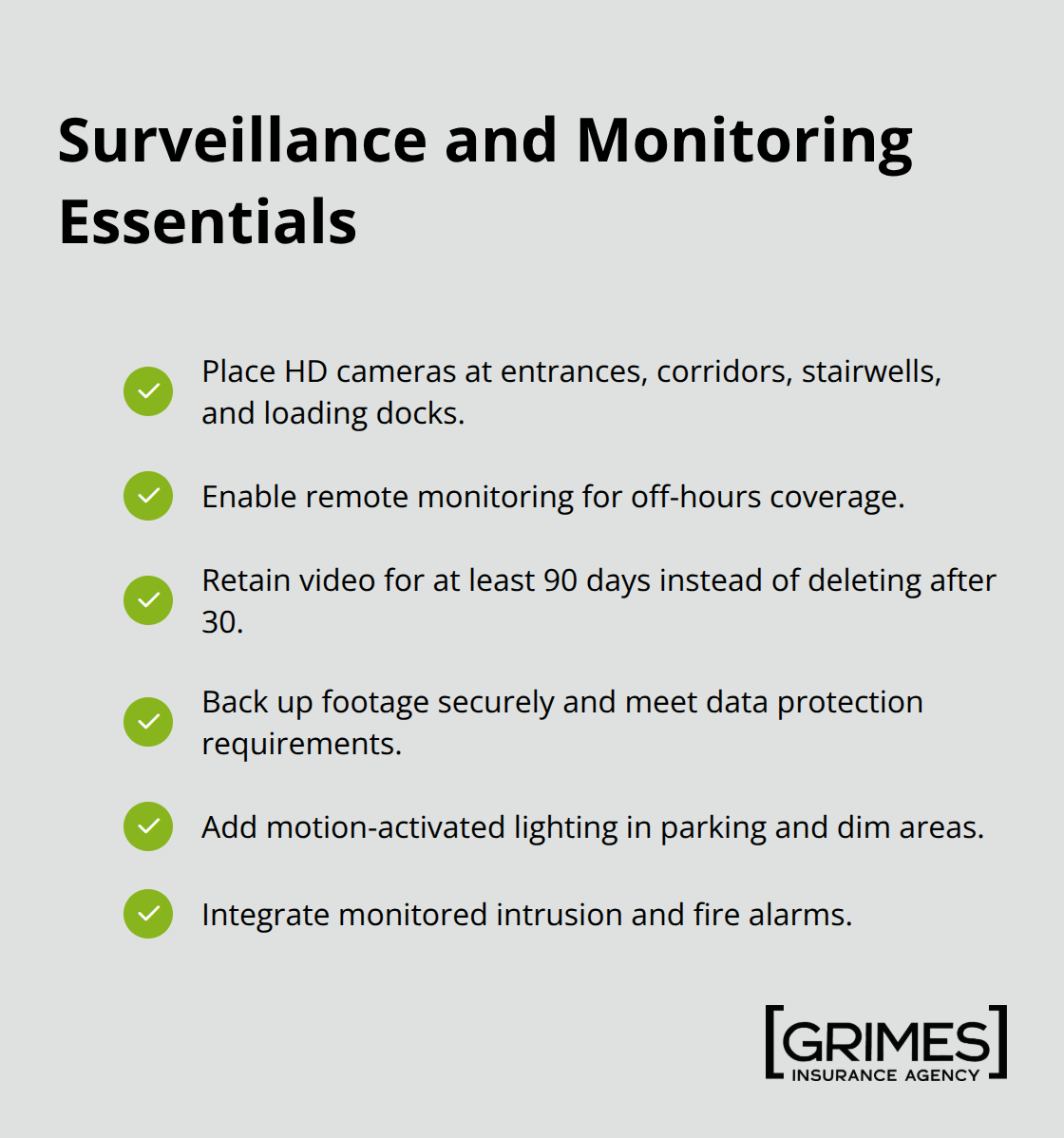
Motion-activated lighting in parking areas and poorly lit zones deters crime far more effectively than you’d expect because most criminals avoid areas where they’re visible. Pair your cameras with intrusion alarms and fire alarms connected to monitoring services that respond immediately rather than just alerting you. The combination of visible cameras, active lighting, and monitored alarms creates a multi-layered defense that stops most opportunistic break-ins before they start.
Control Access Through Single Checkpoints
Your entry points determine whether your entire security strategy succeeds or fails. Install robust physical security measures including secure fencing and controlled-entry gates that force visitors and employees through a single checkpoint rather than allowing multiple access routes. For interior access, implement role-based systems where employees can only reach areas relevant to their job, not your entire building. Add intercom verification at entrances so reception can confirm visitors before granting entry instead of buzzing people in blindly. Keycards or biometric systems beat traditional locks because you can instantly revoke access without changing physical keys, and you can track exactly who entered which areas and when.
Strengthen Doors, Windows, and Visitor Protocols
Reinforce doors and windows in high-risk areas with stronger frames and deadbolts. Establish a formal visitor registration process with identification checks and online pre-registration to streamline check-ins while maintaining security. Issue temporary visitor passes that limit access to specific areas and require escorting rather than allowing visitors to wander freely. This level of control sounds restrictive, but it’s the difference between a property that thieves target and a property they skip for easier opportunities. Once your physical defenses are in place, your next priority shifts to keeping your building systems running smoothly so equipment failures don’t create additional vulnerabilities or costly downtime.
Develop a Proactive Maintenance and Prevention Plan
Catch Problems Before Equipment Fails
Monthly inspections of electrical, plumbing, and HVAC systems catch problems before they become expensive emergencies that disrupt operations or create liability exposure. Most property owners wait until something breaks, then scramble to find contractors and deal with downtime. This approach costs significantly more than preventive work.
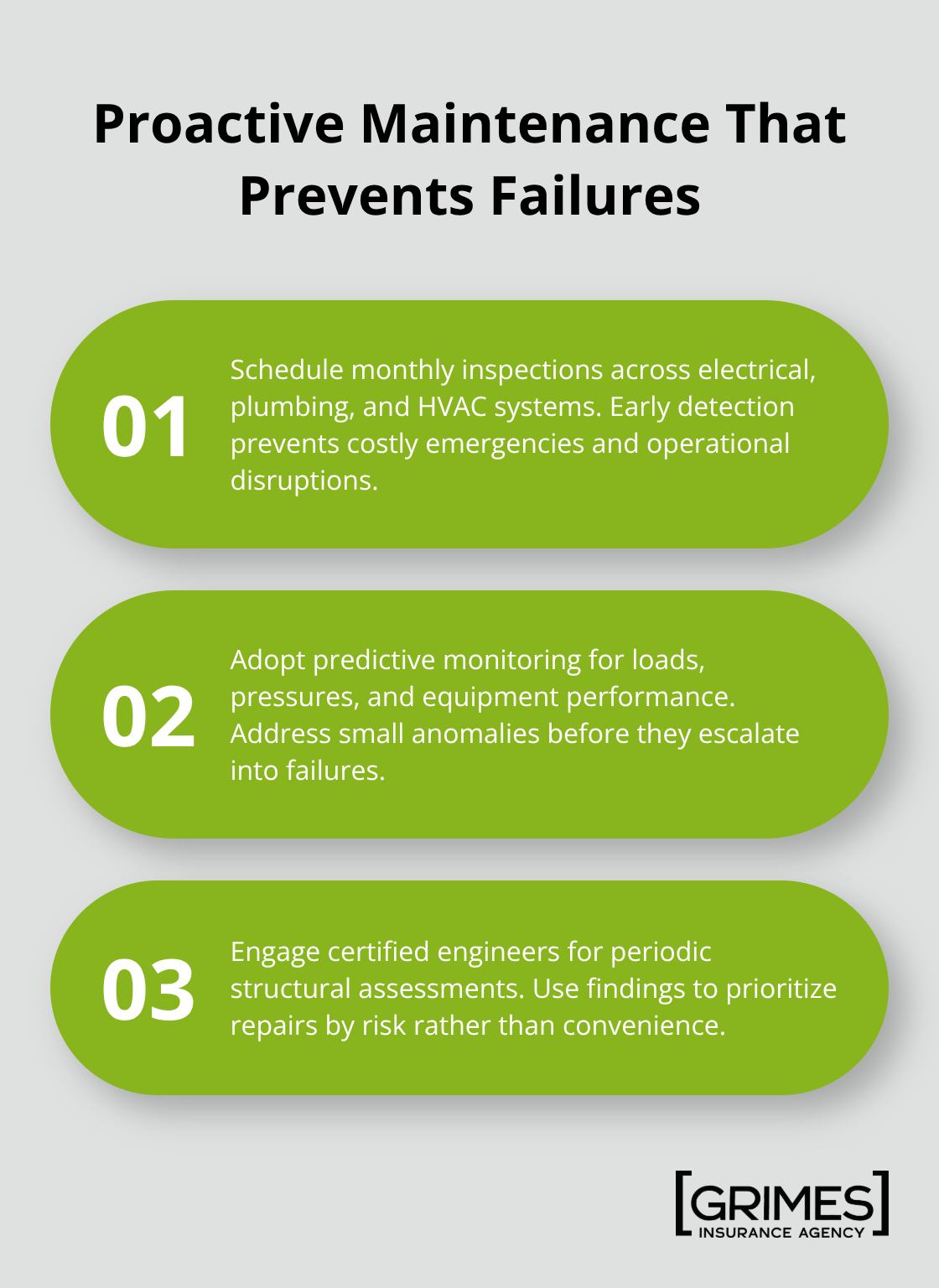
Hire certified engineers to conduct periodic structural assessments and identify aging materials or construction faults that visual inspections miss.
Use predictive maintenance tools to monitor equipment performance in real time rather than waiting for failure alerts. These tools track HVAC efficiency, electrical load patterns, and plumbing pressure to flag issues weeks before equipment fails. Address minor issues promptly because small plumbing leaks become major water damage, small electrical problems become fire hazards, and small structural cracks become expensive reinforcement projects.
Document Everything for Insurance and Liability Protection
Document every inspection, repair, and maintenance activity with dates, findings, and contractor details. This documentation serves two critical purposes: it shows your insurance provider that you maintain your property responsibly (which can improve your rates), and it creates a timeline of when problems emerged and how you addressed them. If a liability claim occurs later, this record demonstrates you acted reasonably to prevent hazards.
The Ryde Garden development in New South Wales identified 44 major defects including structural cracks, water seepage, and fire safety issues through comprehensive assessment and rectification planning. That case shows how systematic documentation and remediation protects both safety and asset value.
Prioritize Repairs Based on Risk, Not Convenience
Most commercial building stock already exists, meaning retrofits and upgrades happen incrementally rather than all at once. Prioritize repairs based on severity and likelihood of failure, not convenience. A leaking roof that affects one storage area ranks lower than deteriorating electrical wiring that could cause fire across multiple zones.
Your maintenance program directly reduces claims frequency and severity, which means lower insurance premiums over time and fewer unexpected shutdowns that cost you revenue. Certified engineers identify problems that your eyes will miss, and predictive tools flag deterioration before failure occurs. This combination of regular inspections, documented repairs, and risk-based prioritization transforms maintenance from a reactive expense into a strategic asset protection investment.
Final Thoughts
You now understand the core commercial property protection tips that reduce your risk. A comprehensive risk assessment identifies vulnerabilities before they become expensive problems. Physical security measures stop break-ins and unauthorized access. Proactive maintenance catches equipment failures before they disrupt operations or create liability exposure. These three strategies work together to protect your building, your tenants, and your bottom line.
Regular inspections cost far less than emergency repairs, and documented maintenance demonstrates responsible ownership to your insurance provider, which can improve your rates over time. Fewer claims mean lower premiums and better coverage terms. A property with strong security systems, maintained building systems, and comprehensive insurance coverage attracts better tenants and commands higher lease rates than a property with visible vulnerabilities.
Schedule a detailed insurance review with Grimes Insurance Agency to match your actual exposure with appropriate protection and competitive pricing. Their team reviews your current gaps, recommends coverage adjustments, and helps you understand how your maintenance and security investments affect your rates. Start that conversation now, then implement the protection strategies outlined in this guide.
Disclaimer: The information provided in this blog is for general informational purposes only and does not constitute legal, financial, or insurance advice. Coverage options, terms, and availability may vary. Please consult with a licensed professional for advice specific to your situation

